Image 1 of 3
1 / 3
Plant Reference
Stipa, Genus, gigantea, Species,
- Genus & species
giant feather grass
Iberian Peninsula (Spain and Portugal); dry rocky hillsides, scrub, and open pine woodland
Overview
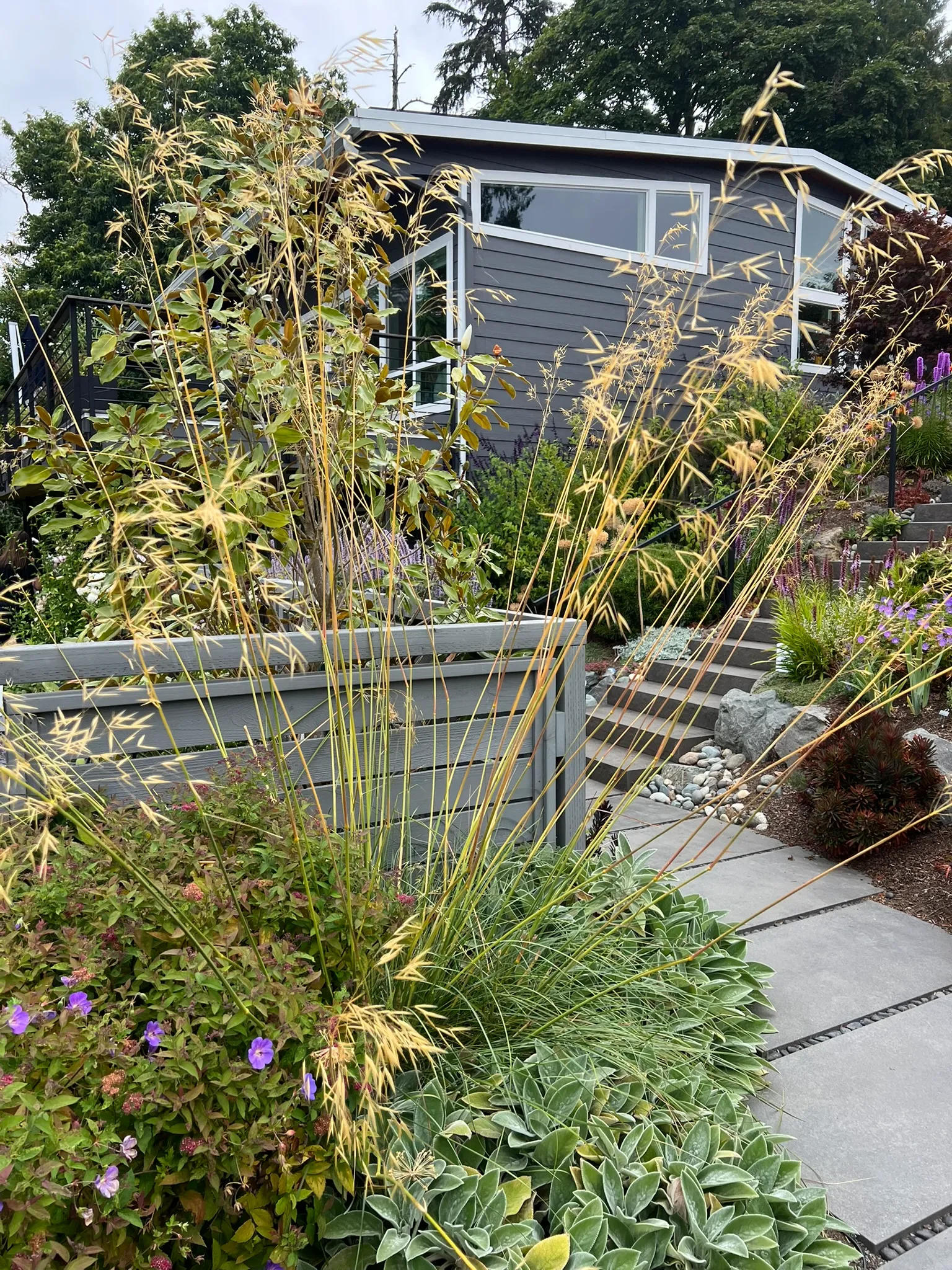
Stipa gigantea (syn. Celtica gigantea) is giant feather grass (golden oats), a cool-season evergreen ornamental grass. The basal foliage clump grows 18-24 inches (45-60 cm) tall and 36-48 inches (90-120 cm) wide of narrow rolled dark green to gray-green arching leaves. Towering flower culms rise to 60-96 inches (150-240 cm / 5-8 feet) with enormous open airy golden panicles 12-18 inches (30-45 cm) of pendant oat-like florets bearing long twisted glistening awns in summer (June-July). The panicles glow gold and amber when backlit by low-angle sun. The dried panicles persist for 6-8 months through fall and winter. In the grass family (Poaceae). A 'see-through' plant: the tall airy flower stems are transparent enough to allow views through to plants behind. RHS Award of Garden Merit. Cool-season grass. Native to the Iberian Peninsula (Spain and Portugal), growing on dry rocky hillsides, scrub, and open pine woodland. Sharp drainage — intolerant of wet winter soil. Do not cut the evergreen foliage clump — only remove old flower culms. Non-toxic. Deer-resistant. Drought-tolerant. Full sun. Zones 6-9. Growth rate is slow to moderate.
Native Range
Native to the Iberian Peninsula (Spain and Portugal), growing on dry rocky hillsides, scrub, and open pine woodland.Suggested Uses
Planted as a specimen and in borders in zones 6-9. The 'see-through' airy panicles allow views through to plants behind. Position where the panicles catch low-angle sun. Sharp drainage. 6-8 months of panicle display. Non-toxic. Deer-resistant.How to Identify
Appearance
Size & Dimensions
Height2' - 8'
Width/Spread3' - 4'
Bloom Information
Summer (June-July), lasting 6-8 weeks of active flowering. The dried golden panicles persist 6-8 months through winter. The panicles glow in backlit low-angle light.
Detailed Descriptions
Flower Description
Silver-gold; enormous open airy panicles 12-18 inches (30-45 cm) with pendant oat-like florets bearing long twisted glistening awns; the panicles glow gold and amber when backlitFoliage Description
Narrow, rolled, dark green to gray-green, arching; the foliage clump is 18-24 inches (45-60 cm) tallGrowing Conditions
Sun Requirements
Requires 6-10 hours of direct sunlight daily
• Full Sun: 6+ hours of direct sunlight
• Partial Shade: 3-6 hours of direct sunlight
• Full Shade: Less than 3 hours of direct sunlight
Care & Maintenance
Care Guide
Full sun. Sharp drainage — intolerant of wet winter soil. Tolerates alkaline and chalky soil (pH to 8.0). Do not cut the evergreen foliage clump. Cut old flower culms to the base in late winter. Cool-season grass. Non-toxic. Deer-resistant. Drought-tolerant. Zones 6-9.Pruning
Cut old flower culms to the base in late winter (February-March). Do not cut the evergreen foliage clump. Comb out dead foliage with gloved hands. Division rarely needed and resented — the deep roots make division difficult.Pruning Schedule
Prune: February–March
early spring