Image 1 of 2
1 / 2
© Ian Sutton from Collinsville and Oberon, Australia, some rights reserved (CC-BY) · Wikimedia Commons
Stackhousia, Genus, spp., Multiple species,
- Genus
- Multiple species
creamy candles
Australia, with some species in New Zealand and the Pacific
Overview
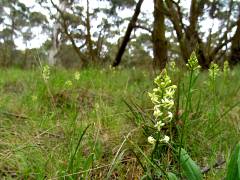
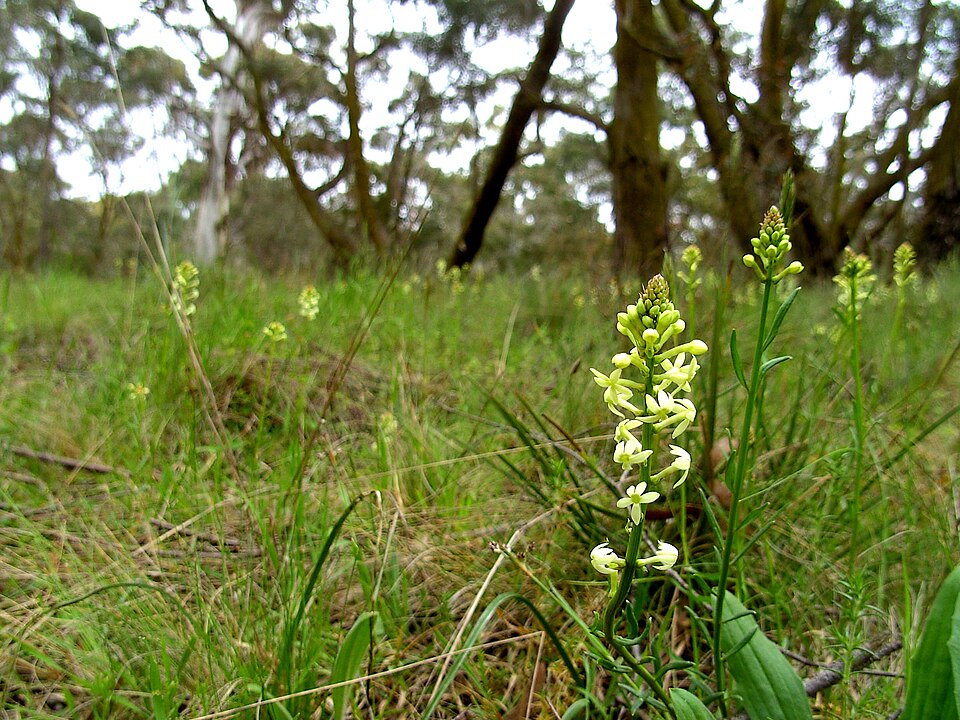
Stackhousia is a genus of tufted perennial herbs in the family Celastraceae, native mainly to Australia, with a few species reaching New Zealand and the Pacific. Plants rise from a woody rootstock into upright, often unbranched stems 4-24 inches (10-60 cm) tall, set with narrow, fleshy, alternate leaves. From spring into early summer the stems end in dense, candle-like spikes of small tubular flowers in white, cream, or yellow, each flower with five spreading lobes and a sweet scent. The genus grows in grassland, heath, open woodland, and coastal sand on a range of well-drained soils, in full sun to light shade. Many species die back to the rootstock after flowering and reshoot the following season. They tolerate poor soils and seasonal dryness but resent waterlogging. Plants suit native and wildflower gardens in mild, frost-free to light-frost climates, roughly USDA zones 9 to 10.
Native Range
Stackhousia is native mainly to Australia, across most states, with some species extending to New Zealand and Pacific islands. The plants grow in grassland, heath, open woodland, and coastal dunes on sandy, loamy, or rocky well-drained soils.Suggested Uses
Used in native, wildflower, and rockery plantings, on dry banks, and in containers in mild climates. Spaced 8-16 inches (20-40 cm) apart, plants form upright tufts. The fragrant spring spikes also draw native bees and butterflies.How to Identify
Appearance
Size & Dimensions
Height4" - 2'
Width/Spread6" - 1'
Bloom Information
Flowering occurs from spring into early summer, generally September to December in the native range. Dense, candle-like spikes of small tubular flowers open from the base upward in white, cream, or yellow, carrying a sweet scent. The display lasts several weeks before plants set seed and die back.
Detailed Descriptions
Flower Description
White, cream, or yellowFoliage Description
Green to grey-greenGrowing Conditions
Sun Requirements
Requires 5-8 hours of direct sunlight daily
• Full Sun: 6+ hours of direct sunlight
• Partial Shade: 3-6 hours of direct sunlight
• Full Shade: Less than 3 hours of direct sunlight
Care & Maintenance
Care Guide
Plants grow in full sun to light shade on sandy, loamy, or rocky, well-drained soils at an acid to neutral pH from about 5.5 to 7.0. They tolerate poor, dry ground and seasonal moisture but resent heavy, wet soils and prolonged summer irrigation. Even moisture in spring supports flowering, after which many species die back to the rootstock for summer dormancy. Sharp drainage and low fertility suit them, with little or no feeding. In containers a gritty, free-draining mix is used. Hardiness suits frost-free to light-frost regions, roughly USDA zones 9 to 10.Pruning
No routine pruning is needed. Spent flower spikes can be cut at the base after flowering. Dead foliage is cleared once plants enter summer dormancy.Pruning Schedule
Prune: December–January
summer
Container Growing
Suitable for container growing
Minimum container size: 1 gallons