Sorghum, Genus, halepense, Species,
- Genus & species
Johnson grass
Mediterranean, North Africa, and Asia
Overview
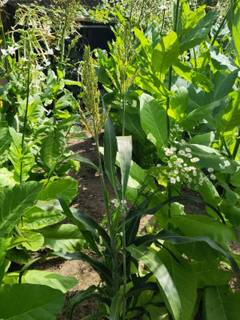
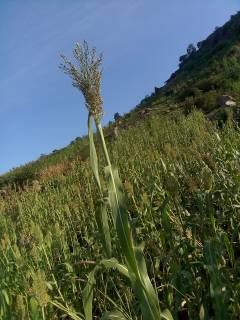
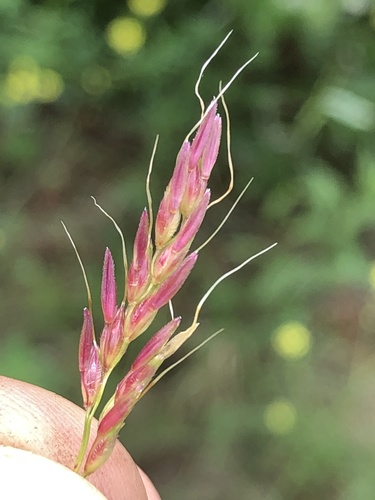
Sorghum halepense is a tall, coarse perennial grass native to the Mediterranean region, growing 2-7 feet (0.6-2.1 m) tall from stout, spreading underground rhizomes. The flat leaf blades are 0.4-1 inch (1-2.5 cm) wide and up to 2 feet (60 cm) long, with a prominent whitish midrib. In summer the stems are topped with large, open, purplish to reddish panicles 6-20 inches (15-50 cm) long that bear paired spikelets and shed abundant seed. S. halepense spreads both by seed and by thick rhizomes that can extend several feet, forming dense stands that crowd out crops and native plants. It was introduced for forage and has become a serious agricultural weed, listed as a noxious weed across much of the United States and many other countries. The foliage can build up cyanogenic compounds and nitrates, especially under drought or frost stress, and is toxic to grazing livestock at those times. It tolerates heat, drought, and a wide range of soils. Growth is fast in warm weather, and rhizome fragments left in soil readily sprout new plants. It dies back to the rhizomes after frost.
Native Range
Sorghum halepense is native to the Mediterranean region and parts of Asia and North Africa. It has naturalized across the warmer parts of North America and worldwide, growing in fields, roadsides, ditches, and disturbed ground.Suggested Uses
S. halepense was introduced as a forage and hay grass but is now treated mainly as a noxious weed of crops and pastures. Its seed is eaten by some birds, and the tall stands give cover in rough ground. It is no longer planted deliberately in most regions because of its invasive spread.How to Identify
Appearance
Size & Dimensions
Height2' - 7'
Width/Spread2' - 4'
Bloom Information
Detailed Descriptions
Flower Description
purplish to reddishFoliage Description
green with white midribGrowing Conditions
Sun Requirements
Requires 6-12 hours of direct sunlight daily
• Full Sun: 6+ hours of direct sunlight
• Partial Shade: 3-6 hours of direct sunlight
• Full Shade: Less than 3 hours of direct sunlight