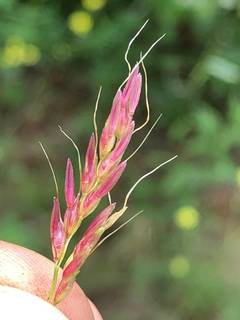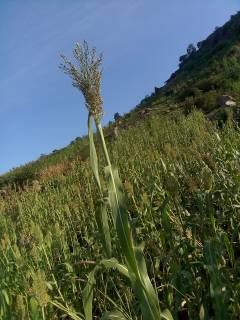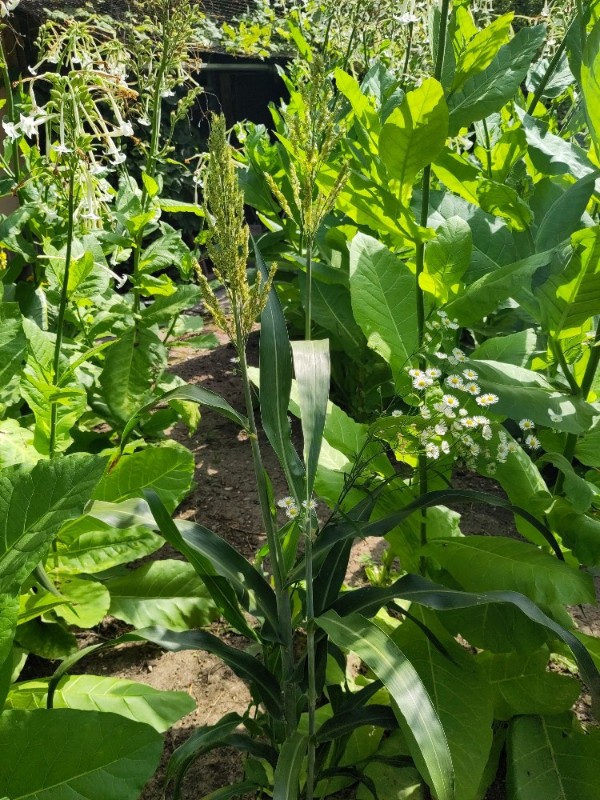
Overview
Sorghum bicolor is a warm-season annual grass grown worldwide as a grain, forage, and syrup crop. Depending on the type, plants range from 2 to 15 feet (0.6 to 4.5 m) tall, with grain varieties typically 4-6 feet (1.2-1.8 m) and forage and sweet types reaching much taller. The stems are solid and cane-like, bearing flat leaf blades 1-3 feet (30-90 cm) long. Flowers form in a branched terminal panicle that ripens into rounded seeds in red, bronze, white, or brown. The crop originated in northeastern Africa and is adapted to heat and low rainfall, forming a deep, fibrous root system that draws moisture from dry soils. It grows where summers are long and warm and does not tolerate frost or cold, wet ground. Young growth and drought- or frost-stressed plants accumulate cyanogenic compounds that release hydrogen cyanide and can poison grazing livestock. Sorghum is sown after soils warm in spring and matures in 90-120 days depending on type. It is used for grain, animal feed, syrup, and broom fiber. Grown only as a frost-free annual.
Native Range
Sorghum bicolor originated in northeastern Africa, likely in the region of present-day Ethiopia and Sudan, where it was domesticated several thousand years ago. It is now grown across Africa, Asia, the Americas, and Australia in warm, semi-arid regions.Suggested Uses
Grown for grain, livestock forage, silage, syrup from sweet types, and fiber for brooms. Used in crop rotations and as a summer cover crop that suppresses weeds and builds soil. Planted in field rows or blocks in warm-season gardens and farms.How to Identify
Appearance
Size & Dimensions
Height2' - 15'
Width/Spread1' - 3'
Bloom Information
Flowers in mid to late summer, about 60-80 days after sowing, as the panicle emerges from the upper stem. Pollination occurs over 1-2 weeks, after which seeds fill and ripen over another 30-45 days. In short-season climates flowering may be delayed or incomplete before frost.
Detailed Descriptions
Flower Description
Reddish-brown to tanFoliage Description
GreenGrowing Conditions
Sun Requirements
Requires 6-12 hours of direct sunlight daily
• Full Sun: 6+ hours of direct sunlight
• Partial Shade: 3-6 hours of direct sunlight
• Full Shade: Less than 3 hours of direct sunlight
Water & Climate
Water Needs
Drought Tolerance
Drought tolerant when established