Smilax, Genus, tamnoides, Species,
- Genus & species
bristly greenbrier
Overview
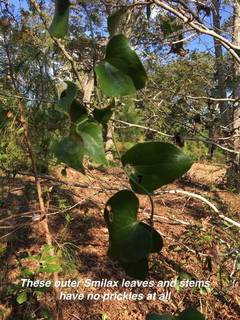
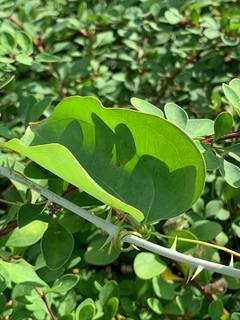
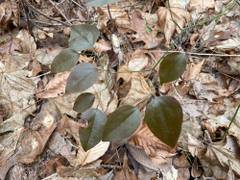
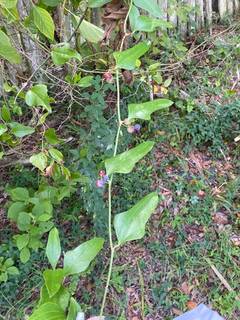
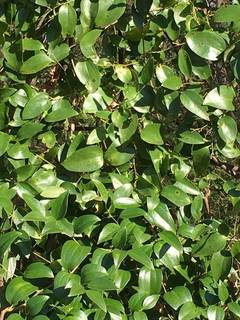
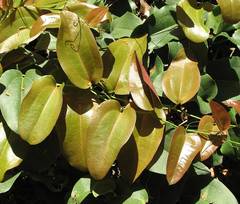
Smilax tamnoides is a deciduous climbing vine of eastern and central North America, scrambling 10-25 feet (3-7.6 m) into shrubs and trees by means of paired tendrils at the leaf bases. The green stems are armed near the base with dense, needle-like black bristles up to 0.4 inch (1 cm) long, the trait behind the common name bristly greenbrier, while the upper stems carry scattered stout prickles. The alternate leaves are 2-5 inches (5-13 cm) long, broadly oval to fiddle-shaped, glossy green, with prominent parallel veins. The species is dioecious, with small greenish flowers in spring on separate male and female plants; female vines bear clusters of blue-black to purple berries that ripen in fall and persist into winter. It grows in moist woods, thickets, stream banks, and fence rows, climbing toward light and forming dense tangles. Birds eat the berries and shelter in the thorny growth. Limitations include the sharp bristles and prickles that make the plant hard to handle, a vigorous, thicket-forming habit that can overwhelm smaller plants, and rhizomes that resprout after cutting. The vine dies back at the tips in cold winters but regrows from woody lower stems and underground rhizomes.
Native Range
Smilax tamnoides is native to eastern and central North America, from Ontario and the eastern United States west to the Great Plains and south to Texas and Florida. It grows in moist woodlands, thickets, floodplains, and along stream banks and fence rows.Suggested Uses
Grown in native and wildlife plantings where its berries and thorny cover support birds. Used along fence lines and woodland edges as a barrier or screen. Suited to naturalized areas with room for a vigorous, thicket-forming vine.How to Identify
Appearance
Size & Dimensions
Height10' - 25'
Width/Spread3' - 10'
Bloom Information
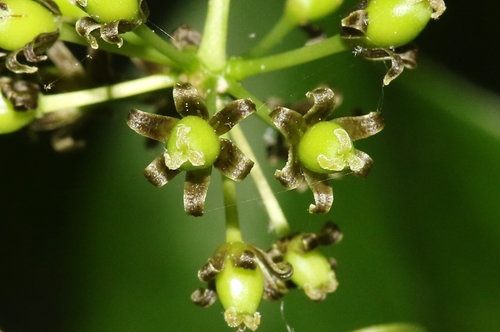
Small greenish flowers open in late spring, generally May into June, in rounded clusters on stalks from the leaf axils. Male and female flowers grow on separate plants and are individually under 0.2 inch (5 mm) across. On female vines, blue-black berries develop through summer and ripen in fall, holding on the bare stems into winter.
Detailed Descriptions
Foliage Description
Glossy green, yellow in fallGrowing Conditions
Sun Requirements
Requires 3-8 hours of direct sunlight daily
• Full Sun: 6+ hours of direct sunlight
• Partial Shade: 3-6 hours of direct sunlight
• Full Shade: Less than 3 hours of direct sunlight
Care & Maintenance
Care Guide
Grows in full sun to part shade in moist, well-drained loam, clay, or sandy soil at a pH of 5.0-7.0. Established vines tolerate drought, varied soils, and seasonal flooding, and need no supplemental water in most sites. Hardy in USDA zones 4-9, the plant withstands cold winters and resprouts from rhizomes if the top is killed. The vine climbs by tendrils and needs a fence, trellis, or host shrub for support. Cutting the stems prompts vigorous regrowth from the rhizome, so control takes repeated effort. No fertilizer is needed in woodland soil.Pruning
Cut stems back in winter to control spread and remove dead growth, knowing that the rhizome resprouts. Repeated cutting over seasons weakens established plants. Thick hand and arm protection is needed against the bristles and prickles during any pruning.Pruning Schedule
Prune: January–February
winter