Smilax, Genus, herbacea, Species,
- Genus & species
smooth carrionflower
Overview
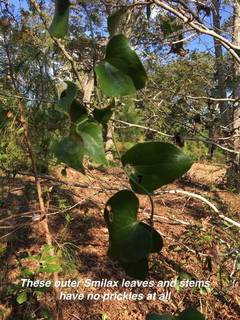
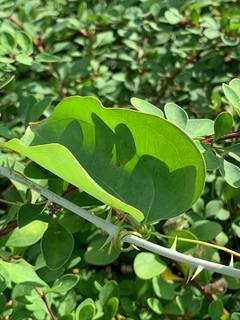
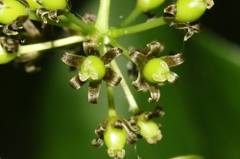
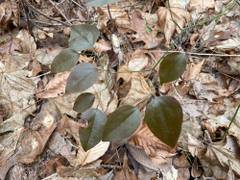
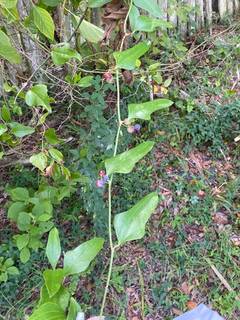
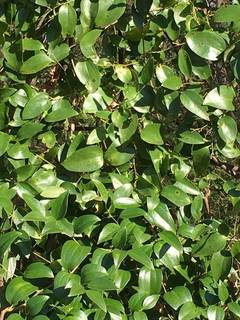
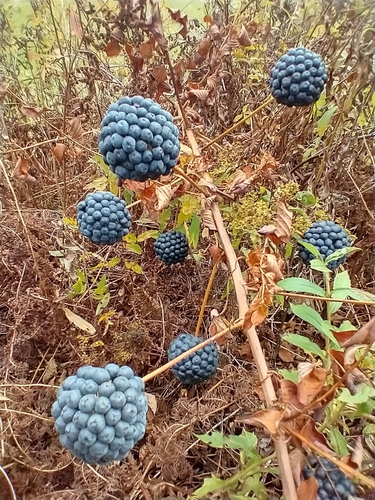
Smilax herbacea is a herbaceous perennial vine that dies to the ground each winter and climbs each year by paired tendrils to 4-8 feet (1.2-2.4 m). Unlike the woody greenbriers, its stems are soft, green, and unarmed, without prickles. The leaves are broadly oval to heart-shaped, 2-5 inches (5-13 cm) long, with parallel main veins and smooth margins. In late spring it bears rounded long-stalked umbels of 20-100 small yellow-green flowers; the male flowers give off a strong carrion odor that draws flies and other pollinating insects. Male and female flowers grow on separate plants, and pollinated female umbels develop into clusters of blue-black berries about 0.3 inch (8 mm) wide with a waxy bloom, ripening in late summer and persisting into autumn. The vine grows from a knotty rhizome in moist woods, thickets, meadows, and along streams across eastern North America. It tolerates a range of soils and light from sun to part shade. The carrion scent at bloom time is noticeable near the plant. It needs support or neighboring plants to climb and otherwise sprawls across the ground.
Native Range
Smilax herbacea is native to eastern North America, from Quebec and Ontario south to Georgia and west to the Great Plains. It grows in moist deciduous woods, woodland edges, thickets, meadows, and stream banks.Suggested Uses
Grown on fences, trellises, and through shrubs in native and woodland plantings, where the berries feed birds. Used in naturalized and wildlife gardens rather than formal settings, partly because of the carrion scent at bloom. Suited to moist woodland edges with support to climb.How to Identify
Appearance
Size & Dimensions
Height4' - 8'
Width/Spread2' - 3'
Bloom Information
Rounded umbels of small yellow-green flowers open on long stalks in May and June. The male flowers produce a carrion odor that attracts flies and beetles, which pollinate them. Female plants ripen clusters of blue-black berries in late summer that persist into autumn.
Detailed Descriptions
Foliage Description
greenGrowing Conditions
Sun Requirements
Requires 4-8 hours of direct sunlight daily
• Full Sun: 6+ hours of direct sunlight
• Partial Shade: 3-6 hours of direct sunlight
• Full Shade: Less than 3 hours of direct sunlight
Care & Maintenance
Care Guide
Smilax herbacea grows in full sun to part shade on moist, fertile soils in woods, thickets, and meadows. It dies back to a rhizome each winter and resprouts in spring, climbing by tendrils over nearby plants or a support. It is propagated from seed cleaned of pulp or by division of the rhizome in dormancy. Steady soil moisture suits it, though it tolerates short dry spells once established. It spreads slowly by rhizome and self-sows where birds drop the seeds. Hardy in USDA zones 4-8, it withstands cold winters.Pruning
The annual stems can be cut to the ground in late autumn or late winter after they die back. Stems may also be shortened during the season to keep the vine in bounds. The rhizome resprouts regardless of top growth.Pruning Schedule
Prune: February & November
fallwinter