Smilax, Genus, spp., Multiple species,
- Genus
- Multiple species
greenbriers
Worldwide tropical and temperate regions
Overview
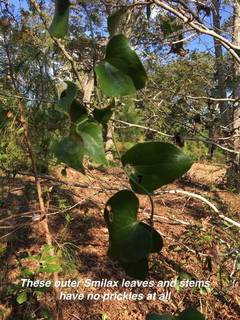
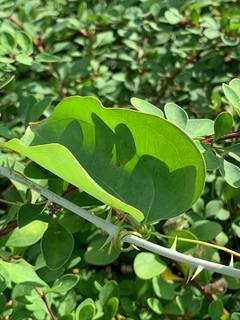
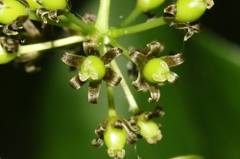
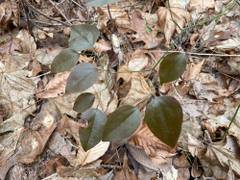
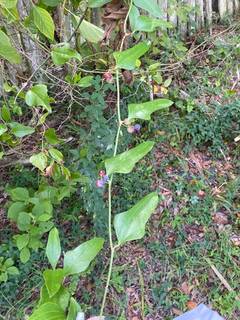
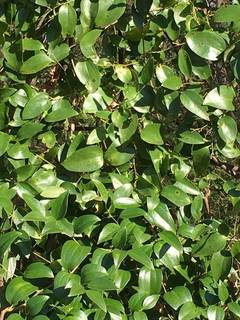
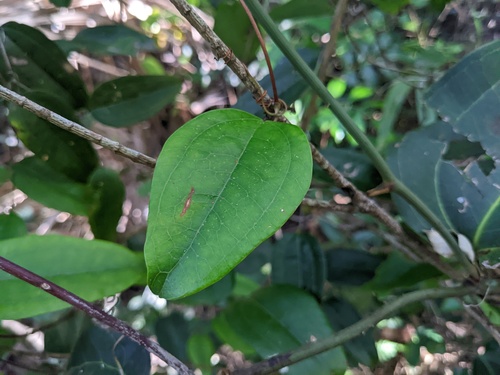
Smilax is a genus of roughly 300 to 350 species of climbing and scrambling perennial vines in the family Smilacaceae, distributed across tropical and temperate regions worldwide. Stems range from herbaceous to woody and climb 1–10 m (3–33 ft) by means of paired tendrils that arise from the base of the leaf stalk. Many species carry scattered prickles along the stems, ranging from soft bristles to rigid spines up to 1 cm (0.4 in) long. Leaves are alternate, 5–15 cm (2–6 in) long, ovate to heart-shaped, with curved parallel veins and a leathery texture; temperate species such as S. rotundifolia drop their leaves in winter, while tropical species remain evergreen. Plants are dioecious, with male and female flowers on separate individuals. The flowers are small, 5–8 mm (0.2–0.3 in) across, greenish-yellow, and borne in rounded axillary clusters. Female plants produce berries 5–10 mm (0.2–0.4 in) in diameter that ripen blue-black or red, each holding one to three seeds. Underground, the genus forms thick rhizomes or tubers that resprout after top growth is cut. The prickly stems and dense growth can form impenetrable thickets, and established root systems are difficult to remove.
Native Range
The genus is distributed nearly worldwide across tropical, subtropical, and warm-temperate regions, with centers of diversity in East Asia, the southeastern United States, Mexico, and Central and South America. Smilax is largely absent from cold-temperate and boreal zones.Suggested Uses
Species in this genus are used for wildlife plantings and naturalized screens, where the dense thorny growth forms cover for wildlife and the berries feed birds. Some species are grown for their edible young shoots or for sarsaparilla flavoring derived from the roots. The prickly stems limit use near paths and high-traffic areas.How to Identify
Appearance
Size & Dimensions
Height3' - 33'
Width/Spread3' - 10'
Bloom Information
Flowering occurs from spring into early summer, typically April to June in temperate zones, with tropical species flowering across a longer season. The small greenish-yellow flowers are insect-pollinated and easily overlooked. Berries develop through summer and ripen in autumn, often persisting on female plants into winter.
Detailed Descriptions
Foliage Description
greenGrowing Conditions
Sun Requirements
Requires 4-8 hours of direct sunlight daily
• Full Sun: 6+ hours of direct sunlight
• Partial Shade: 3-6 hours of direct sunlight
• Full Shade: Less than 3 hours of direct sunlight
Water & Climate
Water Needs
Drought Tolerance
Drought tolerant when established
Care & Maintenance
Care Guide
Most species grow in full sun to part shade and tolerate a wide range of soils, from sandy to clay, where drainage is adequate. Established plants withstand drought through their thick rhizomes, though young plants need regular moisture in the first season. Soil pH from 5.0 to 7.0 suits the majority of species. Temperate species are cold-hardy across USDA zones 4–9, while tropical species are limited to frost-free zones 9–11. The vigorous rhizomes spread laterally and can send up shoots several feet from the parent plant. Once established, the deep root system makes the genus persistent in the landscape.Pruning
Stems can be cut back to ground level in late winter to control spread, though the rhizomes will resprout. Removing the woody root mass requires digging, as cut stems regrow from underground reserves. Thinning the prickly canes in dormancy reduces thicket formation.Pruning Schedule
Prune: February
winter