Skimmia, Genus, spp., Multiple species,
- Genus
- Multiple species
skimmia
Himalayas, China, Japan, and Southeast Asia
Overview
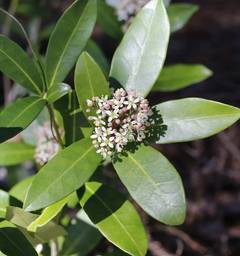
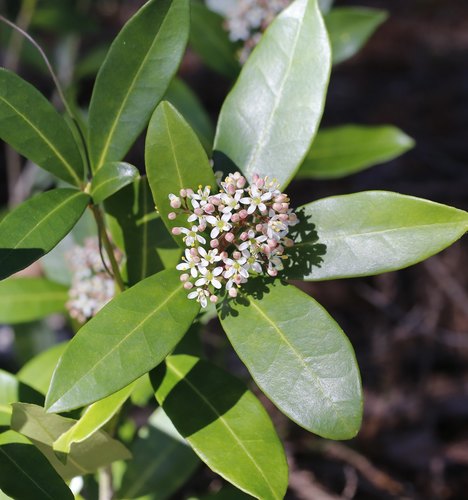
Skimmia is a genus of evergreen shrubs in the rue family, native to East Asia, with about four species. Plants form dense, rounded mounds 1.5-6 feet (0.5-1.8 m) tall and wide, growing slowly. Leaves are alternate, often clustered toward the branch tips, oval to lance-shaped, 2.5-5 inches (6-13 cm) long, leathery, and dark green, releasing an aromatic scent when crushed. Most species are dioecious, with male and female flowers on separate plants; dense terminal clusters of small fragrant cream to pink flowers open in spring from red buds that show through winter. Female plants bear clusters of round red berries 0.3-0.4 inch (8-10 mm) across that persist from fall into spring. The berries and foliage contain alkaloids and are toxic if eaten. Because most species are dioecious, both a male and a female plant are needed for berries. Growth is slow, and leaves yellow in full sun or alkaline soil.
Native Range
Skimmia species are native to the woodlands and mountain slopes of the Himalayas, China, Japan, and Southeast Asia. They grow in moist, humus-rich, acidic soils in the shade of forests, from foothills to montane elevations.Suggested Uses
Grown in shaded borders, woodland gardens, foundation plantings, and containers, spaced 24-36 inches (60-90 cm) apart, with male and female plants grouped for berries. The need for acidic soil and shade leaves it poorly suited to hot, sunny, or alkaline sites. The berries and foliage are toxic if eaten.How to Identify
Appearance
Size & Dimensions
Height1'6" - 6'
Width/Spread2' - 5'
Bloom Information
Red flower buds form in fall and hold through winter, opening into clusters of small fragrant cream to pink flowers in spring, mainly March through May. Flowering lasts three to five weeks. On female plants, pollinated flowers develop into red berries that ripen in fall.
Detailed Descriptions
Flower Description
cream to pinkFoliage Description
dark greenGrowing Conditions
Sun Requirements
Requires 2-6 hours of direct sunlight daily
• Full Sun: 6+ hours of direct sunlight
• Partial Shade: 3-6 hours of direct sunlight
• Full Shade: Less than 3 hours of direct sunlight
Care & Maintenance
Care Guide
Skimmia grows in part to full shade in moist, acidic, humus-rich, well-drained soil and develops yellow, scorched leaves in full sun or alkaline ground. It is hardy in USDA zones 6-8, with foliage damaged by cold, dry wind and hard freezes. Established plants need steady moisture and decline in dry soil. Most species need both a male and a female plant for berries. Spider mites and scale can occur in dry or stagnant conditions. Growth is slow, so plants stay compact for years.Pruning
Little pruning is needed because of the slow, naturally rounded growth. Light shaping is done after flowering, and overlong shoots can be cut back to a leaf cluster. Removing frost-damaged growth in spring keeps the mound dense.Container Growing
Suitable for container growing
Minimum container size: 5 gallons