Scutellaria, Genus, ovata, Species,
- Genus & species
heart-leaved skullcap
Central and southeastern United States
Overview
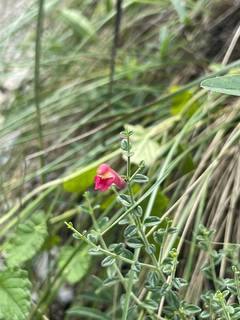
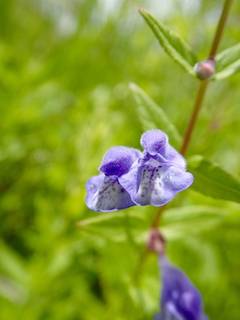
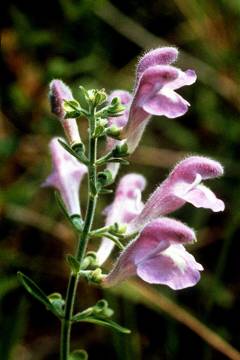
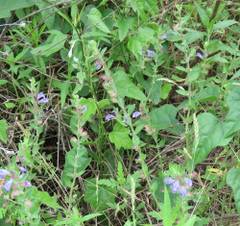
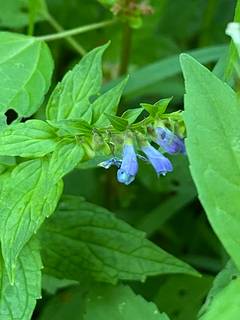
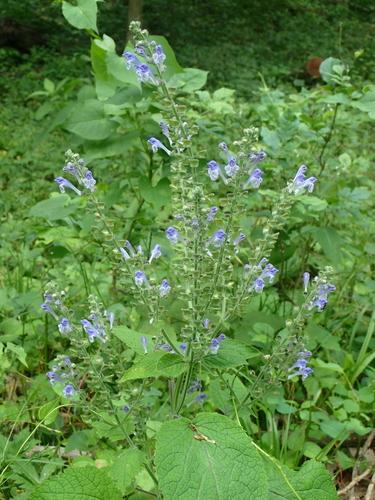
Scutellaria ovata is an upright perennial in the mint family, growing 1-2 feet (30-60 cm) tall and 1-1.5 feet (30-45 cm) wide. The square stems carry heart-shaped, toothed leaves on long stalks, often with a gray, downy coating. From early to midsummer it produces two-lipped, blue-violet flowers about 0.75-1 inch (2-2.5 cm) long in terminal clusters, each flower with a small ridge, or skullcap, on the calyx. The species is native to dry woods, rocky slopes, glades, and bluffs across the central and southeastern United States. It grows in part shade and well-drained soil and tolerates dry, rocky ground better than most woodland mints. The leaves often take on a grayish, sometimes purple-tinged cast in lean soil. It spreads slowly by rhizomes to form modest clumps and self-seeds in open ground. The flowers draw bees and other pollinators. Foliage may go dormant in late summer heat and drought. Hardy in USDA zones 5-8.
Native Range
Scutellaria ovata is native to the central and southeastern United States, from Pennsylvania and Iowa south to Texas and Florida. It grows in dry, open woods, on rocky slopes and bluffs, and in limestone glades.Suggested Uses
Used in shade and woodland gardens, rock gardens, and native plant borders on dry soil. Suited to part-shade sites with lean, rocky ground. Spaced 12-18 inches (30-45 cm) apart in groups.How to Identify
Appearance
Size & Dimensions
Height1' - 2'
Width/Spread1' - 1'6"
Colors
Bloom Information
Detailed Descriptions
Foliage Description
Gray-greenGrowing Conditions
Sun Requirements
Requires 2-6 hours of direct sunlight daily
• Full Sun: 6+ hours of direct sunlight
• Partial Shade: 3-6 hours of direct sunlight
• Full Shade: Less than 3 hours of direct sunlight
Care & Maintenance
Care Guide
Grow in part shade in well-drained soil; the plant tolerates dry, rocky, and alkaline ground. Water during establishment, after which it withstands short dry spells. Rich, wet soil shortens its life and causes flopping. It spreads slowly by rhizomes and can be divided in spring. Foliage may go summer-dormant in heat, returning with cooler, moister weather. No fertilizer is needed in average soil.Pruning
Cut stems back after bloom to tidy the plant and limit self-seeding. Remove dead foliage in late fall or early spring. Shear lightly if plants flop in shade.Pruning Schedule
Prune: July & November
summerfall
Container Growing
Suitable for container growing
Minimum container size: 2 gallons