Scutellaria, Genus, spp., Multiple species,
- Genus
- Multiple species
skullcaps
Nearly cosmopolitan; temperate and tropical regions worldwide
Overview
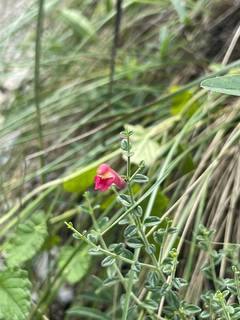
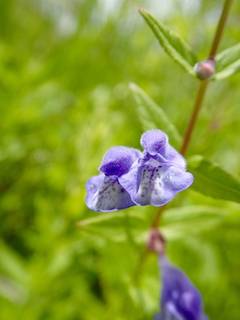
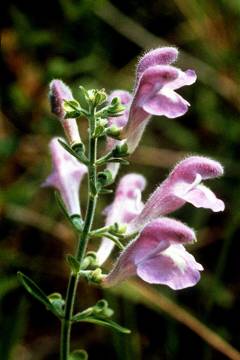
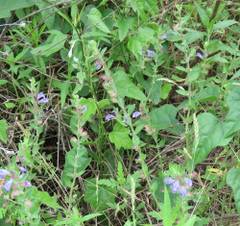
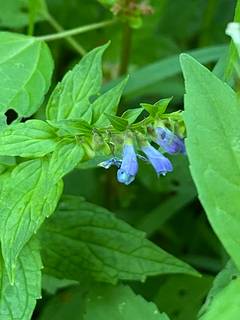
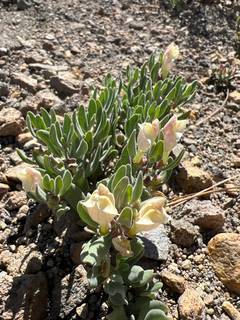
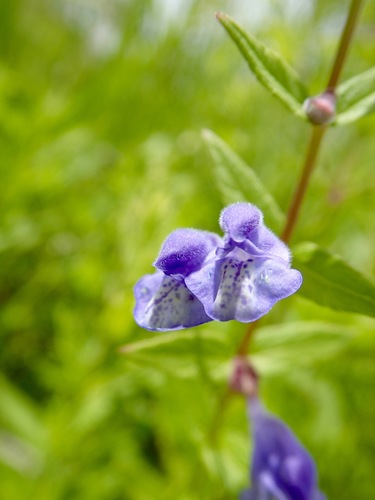
Scutellaria is a genus of roughly 470 species in the mint family (Lamiaceae), spread across temperate and tropical regions on every continent except Antarctica. Most are herbaceous perennials, with some annuals and a few woody-based subshrubs. Like other mints, plants carry square stems and paired opposite leaves, but the genus is set apart by its calyx: the upper lip bears a raised crest or pouch that caps the seed cup, the feature behind the common name skullcap. Plants range from 4 in to 4 ft (10 cm to 1.2 m) tall, forming clumps, spreading mats, or low subshrubs depending on species. The two-lipped tubular flowers, 0.3 to 1.2 in (8 to 30 mm) long, line one side of the stem or cluster in leafy spikes; blue and violet are most frequent, with pink, red, white, and yellow in various species. S. baicalensis and S. lateriflora are grown for traditional herbal use, while S. suffrutescens and S. orientalis are kept as compact rock-garden plants. Bees and other long-tongued insects work the flowers. Many species are short-lived and reseed, and some woodland types spread by rhizomes into wider patches than a small garden allows.
Native Range
The genus is nearly cosmopolitan, native to temperate and tropical regions on every continent except Antarctica. North America, eastern Asia, and the Mediterranean each hold many species.Suggested Uses
Used in borders, meadow and pollinator plantings, and rock gardens, with species matched to the site from damp woodland to dry slope. Compact kinds edge paths and fill troughs, spaced 10-15 in (25-38 cm) apart. The herbal species are grown in physic and teaching gardens.How to Identify
Appearance
Size & Dimensions
Height4" - 4'
Width/Spread8" - 2'
Bloom Information
Most species bloom through summer, roughly June to August, with spring-flowering kinds in milder climates. Flowers open in sequence up the stem over several weeks. Light shearing after the first flush brings a lighter second round in many perennials.
Detailed Descriptions
Flower Description
blue, violet, pink, red, white, and yellowFoliage Description
greenGrowing Conditions
Sun Requirements
Requires 4-8 hours of direct sunlight daily
• Full Sun: 6+ hours of direct sunlight
• Partial Shade: 3-6 hours of direct sunlight
• Full Shade: Less than 3 hours of direct sunlight
Care & Maintenance
Care Guide
Plants grow in full sun to part shade in average, well-drained soil and tolerate lean, rocky ground once established. Even moisture suits woodland species, while dry-slope kinds need sharp drainage and decline in wet winter soil. No rich feeding is needed, as lean conditions keep growth firm and upright. Division in spring renews older clumps and controls rhizomatous spreaders. Plants carry few serious pests, though powdery mildew can mark the foliage in humid, crowded plantings. Cutting back after bloom limits self-sowing where it is unwanted.Pruning
Shearing spent flowering stems by about one-third after the main flush tidies the clump and prompts rebloom. Herbaceous types are cut to the ground in late autumn or early spring. Lifting and dividing every few years keeps rhizomatous species in bounds.Container Growing
Suitable for container growing
Minimum container size: 2 gallons