Scilla, Genus, siberica, Species,
- Genus & species
Siberian squill
Southwestern Russia, the Caucasus, and Turkey (meadows, scrub, and open woodlands); epithet siberica is a historical misnomer
Overview
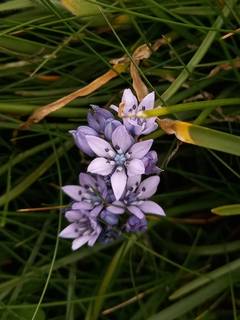
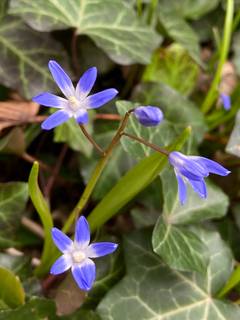
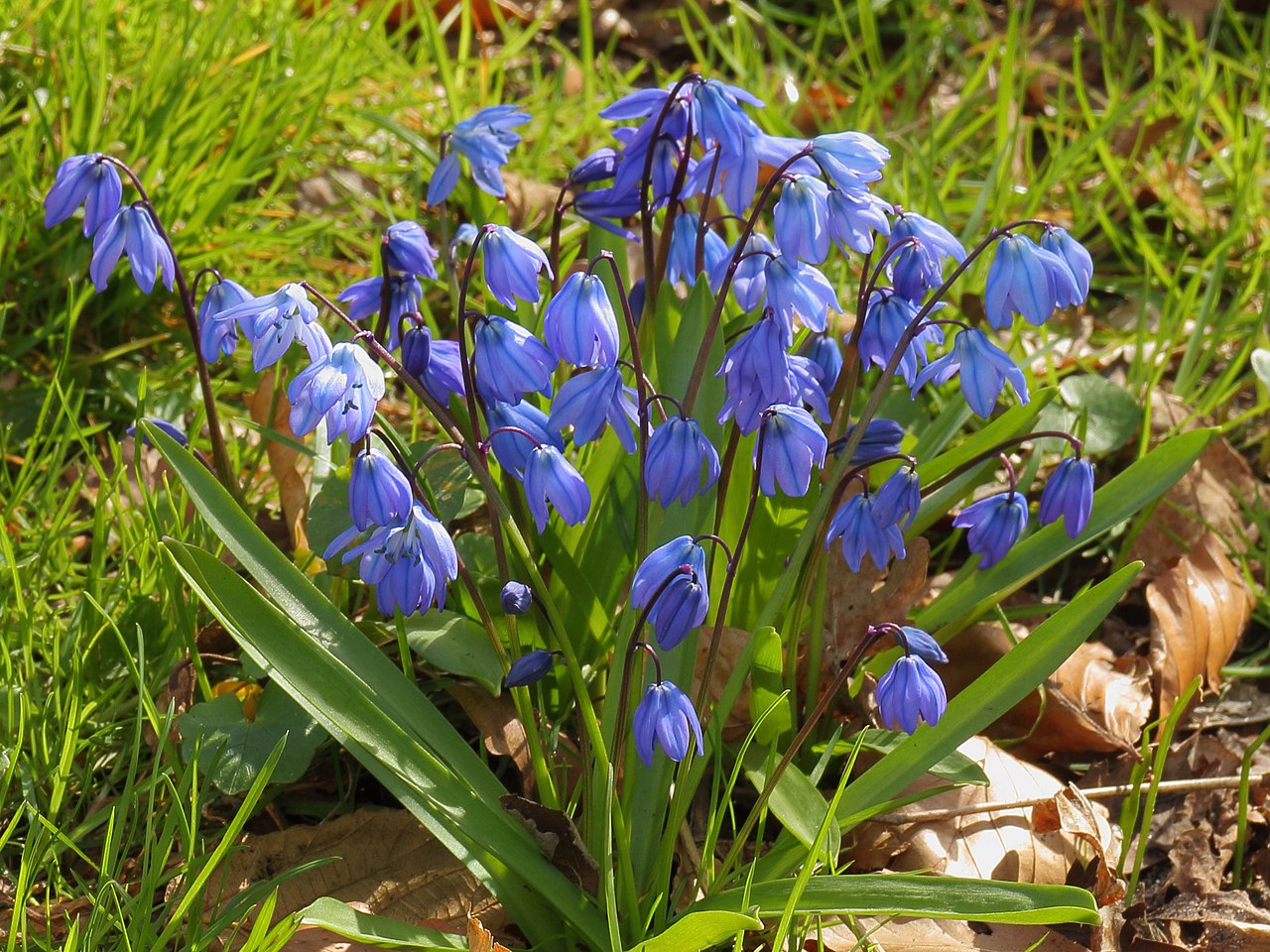
Scilla siberica is a bulbous perennial reaching 4–6 inches (10–15 cm) tall and 3–4 inches (8–10 cm) wide per bulb, forming dense colonies over time by self-seeding and bulb offsets. Despite the epithet siberica, the species is native to southwestern Russia, the Caucasus, and Turkey, not to Siberia. Leaves are 2–4 strap-shaped glossy dark-green basal blades 0.5 inch (1 cm) wide that emerge in late winter. Nodding bell-shaped gentian-blue flowers 0.5–0.75 inch (1–2 cm) long appear 1–3 per stem in March and April; the blue tone is more saturated than the pale sky-blue of Chionodoxa forbesii and deeper than the lavender-blue of Muscari armeniacum, a color difference visible in side-by-side plantings. The species is a spring ephemeral — foliage dies back fully by late May. Growth rate is moderate. Hardy in USDA zones 2–8. Self-sowing is prolific and establishes naturalized colonies in lawns, meadows, and under deciduous trees within a few years. The species is listed as invasive in several northeastern US states; sites where spread must be contained are outside the species' adapted use. All parts are toxic to humans and pets.
Native Range
Scilla siberica is native to southwestern Russia, the Caucasus, and Turkey, in meadows, scrub, and open woodlands. The epithet siberica is a historical misnomer — the species does not grow naturally in Siberia.Suggested Uses
Naturalized in lawns, under deciduous trees, in woodland gardens, or in meadow plantings at 3–4 inch (8–10 cm) spacing in drifts of 25–50 or more bulbs in USDA zones 2–8. The early spring bloom window and saturated blue flowers combine with Galanthus and Crocus for an early-spring sequence beneath deciduous canopy. Extreme cold hardiness to zone 2 extends the species' range well beyond most bulb options. Sites where spread must be contained, positions requiring early spring mowing, and regions where the species appears on state invasive lists are outside the species' adapted use.How to Identify
Appearance
Size & Dimensions
Height4" - 6"
Width/Spread3" - 4"
Bloom Information
Produces 1–3 nodding bell-shaped gentian-blue flowers 0.5–0.75 inch (1–2 cm) long per stem from March through April. Bloom duration 3 weeks. The saturated blue tone is visibly deeper than Chionodoxa or Muscari in the same spring window. Foliage dies back fully by late May (spring ephemeral).
Detailed Descriptions
Flower Description
Saturated gentian-blue (deeper than Chionodoxa or Muscari in the same spring window); nodding bell-shaped 0.5–0.75 inch (1–2 cm); 1–3 per stem; March–AprilFoliage Description
Glossy dark green; strap-shaped 0.5 inch (1 cm) wide; basal; spring ephemeral — dies back by late MayGrowing Conditions
Sun Requirements
Requires 3-8 hours of direct sunlight daily
• Full Sun: 6+ hours of direct sunlight
• Partial Shade: 3-6 hours of direct sunlight
• Full Shade: Less than 3 hours of direct sunlight
Care & Maintenance
Care Guide
Plant bulbs 3–4 inches (8–10 cm) deep in autumn in partial shade to full sun in average, well-drained loam, sandy, or clay soil at pH 6.0–7.5. Hardy in USDA zones 2–8. The species naturalizes readily under deciduous trees, taking advantage of the sunlit window before canopy leaf-out and tolerating the shade that follows. Mowing should be delayed until foliage yellows in late May to allow bulb replenishment. Self-sowing is prolific; sites where spread must be contained require deadheading before seed-set, and the species is listed as invasive in several northeastern US states.Pruning
No pruning is used. Foliage yellows and dies back on its own in late May; premature removal starves bulbs for the next season. Self-sown seedlings can be thinned where density becomes problematic.Container Growing
Suitable for container growing
Minimum container size: 1 gallons