Scilla, Genus, forbesii, Species,
- Genus & species
Forbes' glory-of-the-snow
Overview
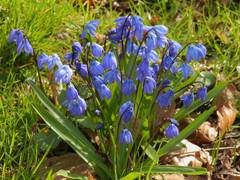
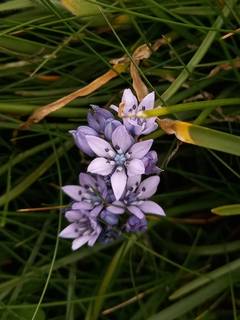
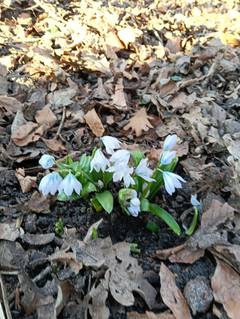
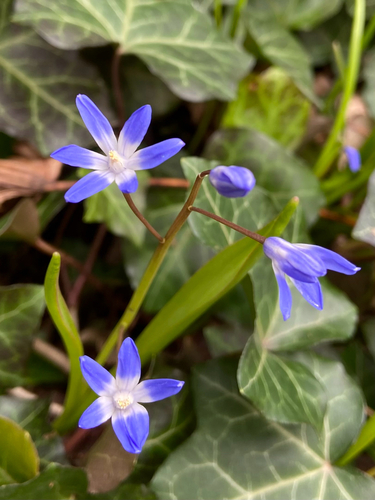
Scilla forbesii is a small bulbous perennial that flowers in very early spring, often as snow recedes. Each bulb sends up two strap-shaped basal leaves 8-15 cm (3-6 in) long and a flowering stem 10-20 cm (4-8 in) tall carrying four to twelve star-shaped flowers. The flowers are 2-3 cm (0.8-1.2 in) across, clear blue with a white centre, and face outward and upward on the stem. Formerly placed in the genus Chionodoxa, it differs from true Scilla in having the stamen filaments flattened and joined at the base into a small central cup. The bulbs multiply by offsets and the plant also self-seeds freely, so a few bulbs spread into broad drifts over several years. After flowering the foliage yellows and dies down by early summer, leaving the ground bare until the following spring. Its short stature means it is lost among taller plants unless grown at the front of a bed or in turf.
Native Range
Scilla forbesii is native to western Turkey, where it grows on hillsides and in open woodland that is moist in spring and dry in summer. It is widely planted elsewhere and naturalizes readily in cool-temperate gardens.How to Identify
Appearance
Size & Dimensions
Height4" - 8"
Width/Spread2" - 4"
Bloom Information
Detailed Descriptions
Flower Description
blue with white centreFoliage Description
mid-greenGrowing Conditions
Sun Requirements
Requires 4-8 hours of direct sunlight daily
• Full Sun: 6+ hours of direct sunlight
• Partial Shade: 3-6 hours of direct sunlight
• Full Shade: Less than 3 hours of direct sunlight
Care & Maintenance
Care Guide
Scilla forbesii grows in full sun to light shade on free-draining soil that stays moist in spring. Bulbs are planted 8-10 cm (3-4 in) deep in autumn and need no lifting, returning each year. Soil pH from about 6.0 to 7.5 suits it. The plant tolerates soil that dries in summer once the foliage has died back. It needs no feeding in fertile ground and is left undisturbed to multiply. Self-sown seedlings can be moved while dormant if drifts spread too far.Pruning
Faded foliage is left to die down naturally so the bulb can rebuild for the next season. Spent flower stems can be removed where self-seeding is not wanted. No other pruning is required.Container Growing
Suitable for container growing
Minimum container size: 1 gallons