Sanguisorba, Genus, minor, Species,
- Genus & species
salad burnet
Overview
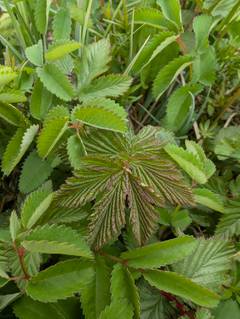
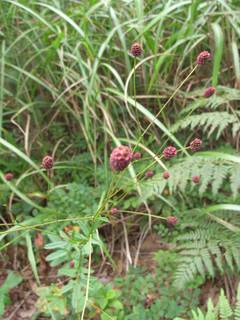
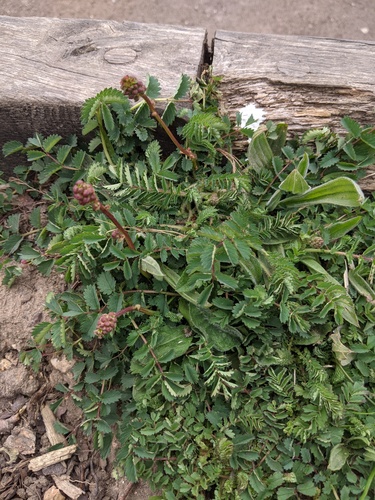
Sanguisorba minor is a clump-forming herbaceous perennial in the rose family, growing 8-24 inches (20-60 cm) tall with a basal rosette of pinnate leaves. Each leaf carries 4 to 12 pairs of small, rounded, deeply toothed leaflets 0.3-0.8 inch (8-20 mm) long; the young leaves smell of cucumber when crushed and are used in salads and drinks. In late spring and early summer, wiry, branching stems rise above the foliage and end in dense, rounded to oval flower heads 0.3-0.5 inch (8-12 mm) long. The heads are petalless: the upper flowers are female with feathery red stigmas, the lower ones male with dangling yellow stamens, and the middle bisexual, giving the head a greenish flush topped with red. The foliage stays green into winter in mild areas. The plant tolerates drought, poor soil, and lime, growing on dry grassland, chalk downs, and rocky banks. It self-sows where soil is open and is short-lived but renews itself from seed. Hot, wet, heavy soils shorten its life.
Native Range
Native to Europe, North Africa, and western Asia, where it grows on dry, calcareous grassland, chalk downs, rocky slopes, and roadsides. It has naturalised in North America and other temperate regions.Suggested Uses
Grown in herb gardens, dry borders, gravel gardens, and wildflower meadows, and used as a salad and cocktail herb for its cucumber-flavoured leaves. It suits xeric and pollinator plantings on poor, alkaline soils. The low evergreen rosette also works as an edging or groundcover in dry sites.How to Identify
Appearance
Size & Dimensions
Height8" - 2'
Width/Spread8" - 1'6"
Bloom Information
Detailed Descriptions
Foliage Description
greenGrowing Conditions
Sun Requirements
Requires 4-10 hours of direct sunlight daily
• Full Sun: 6+ hours of direct sunlight
• Partial Shade: 3-6 hours of direct sunlight
• Full Shade: Less than 3 hours of direct sunlight
Care & Maintenance
Care Guide
Performs in full sun to light shade on free-draining, neutral to alkaline soil at a pH from 6.0 to 8.0, including dry, stony, and chalky ground. Once established it tolerates drought and poor soil and needs little water. It is hardy in zones 4 to 8 and holds much of its foliage through mild winters. The plant self-sows where the ground is open, so seedlings may appear nearby. Cutting back after flowering keeps the leaves tender for kitchen use and prevents heavy self-seeding. Rich, wet soils shorten its life and produce floppy growth.Pruning
Little pruning is needed. Cutting back flowering stems keeps a supply of fresh, tender leaves and limits self-sowing. Old or tattered foliage can be trimmed away in late winter to make room for new spring growth.Container Growing
Suitable for container growing
Minimum container size: 2 gallons