Salicornia, Genus, spp., Multiple species,
- Genus
- Multiple species
pickleweeds
Coastal and inland salt marshes across the Northern Hemisphere, including North America, Europe, and Asia
Overview
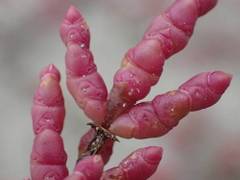
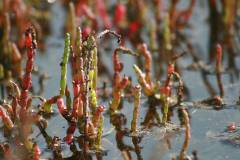
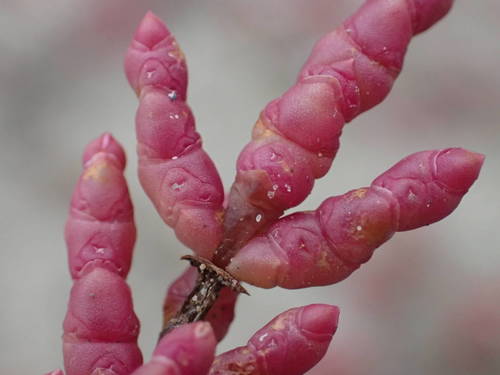
Salicornia is a genus of about 25 to 30 species of succulent annual herbs in the amaranth family (Amaranthaceae), the pickleweeds or glassworts, found in salt marshes and coastal flats across much of the world. Plants form jointed, fleshy, almost leafless stems 6 to 18 in (15 to 45 cm) tall, the leaves reduced to tiny scales at each swollen node, giving a segmented, candelabra-like outline. The stems are bright green through the growing season, and many species flush red or pink in autumn as they die. Flowers are minute and petalless, sunk in threes into the stem joints, pollinated by wind, and followed by tiny seeds. Salicornia is a halophyte, taking up salt water that would kill most plants and storing water in its swollen tissue, which gives the stems a salty, crisp taste used in cooking under names such as samphire and sea bean. The genus grows on tidal mudflats, salt pans, and inland saline soils, often in dense stands that turn coastal marshes red in fall. As annuals the plants complete their cycle in one season and return from seed the following year.
Native Range
Salicornia grows in salt marshes, tidal flats, and inland saline soils across the Northern Hemisphere, including the coasts of North America, Europe, and Asia, with related species on southern continents. Several species are native to both the Atlantic and Pacific coasts of North America.Suggested Uses
Salicornia is grown and foraged as the edible vegetable samphire or sea bean, with the young succulent stems eaten raw or cooked. In coastal and naturalistic plantings it is used to vegetate saline and tidal ground where other plants fail, and it has a role in stabilizing salt-marsh sediment. The reddening autumn stands also add seasonal color to coastal landscapes.How to Identify
Appearance
Size & Dimensions
Height6" - 1'6"
Width/Spread4" - 1'
Bloom Information
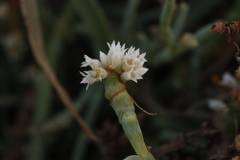
Flowering occurs in late summer and early autumn, roughly August to October, but is easily missed. The flowers are minute, green, and petalless, set in groups of three in hollows along the upper stem joints. Pollination is by wind, and the seeds ripen as the stems redden and die.
Detailed Descriptions
Flower Description
minute, greenish, sunk in the stem jointsFoliage Description
green turning redGrowing Conditions
Sun Requirements
Requires 6-10 hours of direct sunlight daily
• Full Sun: 6+ hours of direct sunlight
• Partial Shade: 3-6 hours of direct sunlight
• Full Shade: Less than 3 hours of direct sunlight
Water & Climate
Water Needs
Care & Maintenance
Care Guide
Salicornia grows in full sun on wet, saline soils, including tidal mud, salt pans, and brackish ground that few other plants tolerate. It needs constant moisture and salt in the root zone and does not persist in ordinary garden soil without added salt. The genus tolerates a soil pH from about 6.5 to 8.5 and flooding by tides or standing brackish water. Seed is sown directly onto bare saline mud in spring, and the plants grow quickly through summer. As annuals they set seed and die in autumn, regrowing from the seed bank the next year. Few pests affect the plants, which are eaten mainly by salt-marsh birds and foragers.Pruning
No pruning is needed for these annual plants. Harvesting the tender stem tips in late spring and summer brings on branching and a longer picking season where the plants are grown as samphire. The stems are left to set seed in autumn to maintain the stand.Toxicity
Non-toxicPlanting Guide
Planting Methods & Timing
Planting Method
direct sow
Direct Sow Timing
spring, onto bare saline mud
Days to Maturity
60–90 days
Plant Spacing
4 inches