Cycas, Genus, revoluta, Species,
- Genus & species
sago palm
Southern Japan (Kyushu, Ryukyu Islands)
Overview
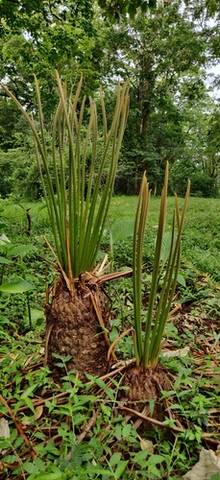
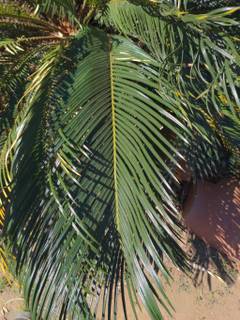
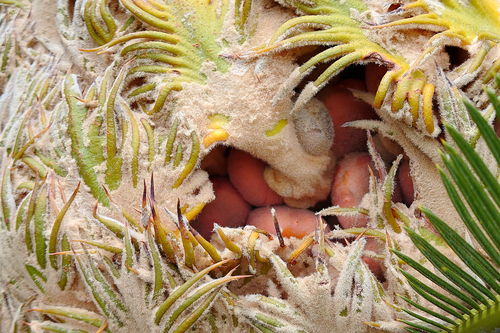
Cycas revoluta is the sago palm (king sago), growing 36-120 inches (90-300 cm) tall and 36-96 inches (90-240 cm) wide. Not a true palm — a cycad, an ancient seed plant lineage (predating dinosaurs, with fossils dating to the Permian period, 280 million years ago). More closely related to conifers and ginkgo than to palms. Dark green glossy stiff pinnate fronds 24-60 inches (60-150 cm) in a symmetrical rosette on a thick rough-textured trunk 6-12 inches (15-30 cm) in diameter. Extremely slow-growing: the trunk increases by approximately 1 inch (2.5 cm) per year — a 36-inch (90 cm) specimen is 30+ years old. Produces one flush of new fronds per year in spring, all emerging simultaneously from the center of the rosette. Dioecious: separate male (produces an upright cone 12-24 inches / 30-60 cm) and female (produces a rosette of megasporophylls with orange-red seeds) plants. All parts are highly toxic — cycasin, a carcinogenic glycoside, causes acute liver failure in dogs; ingestion of even 1-2 seeds is frequently fatal to dogs. Toxic to cats and humans. Native to southern Japan (Kyushu and the Ryukyu Islands). Hardy to 15°F (-9°C) when mature. Drought-tolerant once established. Scale insects (Asian cycad scale, Aulacaspis yasumatsui, can kill the plant). Full sun to partial shade. Growth rate is extremely slow. Containers of 5+ gallons (20+ liters). Long-lived: 100+ years. Zones 8-11.
Native Range
Native to southern Japan (Kyushu and the Ryukyu Islands), growing on rocky coastal slopes and in open forests.Suggested Uses
Grown in the ground in zones 8-11 or in containers of 5+ gallons (20+ liters). Full sun to partial shade. The symmetrical rosette and thick trunk are the display features. All parts highly toxic to dogs (frequently fatal). Long-lived (100+ years). Deer-resistant.How to Identify
Appearance
Size & Dimensions
Height3' - 10'
Width/Spread3' - 8'
Bloom Information
Cycads do not produce flowers. Male plants produce an upright cone 12-24 inches (30-60 cm) in summer. Female plants produce a rosette of megasporophylls with orange-red seeds. One new frond flush per year in spring.
Detailed Descriptions
Flower Description
Not a flowering plant; reproduces by cones (male) and megasporophylls (female)Foliage Description
Dark green, glossy, stiff pinnate fronds with narrow leafletsGrowing Conditions
Sun Requirements
Requires 4-10 hours of direct sunlight daily
• Full Sun: 6+ hours of direct sunlight
• Partial Shade: 3-6 hours of direct sunlight
• Full Shade: Less than 3 hours of direct sunlight
Care & Maintenance
Care Guide
Full sun to partial shade. Drought-tolerant once established. Extremely slow-growing (1 inch / 2.5 cm trunk per year). Hardy to 15°F (-9°C) mature. Asian cycad scale — can be lethal if untreated. All parts highly toxic — cycasin causes fatal liver failure in dogs. Toxic to cats and humans. Deer-resistant. Zones 8-11.Pruning
Yellowed or browned lower fronds are removed by cutting at the trunk. Green fronds are left in place — the slow growth rate means each frond represents years of energy investment. One new frond flush per year.Container Growing
Suitable for container growing
Minimum container size: 5 gallons