Cycas, Genus, spp., Multiple species,
- Genus
- Multiple species
cycads
Old World tropics and subtropics (Africa, Madagascar, Asia, Australia, Pacific)
Overview
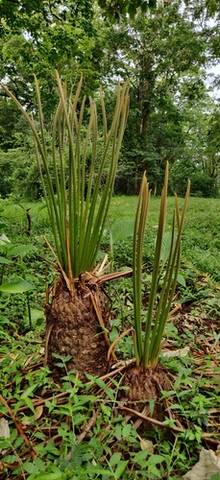
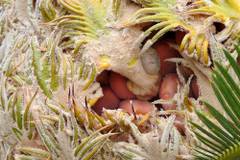
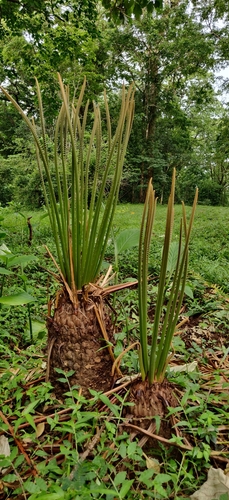
Cycas is a genus of about 115 evergreen, palm-like gymnosperms in the family Cycadaceae, the only genus of its family, native to the Old World tropics and subtropics. Despite the palm-like look, cycads are not palms; they are ancient cone-bearing plants more closely related to conifers. Plants have a stout, usually unbranched trunk topped by a crown of stiff, pinnate leaves 1.5-10 feet (0.5-3 m) long, with narrow leaflets that uncoil like ferns when new. Trunks range from underground stems to columns 6-40 feet (2-12 m) tall over many decades, as growth is slow. The genus is dioecious, with separate male and female plants; males form pollen cones, while females bear loose crowns of seed-bearing leaves rather than a closed cone. Seeds are large and often red or orange. Cycas is native to East Africa, Madagascar, Asia, Australia, and the western Pacific, growing in forest, scrub, and rocky slopes. C. revoluta, the sago palm, is widely grown as a container and landscape plant. All parts, especially the seeds, contain cycasin and are highly toxic to people and pets, and several species are threatened in the wild.
Native Range
Cycas is native to the Old World tropics and subtropics, including East Africa, Madagascar, southern and eastern Asia, Australia, and the islands of the western Pacific. Plants grow in tropical forest, open woodland, savanna, and rocky coastal slopes. The genus reaches its greatest diversity in Southeast Asia and Australia.Suggested Uses
Grown as a slow-growing specimen and accent in tropical and subtropical gardens, and as a container and houseplant elsewhere. C. revoluta is used in formal plantings, courtyards, and bonsai. The genus suits warm, well-drained sites with room for the spreading crown.How to Identify
Appearance
Size & Dimensions
Height1'6" - 40'
Width/Spread3' - 12'
Bloom Information
Cycads do not flower; they reproduce by cones and cone-like structures. Male plants produce an upright pollen cone, generally in spring or early summer, while female plants form a loose crown of furry seed-bearing leaves. Plants take many years to reach reproductive age and may cone only every few years.
Detailed Descriptions
Foliage Description
dark greenGrowing Conditions
Sun Requirements
Requires 4-10 hours of direct sunlight daily
• Full Sun: 6+ hours of direct sunlight
• Partial Shade: 3-6 hours of direct sunlight
• Full Shade: Less than 3 hours of direct sunlight
Care & Maintenance
Care Guide
Cycas species grow in full sun to partial shade in sandy, well-drained soil with a pH near 6.0-7.5. The genus tolerates heat and drought once established but grows slowly, adding only one flush of leaves a year or less. Plants need warmth, and most are damaged below about 15-25F (-9 to -4C), though C. revoluta tolerates brief light frost. Overwatering and heavy, wet soil cause root and trunk rot. As container plants they need bright light and infrequent, thorough watering. Hardy outdoors only in USDA zones 9-11, cycads are grown indoors or under glass in colder regions.Pruning
Pruning is limited to clearing old, yellowed, or damaged leaves close to the trunk once a new flush has hardened. Removing too many green leaves weakens the plant, as each crown supports the next flush. Offsets at the base can be detached to propagate new plants.Container Growing
Suitable for container growing
Minimum container size: 5 gallons