Sagina, Genus, subulata, Species, 'Aurea', Cultivar,
- Genus & species
- Cultivar
golden Irish moss
Garden selection from the species Sagina subulata, which is native to western and southern Europe — Spain, Portugal, France, the British Isles — on rocky alpine and subalpine slopes, sandy heaths, and coastal cliffs.
Overview
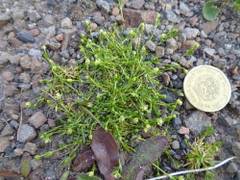
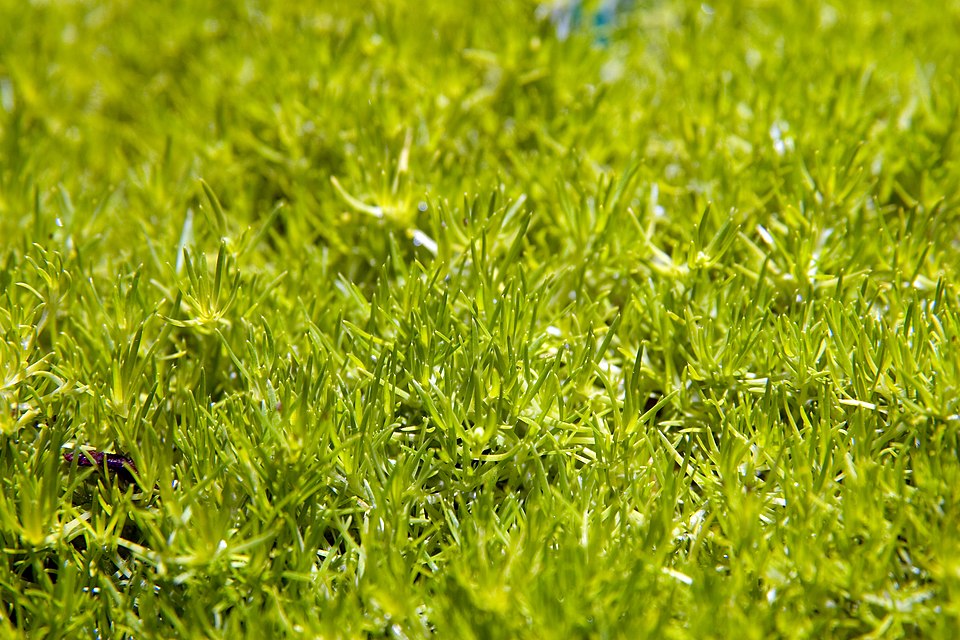
Sagina subulata Aurea is the golden-foliage cultivar of Irish moss (also called Scotch moss). The common name 'Irish moss' is a botanical-naming misnomer because the species is not a true moss at all — it is a flowering plant in the pink and carnation family (Caryophyllaceae) that grows as an ultra-low evergreen mat resembling true moss in surface texture but reproducing by flowers and seeds rather than the spores that true mosses (division Bryophyta) use. Plants form a dense mat just 1-2 inches (2.5-5 cm) tall and 10-15 inches (25-38 cm) wide, with the small individual size making the species suited only to small-scale planting positions. Bright chartreuse to golden-yellow tiny needle-like awl-shaped leaves arranged densely along prostrate creeping stems give the cultivar its principal ornamental feature: a living golden carpet across the planting area that holds visual interest 12 months of the year. Tiny white star-shaped five-petaled flowers 0.25 inch (6 mm) across are sprinkled across the golden surface from May through June across a 3-week active flowering window, but the flowers are individually inconspicuous and the foliage carries the principal ornamental display. The golden color saturation is most vivid in partial shade with morning sun and afternoon shade: in full direct sun, the leaf tips can scorch to brown in hot summer weather, and in deep shade, the color greens toward chartreuse and loses some of the saturation that the cultivar was selected for. Consistent moisture is the principal cultivation requirement: the moss-like mat desiccates quickly in dry conditions because the surface-area-to-root-volume ratio is high, and the mat browns irreversibly if allowed to dry out beyond a brief period. The cultivar is not tolerant of foot traffic — the mat is fragile and the prostrate stems crush easily under repeated stepping, with damaged areas browning and dying back rather than recovering. The cultivar's principal landscape application is filling crevices between stepping stones and flagstones, where the mat reads at viewing distance as living golden mortar between the dark stones and produces a substantial visual upgrade over plain mortar or bare crevices. In hot humid climates of zones 7 and warmer, the mat may thin or die back during the heat of midsummer, and the cultivar performs reliably only in cool maritime climates (the Pacific Northwest coastal range, coastal New England, the British Isles, the maritime Pacific coastline) where the summer climate matches the cultivar's western European native-range physiology. Deer avoid the tiny foliage because the small leaf size makes the species an inefficient browse target rather than because of any chemical defense.
Native Range
Sagina subulata Aurea is a garden cultivar selected from the species Sagina subulata, which is native to western and southern Europe with a range concentrated in the British Isles, the Iberian Peninsula (Spain and Portugal), western and southern France, and the western Mediterranean coastline. The species occurs on rocky alpine and subalpine slopes, sandy heaths, coastal cliffs, and well-drained gravelly substrates across the native range, with the species' physiological preference for moderately moist well-drained substrate and cool-summer maritime climate reflecting the western European native-range conditions. The Aurea cultivar was selected for the bright chartreuse-to-golden-yellow foliage color that distinguishes the cultivar from the species' wild-type green foliage; the cultivar's golden coloration is a stable cultivar trait that breeds true through vegetative propagation.Suggested Uses
Used between stepping stones and flagstones, in crevice gardens, in fairy gardens, in miniature landscape plantings, and as an ultra-small-scale ground cover in shaded moist planting positions where the small mat size suits the planting scale. The golden mat reads at viewing distance as living golden mortar between dark stones and produces a substantial visual upgrade over plain mortar or bare crevices. Container culture in shallow alpine pans, dish gardens, and miniature-landscape containers works for the small root volume and the small visual scale. The cultivar is not suited to foot traffic, hot dry summer climates, or any substantial planting-scale where the small mat size would be visually lost; the cultivar pairs with other small-scale companions (Saxifraga, dwarf Sedum cultivars, miniature Hosta) for coordinated small-scale shade-garden plantings.How to Identify
Appearance
Size & Dimensions
Height1" - 2"
Width/Spread10" - 1'3"
Colors
Bloom Information
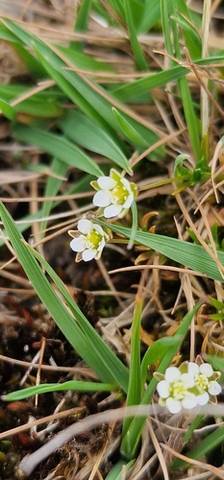
Tiny white five-petaled star-shaped flowers 0.25 inch (6 mm) across open in scattered placement across the golden mat surface from May through June across a 3-week active flowering window. The flowers are individually inconspicuous and the foliage carries the cultivar's principal ornamental display 12 months of the year, with the brief spring flower display adding a secondary scattered-stars accent to the gold mat. Pollination is by small flies and other small insect pollinators that work the open small flowers, and seed set produces self-sown seedlings that may extend the colony across multiple seasons in suitable substrate.
Detailed Descriptions
Flower Description
Tiny white five-petaled star-shaped flowers 0.25 inch (6 mm) across sprinkled across the golden mat surface in spring, with the flowers being secondary to the year-round foliage display and producing a delicate scattered-stars effect against the chartreuse-gold matFoliage Description
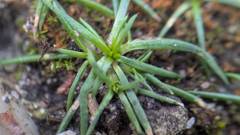
Bright chartreuse to golden-yellow; tiny needle-like awl-shaped leaves arranged densely along prostrate creeping stems, producing a moss-like surface texture across the planting position despite the species being a true flowering plant rather than a true moss; the species name 'subulata' is Latin for awl-shaped and references the leaf formGrowing Conditions
Sun Requirements
Requires 3-6 hours of direct sunlight daily
• Full Sun: 6+ hours of direct sunlight
• Partial Shade: 3-6 hours of direct sunlight
• Full Shade: Less than 3 hours of direct sunlight
Care & Maintenance
Care Guide
Plant in partial shade with morning sun and afternoon shade — the partial-shade exposure gives the strongest golden color saturation and avoids the leaf-tip scorch that develops in hot afternoon sun. Moist well-drained organic soil at pH 5.5-7.0 supports the cultivar; consistent moisture is the principal cultivation requirement because the moss-like mat has a high surface-area-to-root-volume ratio and desiccates quickly in dry conditions, with the mat browning irreversibly if allowed to dry out for an extended period. Watering is regular through dry spells and through the heat of midsummer, with the irrigation timed to keep the substrate consistently moist rather than alternating wet-and-dry. The cultivar is not tolerant of full sun in hot summer climates, of dry substrate, of heavy foot traffic, or of poorly drained wet-bottom positions. The cultivar performs reliably only in cool maritime climates of zones 4-7 with moderate summers; in zones 7 and warmer with hot humid summers, the cultivar may thin or die back during the heat and is grown as a short-lived seasonal feature rather than a long-lived permanent planting. No fertilization is needed and excessive fertility can produce loose growth that breaks down the moss-like mat texture.Pruning
No pruning is needed. The ultra-low mat maintains itself at ground level and the small leaf size means no deadheading or seasonal cleanup is practical. Remove any browned or desiccated patches as they develop because browned areas do not recover and need to be replaced with new plantings if the gardener wants the mat continuity restored.Container Growing
Suitable for container growing
Minimum container size: 1 gallons