Sabal, Genus, palmetto, Species,
- Genus & species
cabbage palmetto
Southeastern United States, Bahamas, Cuba
Overview
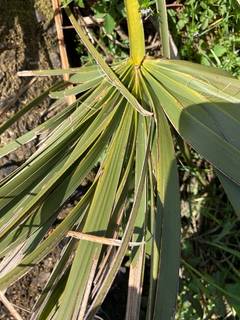
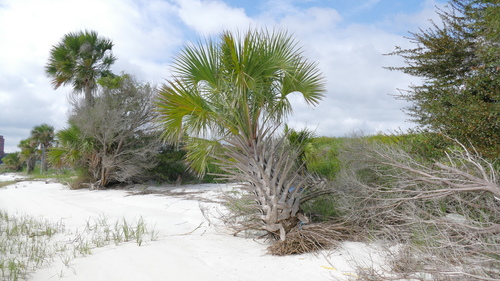
Sabal palmetto is an evergreen fan palm reaching 30-65 feet (9-20 m) tall with a single unbranched trunk 12-24 inches (30-60 cm) thick, often holding a crisscross pattern of old leaf bases when young and smoothing with age. The crown carries 20-40 costapalmate leaves, each a fan 4-6 feet (1.2-1.8 m) wide on a stalk 3-6 feet (0.9-1.8 m) long, with the blade arching and the segments split and threaded with curling fibers. Leaf color is yellow-green to blue-green. Branched flower clusters 4-8 feet (1.2-2.4 m) long carry many small fragrant white flowers in early summer, followed by round black drupes about 0.5 inch (12 mm) wide in fall. Growth is slow, a few inches of trunk per year once established. The palm tolerates salt spray, wind, brief flooding, and short freezes. Transplanted palms shed their roots and regrow a new set, so establishment is slow.
Native Range
Native to the southeastern United States along the coastal plain from North Carolina to Florida and west to the Gulf Coast, and into the Bahamas and Cuba. It grows in coastal hammocks, dunes, pine flatwoods, and the edges of marshes, tolerating salt and seasonal flooding.Suggested Uses
Planted as a street and avenue tree, in coastal and beachfront landscapes, and in groups or rows, spaced 6-10 feet (1.8-3 m) apart. It withstands salt and hurricane wind better than many trees. Single specimens anchor lawns and entries.How to Identify
Appearance
Size & Dimensions
Height30' - 65'
Width/Spread10' - 15'
Bloom Information
Detailed Descriptions
Foliage Description
yellow-green to blue-greenGrowing Conditions
Sun Requirements
Requires 4-12 hours of direct sunlight daily
• Full Sun: 6+ hours of direct sunlight
• Partial Shade: 3-6 hours of direct sunlight
• Full Shade: Less than 3 hours of direct sunlight
Care & Maintenance
Care Guide
Grows in full sun to part shade on a wide range of soils, from sand to clay, and tolerates salt, wind, and brief flooding. Water regularly for the first year or two after transplanting, as the palm regrows its entire root system and establishes slowly. Once rooted, it withstands drought and needs little care. Potassium deficiency yellows older leaves on sandy soils. It survives short freezes to about 10 F (-12 C) but is damaged by prolonged hard frost. Old leaf bases are sometimes removed for a smooth trunk.Pruning
Remove only dead, fully brown leaves, cutting them close to the trunk. Cutting green leaves weakens the palm and is avoided. The persistent old leaf bases can be trimmed for a clean trunk once they loosen.Container Growing
Suitable for container growing
Minimum container size: 15 gallons