Sabal, Genus, minor, Species,
- Genus & species
dwarf palmetto
Southeastern United States with a continuous native range from southeastern North Carolina south through coastal South Carolina, Georgia, Florida, Alabama, Mississippi, Louisiana, and east Texas, with the northern range limit reaching into central North Carolina and southern Arkansas; native habitats include floodplain forest, riparian-margin wetlands, mixed hardwood-pine forest understory, and coastal-plain savanna positions with consistent year-round soil moisture and partial-shade exposure beneath broadleaf canopy trees.
Overview
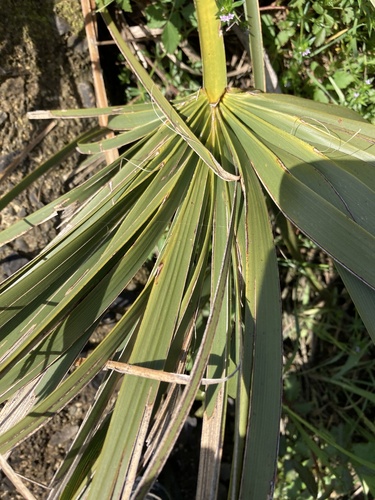
Sabal minor is the dwarf palmetto (also called blue stem palm), an evergreen native palm in the palm family (Arecaceae) growing 36-72 inches (90-180 cm) tall and 48-72 inches (120-180 cm) wide as a mature outdoor specimen. The species is the northernmost native palm species in continental North America with a continuous native range extending from southeastern North Carolina and southern Arkansas south through the southeastern United States to Florida and east Texas — the species' northern range limit reaching into the central North Carolina Piedmont (around 35.5°N latitude) is among the higher-latitude limits of any palm species globally and reflects the species' substantial cold tolerance compared to the broader Arecaceae family. The species' principal physical character is the trunkless growth habit: unlike the related Sabal palmetto (cabbage palm) which develops a substantial single trunk reaching 30-60 feet (900-1800 cm), S. minor produces fronds that emerge directly from the underground rhizome at or near soil level rather than from an elevated trunk, and the trunkless ground-level form supplies a recognizable structural identity that distinguishes the species from most other palm genera. Very old specimens may eventually develop a short trunk 12-24 inches (30-60 cm) tall, but the trunked form is uncommon rather than typical for the species. Each frond is a large fan-shaped (palmate) leaf 24-36 inches (60-90 cm) across with deeply-divided rigid leaflet segments radiating from a central point at the petiole-frond junction, and the leaflet segments are stiffly held in a flat horizontal plane rather than drooping (the drooping leaflet habit being characteristic of Livistona chinensis and other 'fountain palm' species). The blue-green foliage coloration develops most fully in full-sun exposure and shifts toward medium green in deeper-shade positions; the species is among the few palm species that performs reliably across the full range from full-sun direct exposure through full-shade understory conditions, which substantially extends the species' usable garden positions compared to most other palm genera that require either bright direct light or high indirect light. Hardiness extends to USDA zone 7 (approximately 0°F / -18°C minimum winter temperatures), and the species reliably survives winter temperatures that would kill most commercially-grown palm species. Cream to white small fragrant flowers open in long branched inflorescences 24-48 inches (60-120 cm) above the foliage in summer (June-July) across a 3-week active flowering window, and pollinated flowers develop into small black drupe fruits 0.3 inch (8 mm) consumed by birds across the fall-and-winter season. The species adapts to a wide range of substrate types from sand through clay and tolerates both wet and dry soil conditions in the typical floodplain-and-bottomland tolerance pattern of its native range. Growth rate is slow with mature specimens producing only 1-2 new fronds per year, and a mature 6-foot specimen may represent 8-15 years of growth from a young plant. Frost-damaged fronds can be removed at the petiole base and are replaced by new growth from the unaffected underground rhizome over subsequent growing seasons. The species is non-toxic to humans and pets, deer-resistant, and drought-tolerant once established. Mature specimens are difficult to transplant because the underground rhizome system extends substantially deeper than the visible foliage suggests, and gardeners site the species with deliberate consideration of long-term position rather than planning for future relocation.
Native Range
Sabal minor is native to the southeastern United States with a continuous native range from southeastern North Carolina south through coastal South Carolina, Georgia, Florida (statewide), Alabama, Mississippi, Louisiana, and east Texas, with the northern range limit reaching into the central North Carolina Piedmont (around 35.5°N latitude) and southern Arkansas (the Ouachita Mountains and adjacent areas). Native habitats include floodplain forest, riparian-margin wetlands, mixed hardwood-pine forest understory, and coastal-plain savanna positions with consistent year-round soil moisture and partial-shade exposure beneath broadleaf canopy trees. The species is the northernmost native palm species in continental North America and the species'' northern range extension into the central North Carolina Piedmont and southern Arkansas reflects substantial cold tolerance compared to the broader Arecaceae family — most palm species cannot tolerate winter temperatures below 25-30°F (-4 to -1°C) and the species'' tolerance to approximately 0°F (-18°C) is well outside the typical palm-family hardiness range.Suggested Uses
Used as a native palm groundcover, accent specimen, or evergreen understory plant in southeastern United States gardens in zones 7-11, spaced 48-72 inches (120-180 cm) apart for groundcover plantings. The species is among the more versatile palm species in commercial cultivation because the species tolerates the full range of garden light exposures from full direct sun through full shade and adapts to a wide range of substrate types including both wet and dry soil conditions, which substantially extends the species'' usable garden positions compared to most other palm species that require specific cultivation conditions. Use cases include native-plant garden plantings, southeastern-themed landscape compositions, evergreen understory plantings beneath broadleaf canopy trees in shaded woodland-garden positions, and groundcover plantings in zones 7-11 where the year-round evergreen fan-shaped foliage supplies the design contribution. The species is drought-tolerant once established, deer-resistant, non-toxic to humans and pets, and supports native pollinator visitation through the long-stalked summer inflorescences and bird visitation through the late-summer-through-fall drupes. The species pairs with companion southeastern-native and shade-tolerant plantings including Magnolia grandiflora (southern magnolia), Ilex opaca (American holly), Hydrangea quercifolia (oakleaf hydrangea), Asplenium platyneuron (ebony spleenwort fern), and other native woodland-garden species for a multi-species southeastern-native garden composition where the Sabal minor fan-shaped evergreen fronds anchor the year-round structural foliage.How to Identify
Appearance
Size & Dimensions
Height3' - 6'
Width/Spread4' - 6'
Colors
Bloom Information
Cream to white small fragrant flowers open in long branched inflorescences 24-48 inches (60-120 cm) above the foliage in summer (June-July) across a 3-week active flowering window. The inflorescence stalks are unusually long for the species'' overall plant size and extend substantially above the foliage canopy, producing a recognizable summer-flowering display that distinguishes the species from most other commonly cultivated palm genera which rarely flower in indoor or temperate-outdoor cultivation. Pollination is by bees, butterflies, and other small insect pollinators attracted by the floral fragrance and abundant nectar reward. Pollinated flowers develop into small black drupe fruits 0.3 inch (8 mm) following pollination, and the drupes ripen across the late summer through fall season and are consumed by birds (cedar waxwings, robins, mockingbirds, and other fruit-eating bird species) across the fall-and-winter period.
Detailed Descriptions
Flower Description
Cream to white small fragrant flowers in long branched inflorescences (24-48 inches / 60-120 cm long) extending above the foliage in summer; the inflorescence stalks are unusually long for the species'' overall plant size and produce a recognizable summer-flowering display that distinguishes the species from most other commonly cultivated palm genera which rarely flower in cultivationFoliage Description
Blue-green to medium green; large fan-shaped (palmate) fronds 24-36 inches (60-90 cm) across with deeply-divided rigid leaflet segments radiating from a central point at the petiole-frond junction; the leaflet segments are stiffly held in a flat horizontal plane (rather than drooping as in Livistona chinensis), and the blue-green coloration develops most fully in full-sun exposure with the foliage shifting toward medium green in deeper-shade positionsGrowing Conditions
Sun Requirements
Requires 2-10 hours of direct sunlight daily
• Full Sun: 6+ hours of direct sunlight
• Partial Shade: 3-6 hours of direct sunlight
• Full Shade: Less than 3 hours of direct sunlight
Care & Maintenance
Care Guide
Plant in any sun exposure from full direct sun through full shade — the species is among the few palm species that performs reliably across the full range of garden light exposures, and the species can be sited in positions where most other palm species would not survive. Blue-green foliage coloration develops most fully in full-sun exposure and shifts toward medium green in deeper-shade positions, although both color expressions are within the species'' normal range. Adapts to a wide range of substrate types from sand through clay and tolerates both wet and dry soil conditions in the typical floodplain-and-bottomland tolerance pattern of the native range; pH 5.5-7.5 supports the species reliably. Watering is moderate during establishment and minimal once established because the species is drought-tolerant once the rhizome system has developed substantially. Hardy outdoors across zones 7-11 with the species reliably tolerating winter temperatures to approximately 0°F (-18°C), substantially exceeding the cold tolerance of most other commercially-grown palm species. Frost-damaged fronds can be removed at the petiole base and are replaced by new growth from the unaffected underground rhizome over subsequent growing seasons. Growth rate is slow with mature specimens producing only 1-2 new fronds per year, so the species is a long-term planting position rather than a quick-growing landscape filler. Mature specimens are difficult to transplant because the underground rhizome system extends substantially deeper than the visible foliage suggests; gardeners site the species with deliberate consideration of long-term position rather than planning for future relocation. The species is non-toxic to humans and pets, deer-resistant, and supports late-summer pollinator visitation through the long-stalked inflorescences.Pruning
Remove browned, dead, or frost-damaged fronds by cutting at the petiole base near the rhizome. Live green fronds are not removed because each living frond contributes to the plant''s photosynthetic capacity and premature removal of green fronds reduces vigor. The trunkless form does not require any trunk maintenance, and the species does not benefit from active pruning for shape or growth control because the natural clumping rosette form supplies the species'' principal ornamental character without pruning intervention. Spent flower stalks and developing fruit clusters can be left for bird interest or removed for visual neatness depending on the gardener''s preference.Container Growing
Suitable for container growing
Minimum container size: 15 gallons

