Robinia, Genus, spp., Multiple species,
- Genus
- Multiple species
locust trees
Overview
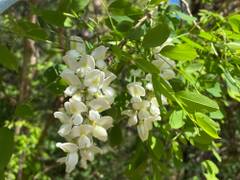
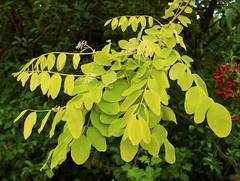
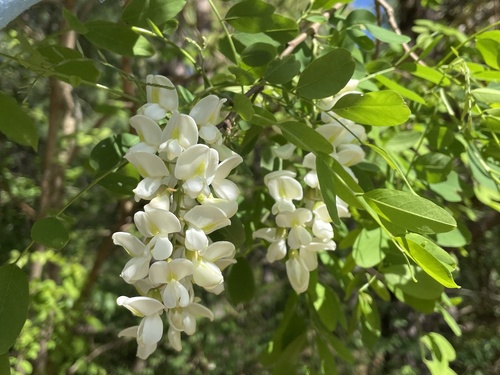
Robinia is a genus of about 10 deciduous trees and shrubs in the pea family, Fabaceae, native to North America and known as locusts. Plants range from suckering shrubs 6-10 feet (1.8-3 m) tall to trees reaching 40-80 feet (12-24 m), with open, irregular crowns. The leaves are pinnately compound with 7-21 oval leaflets, and many species carry paired spines at the leaf bases. In late spring the plants bear hanging clusters of pea-like flowers in white, pink, or rose-purple, often fragrant, followed by flat brown seed pods 2-4 inches (5-10 cm) long. Like other legumes, Robinia fixes nitrogen through root bacteria, which lets it grow on poor, dry, and disturbed soil. The genus is fast-growing and tolerates drought, salt, and pollution, traits that have made R. pseudoacacia a widely planted timber and reclamation tree. The same vigor makes it invasive outside its native range, where it suckers freely and forms thickets. The wood is hard but the branches are brittle and break in storms. All parts, especially the bark and seeds, contain toxic compounds that are poisonous to people and livestock if eaten.
Native Range
Robinia is native to North America, with the natural range centered in the eastern and central United States and extending into Mexico. R. pseudoacacia originated in the Appalachian and Ozark regions but has spread across North America, Europe, and Asia through planting and naturalization.Suggested Uses
Used as a fast-growing shade, timber, and land-reclamation tree, and for stabilizing poor or eroding soil. The flowers are a nectar source for bees, and the wood is used for posts and fuel. Shrubby species such as R. hispida are grown as flowering shrubs on dry banks.How to Identify
Appearance
Size & Dimensions
Height6' - 80'
Width/Spread15' - 40'
Bloom Information
Flowering occurs in late spring, generally May to June, with drooping clusters of pea-like flowers that last about 1-2 weeks. The white-flowered R. pseudoacacia is strongly fragrant and visited heavily by bees. Flowering can be sparse in shade or on very young plants.
Detailed Descriptions
Flower Description
white, pink, or rose-purpleFoliage Description
greenGrowing Conditions
Sun Requirements
Requires 6-10 hours of direct sunlight daily
• Full Sun: 6+ hours of direct sunlight
• Partial Shade: 3-6 hours of direct sunlight
• Full Shade: Less than 3 hours of direct sunlight