Image 1 of 17
1 / 17
Plant Reference
Robinia, Genus, pseudoacacia, Species,
- Genus & species
black locust
Central Appalachian and Ozark regions of eastern North America; widely naturalized and listed as invasive across much of the United States outside its native range and across Europe
Overview
Robinia pseudoacacia is a large upright deciduous tree in the family Fabaceae reaching 40–70 feet (12–21 m) tall and 25–35 feet (7.5–10.5 m) wide with an open irregular crown and a single trunk or several trunks from the base on suckering colonies. Leaves are alternate, pinnately compound, 8–14 inches (20–36 cm) long, and carry 7–19 oval leaflets each 1–2 inches (2.5–5 cm) long; the foliage is late to emerge in spring, typically not until early to mid-May, and turns yellow in fall and drops early, often weeks before other deciduous trees in the same landscape. Paired stipular thorns 0.5–1 inch (1.3–2.5 cm) long develop at each leaf node on young growth and on sprouts and sucker shoots, and the thorns persist on the smaller branches for several years before weathering off mature bark. Bark is deeply furrowed and dark gray-brown on mature trunks. White pea-shaped flowers 0.75 inch (2 cm) long open in pendant racemes 4–8 inches (10–20 cm) long in May and June across a 2-week bloom period and carry a strong sweet heavy fragrance; bees work the flowers heavily and produce a monofloral honey that is valued by beekeepers across the species range. The species fixes atmospheric nitrogen through root nodules in symbiosis with Rhizobium bacteria and establishes on low-fertility soils where other trees cannot. Limitation: R. pseudoacacia is listed as invasive far beyond its native central Appalachian and Ozark range, including Connecticut, Massachusetts, Michigan, Wisconsin, New Jersey, and many other eastern and midwestern states, and across much of Europe including Germany, Austria, Italy, and Hungary, where naturalized populations displace native vegetation through aggressive root suckering and nitrogen enrichment of low-fertility habitats. Root suckers emerge 20–50 feet (6–15 m) from the parent trunk and form expanding colonies, and the brittle wood fails in ice storms and high winds. All parts of the tree except the flowers — including the leaves, bark, pods, and seeds — contain the toxic lectin robin and the glycoside robitin, and ingestion by horses, cattle, and pets produces severe gastrointestinal distress and cardiac effects; the flowers are edible and the wood is extremely hard and rot-resistant, which makes the species the traditional source of long-lasting fence posts and rail ties across its native range.
Native Range
Native to the central Appalachian and Ozark regions of eastern North America, with limited native range in the mountains of Virginia, West Virginia, Pennsylvania south to Georgia and in the Ozarks of Missouri and Arkansas. Widely naturalized across the remainder of the United States and across Europe including Germany, Austria, Italy, Hungary, and the British Isles, where it is listed as invasive in many regions outside its native range.Suggested Uses
Used for erosion control, mine reclamation, pioneer reforestation on degraded sites, and honey production in its native Appalachian and Ozark range and in European silviculture, where the nitrogen-fixing habit and the hard rot-resistant wood are the reasons for planting. The wood is the traditional source of fence posts, rail ties, and boat construction timber across the species range. Planting is discouraged under state invasive plant programs in Connecticut, Massachusetts, Michigan, Wisconsin, New Jersey, and many other states outside the native range where naturalized populations displace native vegetation, and residential landscape use in those regions is unsuitable because of the combination of aggressive root suckering, brittle wood, thorns on young growth, and the toxicity of all non-flower parts.How to Identify
Appearance
Size & Dimensions
Height40' - 70'
Width/Spread25' - 35'
Bloom Information
White pea-shaped flowers 0.75 inch (2 cm) long open in pendant racemes 4–8 inches (10–20 cm) long in May and June across about 2 weeks. The flowers carry a strong sweet heavy fragrance and are pollinated by honeybees and native bees; black locust honey is a monofloral honey valued by beekeepers across the species range. Brown flat seed pods 2–4 inches (5–10 cm) long develop through summer, ripen in fall, and persist on the branches through winter into the following year.
Detailed Descriptions
Flower Description
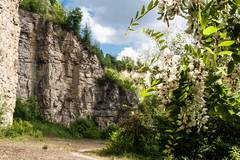
white pea-shaped flowers 0.75 inch (2 cm) long in pendant racemes 4-8 inches (10-20 cm) long; strongly fragrant with a sweet heavy scent; a valued honey source for beekeepersFoliage Description
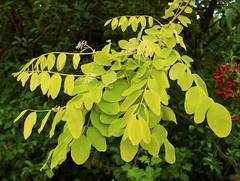
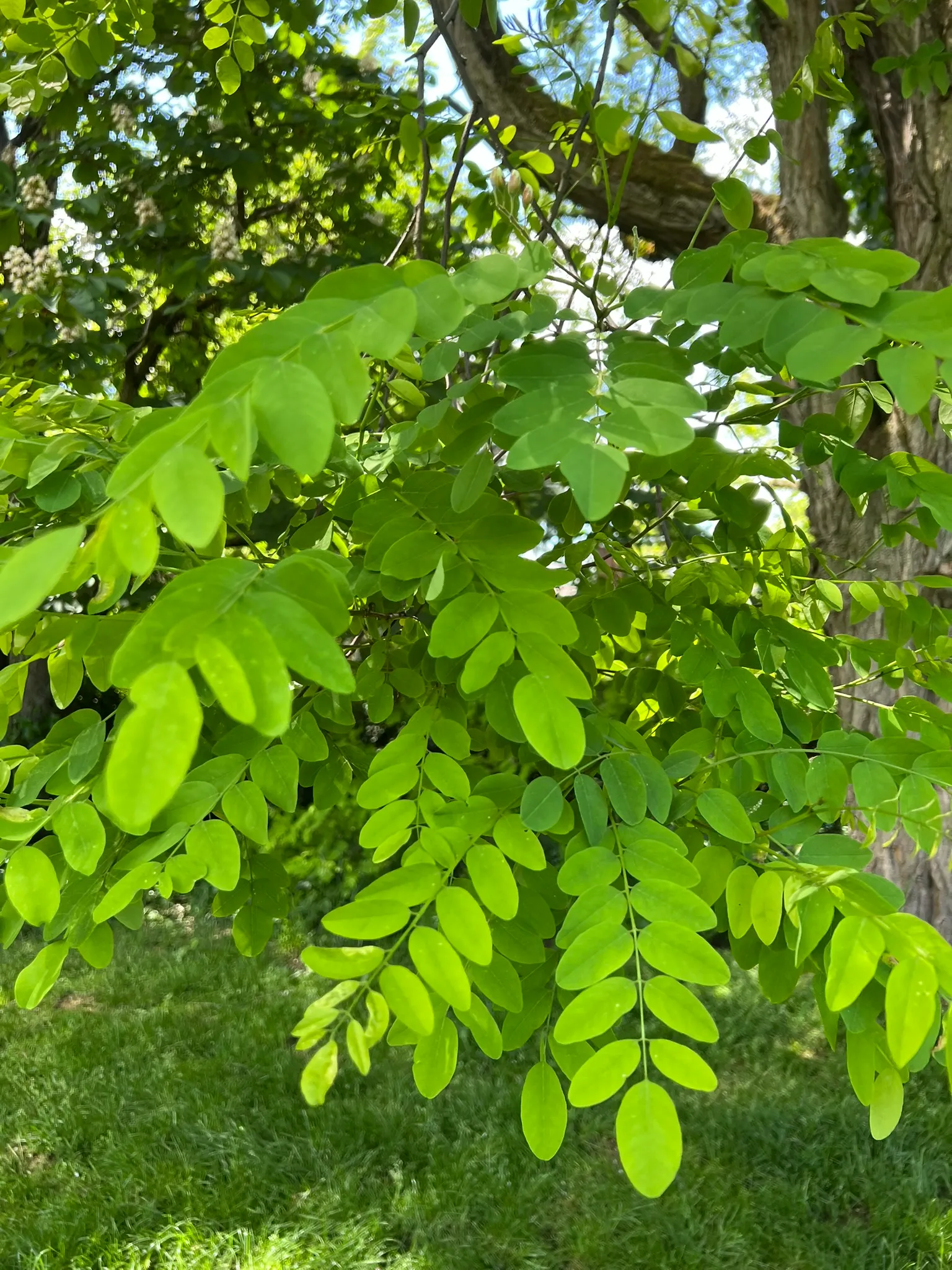
bright to medium green through the growing season; alternate, pinnately compound with 7-19 oval leaflets each 1-2 inches (2.5-5 cm) long; late to emerge in spring (May); turns yellow in fall and drops earlyGrowing Conditions
Sun Requirements
Requires 6-12 hours of direct sunlight daily
• Full Sun: 6+ hours of direct sunlight
• Partial Shade: 3-6 hours of direct sunlight
• Full Shade: Less than 3 hours of direct sunlight
Care & Maintenance
Care Guide
Site in full sun with 6–12 hours of direct sun per day in any well-drained soil with a pH of 5.0–8.5. The species tolerates poor, dry, rocky, alkaline, and salt-exposed soils and is drought-tolerant once established, and the nitrogen-fixing symbiosis with root nodule Rhizobium bacteria makes the species a pioneer tree on degraded and disturbed ground. The species is listed as invasive across much of the United States outside its central Appalachian and Ozark native range and across much of Europe, and planting is discouraged under state invasive plant programs in Connecticut, Massachusetts, Michigan, Wisconsin, New Jersey, and other eastern and midwestern states. Aggressive root suckers emerge 20–50 feet (6–15 m) from the parent trunk and form expanding colonies that call for annual removal at the colony perimeter to hold the planting at the intended boundary. Brittle wood fails in ice storms and high winds. Paired stipular thorns on young growth and sucker shoots are a hazard to handling, and leather gloves are warranted during pruning and sucker removal. Hardy in USDA zones 3–8. All parts of the tree except the flowers contain the toxic lectin robin and the glycoside robitin and are toxic if ingested.Pruning
Pruning is done in winter (January and February) while the tree is dormant. Dead, crossing, and weak-angled branches are removed to reduce storm failure of the brittle wood, and root suckers at the colony perimeter are cut at the soil line each season to hold the planting at the intended boundary. The deeply furrowed bark on mature trunks is a feature of the species and is not removed or disturbed during pruning. The wood is extremely hard and sharp tools are called for. Paired stipular thorns on young growth and sucker shoots are a handling hazard and leather gloves are warranted during any pruning operation.Pruning Schedule
Prune: January–February
winter