Image 1 of 11
1 / 11
Plant Reference
Robinia, Genus, pseudoacacia, Species, 'Frisia', Cultivar,
- Genus & species
- Cultivar
golden black locust
Parent species {Robinia pseudoacacia} native to the Appalachian and Ozark regions of eastern North America; the cultivar 'Frisia' was selected in the Netherlands in 1935
Overview
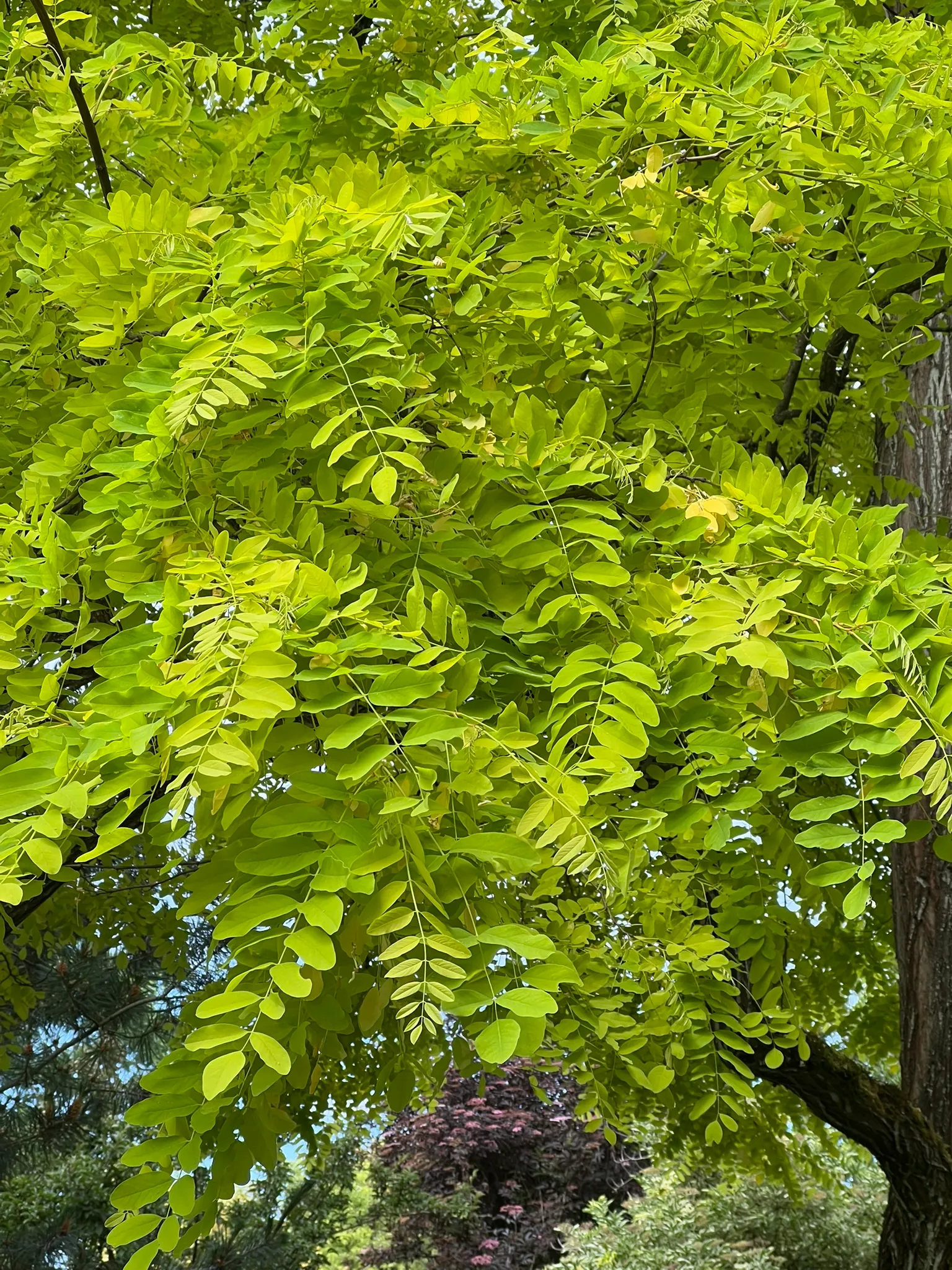
Robinia pseudoacacia 'Frisia' is an upright deciduous tree cultivar in the family Fabaceae, reaching 30-50 feet (9-15 m) tall and 20-30 feet (6-9 m) wide — a smaller mature size than the 40-70 foot (12-21 m) species type from which it was selected. The cultivar was chosen in the Netherlands in 1935 for its golden-yellow to chartreuse pinnately compound foliage in spring and early summer, and the bright foliage color is the principal ornamental feature of the tree rather than the flowers. Leaves are pinnately compound with 7-19 oval leaflets each 1-2 inches (2.5-5 cm) long, and the golden color fades toward lime-green by midsummer as temperatures warm. White pea-shaped flowers 0.75 inch (2 cm) across open in pendant racemes 4-6 inches (10-15 cm) long during May and June with moderate honey-like fragrance, though bloom on 'Frisia' is less reliable than on the species type — some years produce heavy flowering while others carry only scattered racemes. Fall foliage turns yellow to orange before leaf drop. Paired stipular thorns occur at leaf nodes on young growth and on vigorous shoots throughout the tree. The species is nitrogen-fixing via root-nodule symbiosis with Rhizobium bacteria and establishes on nitrogen-poor sites where other trees struggle. The wood is structurally weak for its growth rate, and ice-storm and high-wind branch failure is the central structural cultivation concern on mature specimens — the cultivar is not suited to siting above structures, parking areas, or regularly-used walkways where dropped limbs become a hazard. Root suckers emerge from the spreading root system, though less aggressively than on the species type, and the parent species is classified as invasive across parts of Europe, South Africa, and Australia where it has naturalized from cultivated plantings. All parts of the plant except the flowers contain robin lectin (a toxic plant protein) and cyanogenic compounds, and ingestion of bark, leaves, seeds, or wood chips causes vomiting, weakness, and cardiac disturbance in humans, horses, and other livestock; horses are particularly sensitive and have been fatally poisoned by chewing fallen bark.
Native Range
The parent species Robinia pseudoacacia is native to the Appalachian and Ozark regions of eastern North America, where it grows on rocky slopes, open woodlands, and disturbed ground from Pennsylvania south to Georgia and west to Oklahoma. The species has been planted widely in North America outside its native range and across Europe, Asia, Australia, and South Africa since the 17th century for timber, honey production, erosion control, and fast-growing windbreaks, and it has naturalized extensively in many of those regions. The cultivar 'Frisia' was selected in the Netherlands in 1935 as a golden-foliaged sport and has since been propagated clonally by grafting.Suggested Uses
Planted as a specimen tree or small shade tree in landscapes where the golden spring and early-summer foliage carries the design intent, at 20-30 foot (6-9 m) spacing in zones 4-8. The golden foliage color contrasts strongly with dark green conifer backgrounds and purple-foliaged companions such as Cotinus coggygria 'Royal Purple' or Prunus cerasifera 'Atropurpurea' in mixed plantings. The cultivar's tolerance of poor soil, drought, and alkaline chalk suits it to challenging reclamation sites and low-input landscape positions where high-maintenance trees would struggle. Not suited to positions directly above structures, parking areas, or regularly-used walkways where ice-storm branch failure creates a hazard, landscapes with horses or other livestock where fallen bark creates an ingestion poisoning risk, shaded positions where the golden foliage color fails to develop, or small residential lots where the 30-50 foot (9-15 m) mature size exceeds the available space.How to Identify
Appearance
Size & Dimensions
Height30' - 50'
Width/Spread20' - 30'
Colors
Bloom Information
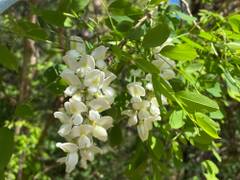
White pea-shaped flowers 0.75 inch (2 cm) across open in pendant racemes 4-6 inches (10-15 cm) long during May and June in zones 4-8, averaging 2 weeks of bloom when flowering occurs. Flowers carry moderate honey-like fragrance and are bee-pollinated. Bloom on 'Frisia' is less reliable than on the species type, with some years producing heavy flowering and others carrying only scattered racemes; the year-to-year variation is a consequence of the cultivar's selection for foliage rather than flower characters.
Detailed Descriptions
Flower Description
white; pea-shaped; 0.75 inch (2 cm) across; borne in pendant racemes 4-6 inches (10-15 cm) long; moderately fragrant; flowers develop less reliably on the cultivar than on the species typeFoliage Description
golden-yellow to chartreuse in spring and early summer, fading to lime-green by midsummer; pinnately compound with 7-19 oval leaflets each 1-2 inches (2.5-5 cm); turns yellow to orange in fall; the species type carries bright to medium green foliageGrowing Conditions
Sun Requirements
Requires 6-12 hours of direct sunlight daily
• Full Sun: 6+ hours of direct sunlight
• Partial Shade: 3-6 hours of direct sunlight
• Full Shade: Less than 3 hours of direct sunlight
Care & Maintenance
Care Guide
Plant in well-drained soil with a pH of 5.0-8.5 in full sun (6+ hours; full sun is needed for the golden foliage color to develop, and shaded positions produce muddy lime-green foliage without the chartreuse intensity of full-sun specimens). Tolerated soil types include loam, sand, clay, rocky ground, and chalk. The species is nitrogen-fixing via root-nodule symbiosis and tolerates poor nitrogen-deficient soil, drought, and alkaline chalk conditions where most other trees struggle. Water weekly through the first 1-2 growing seasons; established trees are very drought-tolerant. The wood is structurally weak and branch failures in ice storms and high winds are recurring on mature specimens, and the cultivar is not suited to siting directly above structures, parked vehicles, or regularly-used walkways where dropped limbs become a hazard. Paired stipular thorns at leaf nodes on young growth and vigorous shoots cause puncture wounds during handling. Root suckers emerge from the spreading root system and are removed at their point of origin when they appear. All parts of the plant except the flowers contain robin lectin and cyanogenic compounds; horses, livestock, dogs, and humans are susceptible to poisoning from ingestion of bark, leaves, seeds, or wood chips, and horses are the species most frequently reported in veterinary poisoning cases from fallen bark. Pruning is done during the dormant season (January through February).Pruning
Pruning is done during the dormant season (January through February) while the tree is leafless. Dead, damaged, crossing, and weak-angled branches are removed at the branch collar, and narrow included-bark unions are corrected early in the tree's development because these are the failure points in later storm damage. Root suckers emerging from the spreading root system are removed at their point of origin during the same pruning visit. Paired stipular thorns at leaf nodes on young growth cause puncture wounds during handling of pruning debris, and stout gloves and long sleeves are the standard work clothing for the task. Heavy pruning of mature trees stimulates a flush of weak water sprouts that are more prone to storm breakage than the branches they replaced, so structural correction is done over multiple years rather than in a single heavy session.Pruning Schedule
Prune: January–February
winter