Richea, Genus, scoparia, Species,
- Genus & species
scoparia
Overview
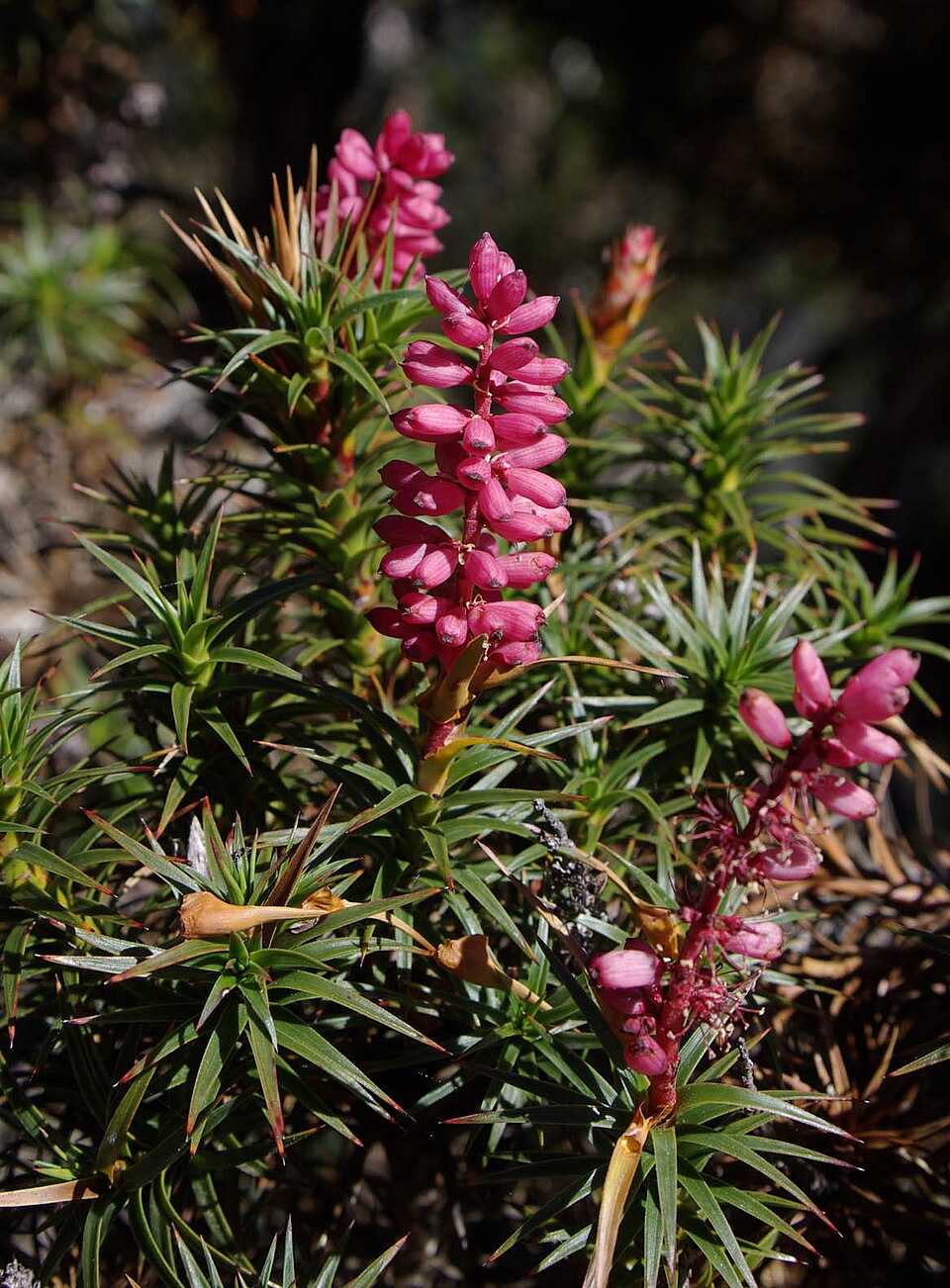
Richea scoparia is an erect alpine shrub growing 12-60 inches (30-150 cm) tall, with stiff, crowded leaves that sheathe the stem at the base and taper to a sharp, rigid point. Leaves are lance-shaped, 1.2-3.2 inches (3-8 cm) long, leathery, and deep green, leaving ring-like scars on the stem as they fall. Flowers are packed into dense terminal spikes 1.2-4 inches (3-10 cm) long; in this genus the petals are fused into a cap that is pushed off as a whole by the expanding stamens, exposing the flower. Spike colour varies between plants and includes pink, orange, red, yellow, and white. Flowering occurs in summer. The fruit is a small dry capsule. The plant grows slowly in cold, exposed alpine conditions and tolerates snow cover, wind, and frost. Foliage is held year-round, and the sharp leaf tips make the shrub prickly to handle. It needs cool, moist, acidic, peaty soils and declines in heat and dry conditions, which limits it in lowland gardens.
Native Range
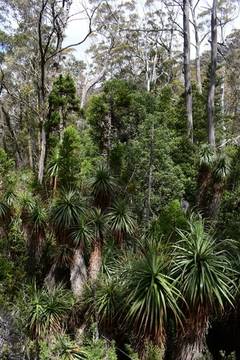
Native to Tasmania, where it is widespread in alpine and subalpine areas. Grows in alpine heath, moorland, and the margins of bogs on cool, moist, acidic peaty soils, often above 3,000 feet (900 m) elevation.Suggested Uses
Grown in cool-climate rock gardens, alpine collections, and peat beds, spaced 16-32 inches (40-80 cm) apart. Suited to cold highland gardens with reliable summer moisture and acidic soil. Grows in containers of at least 3 gallons (11 L) with an acidic, free-draining yet moisture-retaining mix in cool conditions.How to Identify
Appearance
Size & Dimensions
Height1' - 5'
Width/Spread1' - 4'
Bloom Information
Flowers in summer, mainly December to February, as the alpine growing season peaks. The dense spikes hold their colour for several weeks as the petal caps lift to expose the flowers. Flowering follows snowmelt and is heavier after mild winters.
Detailed Descriptions
Flower Description
pink, orange, red, yellow, or whiteFoliage Description
deep greenGrowing Conditions
Sun Requirements
Requires 4-9 hours of direct sunlight daily
• Full Sun: 6+ hours of direct sunlight
• Partial Shade: 3-6 hours of direct sunlight
• Full Shade: Less than 3 hours of direct sunlight
Care & Maintenance
Care Guide
Grows in full sun to part shade in cool climates on moist, acidic, peaty soils that drain freely yet stay damp. It tolerates snow, wind, and hard frost but declines in heat, drought, and alkaline soils, which restricts it to cool highland and alpine gardens. Watering with rainwater in dry spells keeps the root zone moist. Growth is slow, and plants take several years to begin flowering. Fungal leaf spot occurs in still, humid conditions at lower altitudes.Pruning
Light tip pruning after flowering shapes the plant, though the sharp leaves make trimming slow. Spent flower spikes can be removed once they brown. Hard pruning into old wood is unreliable for reshooting.Pruning Schedule
Prune: February–March
summer
Container Growing
Suitable for container growing
Minimum container size: 3 gallons