Richea, Genus, pandanifolia, Species,
- Genus & species
Pandani
Overview
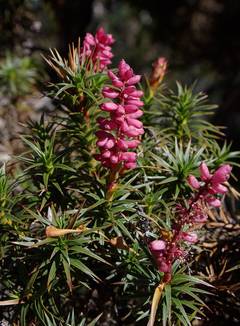
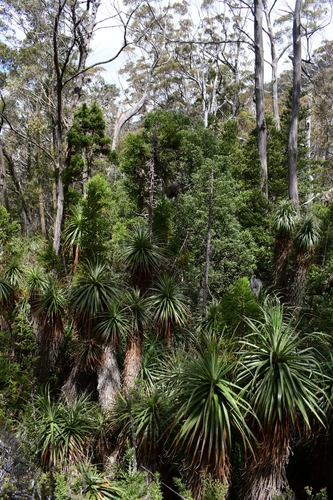
Richea pandanifolia is an evergreen shrub or small tree reaching 10-40 feet (3-12 m) tall, with a single or few unbranched stems topped by a crown of long, stiff, sword-shaped leaves. The leaves are 1.5-5 feet (45-150 cm) long and 0.8-1.6 inches (2-4 cm) wide, tapering to a narrow point, with sharp margins and a sheathing base; old leaves persist as a skirt of brown foliage on the stem. The form resembles a pandanus or a tall grass tree, though the plant belongs to the heath family Ericaceae. Small flowers are packed into dense spikes among the upper leaves, in white through pink to reddish tones, opening in spring and summer. Growth is slow, with plants taking many years to reach tree size. Fruit is a small dry capsule. The plant grows in cool, wet, high-rainfall conditions and is intolerant of heat, drought, and dry air. The sharp leaf tips and persistent dead foliage are limitations in confined plantings.
Native Range
Endemic to Tasmania, Australia, where it grows in cool, wet montane and subalpine forest, heath, and along streams, generally above 2,000 feet (600 m) elevation. It occurs in high-rainfall areas with cool summers.Suggested Uses
Grown as a specimen in cool-climate, high-rainfall gardens and in large containers in protected positions, spaced to allow the long leaves to spread. Used in collections of Tasmanian and alpine plants. The sharp leaves and need for cool, moist conditions limit use in warm or dry regions.How to Identify
Appearance
Size & Dimensions
Height10' - 40'
Width/Spread3' - 8'
Bloom Information
Detailed Descriptions
Flower Description
White through pink to reddishFoliage Description
GreenGrowing Conditions
Sun Requirements
Requires 4-8 hours of direct sunlight daily
• Full Sun: 6+ hours of direct sunlight
• Partial Shade: 3-6 hours of direct sunlight
• Full Shade: Less than 3 hours of direct sunlight
Care & Maintenance
Care Guide
Richea pandanifolia grows in part shade to full sun in cool, constantly moist, acidic, peaty soils with high humidity. It needs reliable moisture and cool conditions, and it declines in heat, dry air, and drought. Drainage must remain free even though the soil stays moist, as stagnant water rots the roots. Fertiliser needs are low, matching its nutrient-poor native soils. Growth is slow, and plants are difficult to establish outside cool, high-rainfall climates. Old dead leaves remain on the stem unless removed.Pruning
Pruning is generally limited to removing the skirt of dead leaves from the stem for appearance or access. Cutting the single growing point stops height growth and can kill the stem. Spent flower spikes are left in place or trimmed once dry.Container Growing
Suitable for container growing
Minimum container size: 10 gallons