Rhododendron, Genus, calendulaceum, Species,
- Genus & species
flame azalea
Appalachian Mountains, eastern United States
Overview
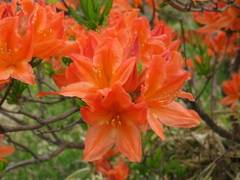
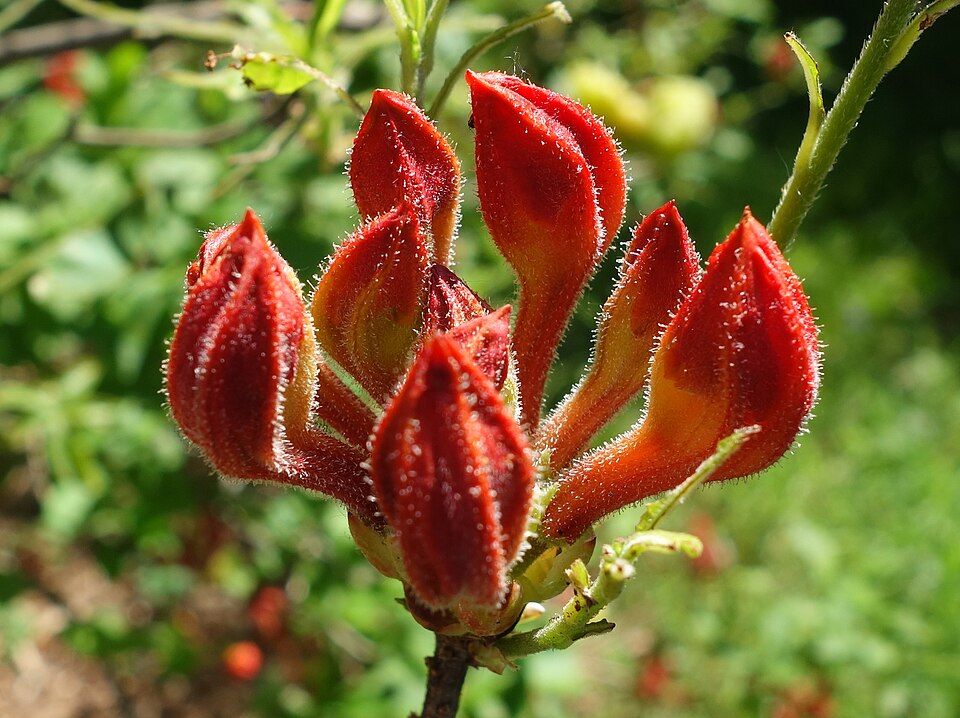
Rhododendron calendulaceum is a deciduous azalea native to the Appalachian Mountains, reaching 4-10 feet (1.2-3 m) tall and about as wide with an upright, open, loosely branched form. Oval leaves 1.5-3 inches (3.8-7.6 cm) long are medium green and softly hairy, clustered at the branch tips, turning yellow to bronze in fall before dropping. In late spring, clusters of funnel-shaped flowers 1.5-2 inches (3.8-5 cm) across open as or just before the leaves expand, ranging from yellow and gold through orange to red, with a long flaring tube and protruding stamens. The flowers carry little or no scent. Seed capsules follow and split to release tiny seed. It is hardy in USDA zones 5-7 and grows on cool, acidic, well-drained mountain soils high in organic matter. The shallow roots dry out quickly in heat, and the species struggles in hot, humid lowlands and in alkaline soil.
Native Range
Rhododendron calendulaceum is native to the southern and central Appalachian Mountains of the eastern United States, from Pennsylvania and West Virginia south to Georgia and Alabama. It grows in open woods, dry ridges, balds, and forest edges from about 1,500 to 5,500 feet (450 to 1,700 m).Suggested Uses
Used in woodland and native plant gardens, on shaded slopes, and in naturalistic shrub borders with other acid-soil plants such as mountain laurel and blueberries. The late-spring flowers draw butterflies and other pollinators.How to Identify
Appearance
Size & Dimensions
Height4' - 10'
Width/Spread4' - 10'
Bloom Information
Flowering runs from April through June, varying with elevation, as the new leaves emerge. Each cluster holds five to seven funnel-shaped flowers in shades from yellow through orange to red. Bees, butterflies, and swallowtails in particular work the flowers for nectar.
Detailed Descriptions
Flower Description
yellow to orange to redFoliage Description
medium greenGrowing Conditions
Sun Requirements
Requires 4-8 hours of direct sunlight daily
• Full Sun: 6+ hours of direct sunlight
• Partial Shade: 3-6 hours of direct sunlight
• Full Shade: Less than 3 hours of direct sunlight
Care & Maintenance
Care Guide
Grows in part shade to full sun on cool, moist, acidic, well-drained soils high in organic matter. A soil pH of 4.5-6.0 is needed, and the shrub develops chlorosis in alkaline ground. Shallow roots call for steady moisture and a mulch of leaf litter or bark, especially in sun. Afternoon shade in hot regions reduces heat stress on the foliage and roots. The plant does poorly in heavy clay, wet ground, or hot, humid lowlands. No heavy feeding is needed in suitable woodland soil.Pruning
Pruning just after flowering removes spent trusses and shapes the open form before next year buds set. Dead or crossing stems can be taken out at the same time. Hard cutting into old wood regrows slowly on this species.Pruning Schedule
Prune: May–June
late spring
Container Growing
Suitable for container growing
Minimum container size: 5 gallons