Rhododendron, Genus, augustinii, Species,
- Genus & species
Augustine rhododendron
Western and central China — primarily Hubei, Sichuan, and Yunnan provinces; mountain forests and scrubland at 5,000-10,000 feet (1,500-3,000 m) elevation
Overview
Rhododendron augustinii (Augustine rhododendron, blue rhododendron) is an upright evergreen shrub in the family Ericaceae growing 6-10 feet (1.8-3 m) tall and 5-8 feet (1.5-2.4 m) wide, native to the mountain forests of western and central China and grown in temperate gardens of zones 7-9 for the lavender-blue to violet-blue spring flower color that the species contributes to the rhododendron palette. The species is the principal source of true blue color in the genus Rhododendron: the typical flower colors across the genus run through pink, magenta, white, red, and yellow with very few selections offering true blue-toned flowers, and R. augustinii is the central wild-species source of the blue color genetics that have been used in 20th-century rhododendron breeding to develop the small group of blue-flowered hybrid cultivars now in commercial nursery trade (the dwarf 'Sapphire', the larger 'Blue Diamond', the upright 'Blue Tit', and other related blue-flowered hybrids all carry R. augustinii as one parent in the breeding lineage). The species was named for Augustine Henry, an Irish physician who served in the Chinese Imperial Maritime Customs Service in the 1880s and 1890s and who collected and shipped large numbers of Chinese plant specimens to British botanical institutions during his postings in Hubei, Yunnan, and Taiwan, and Henry's collections introduced many Chinese mountain plants to Western horticultural cultivation including R. augustinii which reached British gardens in the 1880s. The blue color tone varies considerably across seedling populations of the species — the wild population includes plants with flowers ranging from pale pinkish-lavender at one extreme through clear lavender-blue in the middle to deep violet-blue at the other extreme, and the truest-blue forms are vegetatively propagated as named clonal selections (notably 'Electra', 'Tower Court Form', 'Marine', and other blue-color selections) to preserve the deepest blue color across mass-produced commercial plants. Foliage is dark green narrow lance-shaped lepidote (small-scaled underside) leaves 2-4 inches (5-10 cm) long arranged in alternate spirals along the upright branches, producing an open canopy structure with light passing through rather than being blocked by an opaque leaf mass — this open-foliage character distinguishes the species from the dense broad-leaved standard R. catawbiense-group rhododendrons. The upright open growth habit tends toward leggy bare-stem development at the base if not pruned, and pruning after flowering each year to encourage branching is the standard cultural approach to keep the shrub well-clothed in foliage from the base up rather than allowing it to develop bare lower stems with foliage only on the upper canopy. The flower buds are frost-tender and a hard late-winter freeze can damage the buds and reduce the spring bloom even when the plant itself comes through the winter undamaged, so the species is grown in sheltered garden positions out of the worst late-winter frost-pocket exposure in the colder parts of its hardiness range. Strict acidic soil pH 4.5-6.0 is needed (the standard rhododendron cultural requirement), and the species is not drought-tolerant — consistent soil moisture through the growing season is part of routine cultural care. Deer browse the foliage. All parts of the plant contain grayanotoxins (the cardiac and neurological toxins characteristic of the genus Rhododendron) and ingestion of the leaves, flowers, or honey causes vomiting, diarrhea, salivation, weakness, and slowed heart rate in dogs, cats, horses, and humans.
Native Range
Rhododendron augustinii is native to western and central China, with a natural range across the Hubei, Sichuan, and Yunnan provinces where the species grows in mountain forests, scrubland, and forest-edge openings at 5,000-10,000 feet (1,500-3,000 m) elevation. The native habitat is the cool moist montane forest of the eastern Himalayan and southwest China botanical region, where the high-rainfall summer monsoon climate, the well-drained mountain forest soils, and the moderate elevation cool temperatures match the species' cultural requirements in temperate-garden cultivation. The species was named for Augustine Henry (1857-1930), an Irish physician who served in the Chinese Imperial Maritime Customs Service from 1881 to 1900 and who collected and shipped large numbers of Chinese plant specimens to the Royal Botanic Gardens at Kew and other British botanical institutions during his postings in Yichang (Hubei), Mengtsze (Yunnan), Szemao (Yunnan), and Taiwan. Henry's plant-collecting work during the 1880s and 1890s introduced thousands of Chinese mountain plants to Western herbarium science and horticultural cultivation, and the species R. augustinii reached British garden cultivation in the 1880s through Henry's specimen shipments. The genus Rhododendron is a very large woody genus with approximately 1,000 species distributed across the temperate and tropical mountain regions of the Northern Hemisphere, and the central concentration of species diversity is in the Sino-Himalayan region of southwestern China and the eastern Himalayas where R. augustinii grows. The species received the Royal Horticultural Society Award of Garden Merit and is a cornerstone species in 20th-century rhododendron breeding programs as the principal genetic source of blue flower color in the genus.Suggested Uses
Planted as a flowering specimen in shaded acidic-soil borders, woodland gardens, large container plantings of 10 gallons (38 L) or larger filled with acidic potting mix, mild-coastal Pacific Northwest gardens, British and Irish woodland garden settings, and other temperate-climate shaded acidic-soil positions at 5-8 foot (1.5-2.4 m) spacing in zones 7-9. The lavender-blue to violet-blue spring flower color and the upright open canopy give the species a central role in the small group of large-scale blue-flowered shrubs available to temperate garden cultivation, and the species is the parent of most of the named blue-flowered rhododendron hybrids in modern commercial nursery trade. Combined with other Sino-Himalayan rhododendron species and hybrids in mixed acid-soil rhododendron borders, with British Cornwall-style and Pacific Northwest woodland garden compositions including R. williamsianum, R. yakushimanum, R. fortunei, the dwarf R. impeditum, and other Chinese species rhododendrons that share the same cultural requirements. Combined also with non-rhododendron acid-soil companions including Magnolia (deciduous magnolia species), Camellia (autumn and winter-flowering camellias), Pieris japonica, Hamamelis (witch hazel), and woodland understory perennials like Trillium, Galanthus, and Athyrium ferns. Not suited to alkaline-soil regions where chlorosis develops, hot dry full-sun positions where the species suffers, cold-climate gardens below zone 7 where the plant is not reliably hardy, exposed frost-pocket positions where flower buds are routinely killed by late-winter freezes, deer-browsed landscapes where the heavy deer use damages young plants, or households with grazing pets or curious children where the toxicity of the leaves, flowers, and honey poses a real risk.How to Identify
Appearance
Size & Dimensions
Height6' - 10'
Width/Spread5' - 8'
Bloom Information
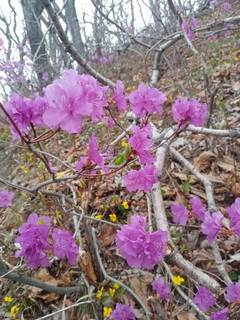
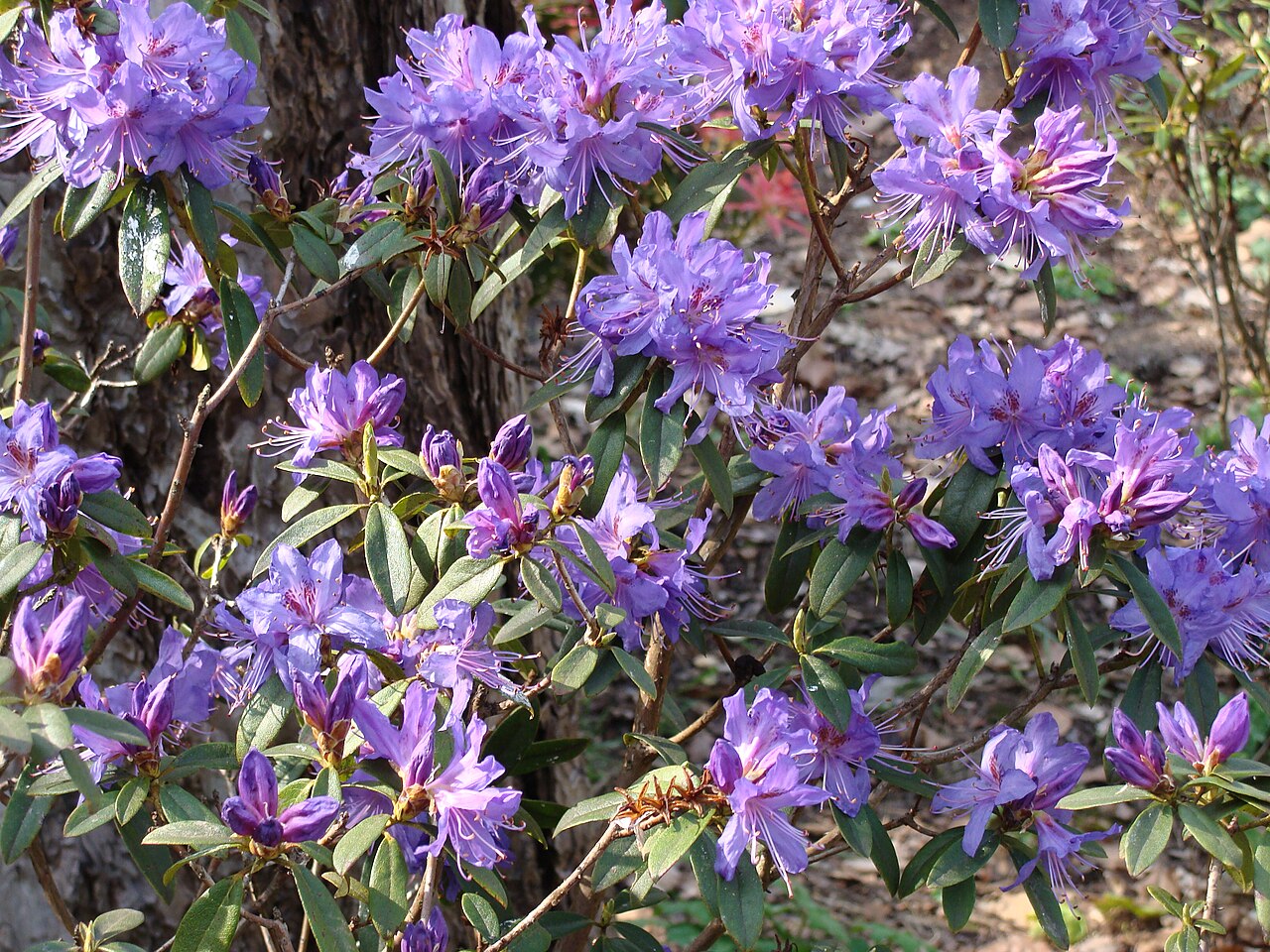
Lavender-blue to violet-blue funnel-shaped flowers 1.5-2 inches (4-5 cm) across open in loose trusses of 3-6 flowers at the branch tips during April and May in zones 7-9, lasting approximately 3 weeks at peak bloom. The flower color varies considerably across seedling populations from pale pinkish-lavender to deep violet-blue, and the truest-blue forms are vegetatively propagated as named clonal selections (notably 'Electra', 'Tower Court Form', 'Marine', and other blue-color selections) to preserve the deepest blue color across mass-produced commercial plants. The bloom event is the central garden value of the species and the principal reason for its cultivation in temperate gardens — the rare blue tone gives gardeners building blue-color planting palettes a large-scale shrub option in this color range. Bees visit the flowers during the bloom period for the spring nectar resource. The flower buds are frost-tender and a hard late-winter freeze in the -10°F to -20°F range can damage the buds and reduce the spring bloom even when the plant itself comes through the winter undamaged, so the species is planted in sheltered garden positions out of the worst late-winter frost-pocket exposure in the colder parts of its hardiness range.
Detailed Descriptions
Flower Description
lavender-blue to violet-blue (with significant variation across seedling populations from pale pinkish-lavender at one extreme to deep violet-blue at the other); funnel-shaped flowers 1.5-2 inches (4-5 cm) across carried in loose trusses of 3-6 flowers at the branch tips during mid to late spring; the species is the principal source of true blue color in the genus Rhododendron and the truest-blue flower forms within the species are vegetatively propagated as named clonal selections rather than seed-grown to preserve the deepest blue colorFoliage Description
dark green; narrow lance-shaped leaves 2-4 inches (5-10 cm) long with lepidote (small scaly) underside texture characteristic of the small-leaved subgenus of Rhododendron; lightly aromatic when crushed; the narrow leaf shape and the upright open arrangement of the foliage on the branches give the species a more open canopy structure than the dense broad-leaved standard rhododendrons of the R. catawbiense group, with light passing through the canopy rather than being blocked by an opaque leaf massGrowing Conditions
Sun Requirements
Requires 3-6 hours of direct sunlight daily
• Full Sun: 6+ hours of direct sunlight
• Partial Shade: 3-6 hours of direct sunlight
• Full Shade: Less than 3 hours of direct sunlight
Care & Maintenance
Care Guide
Plant in well-drained acidic soil with a pH of 4.5-6.0 in part shade (3-6 hours of direct sun); the species tolerates morning sun and dappled afternoon light but suffers in hot all-day full-sun positions. Tolerated soil types are limited to humus-rich loam and peat-amended garden soils with the appropriate acidic pH; alkaline or near-neutral soils cause chlorosis (yellowing of the leaves from iron deficiency) within a season or two, and the species cannot be successfully grown without naturally acidic soil or sustained soil-acidification amendments. The species is not drought-tolerant and consistent soil moisture through the growing season is part of routine cultural care; dry conditions cause leaf scorch and reduced flowering. The flower buds are frost-tender and a hard late-winter freeze can damage the buds and reduce the spring bloom — sheltered garden positions out of the worst late-winter frost-pocket exposure (low cold-air pooling locations, exposed wind-tunnel positions, and other frost-prone microclimates) are needed in the colder parts of the hardiness range to reliably carry the spring bloom. The upright open growth habit tends toward leggy bare-stem development at the base if left unpruned, so pruning after flowering each year to encourage branching is the standard cultural practice — a light pruning pass after the bloom finishes (June) shortens any over-long extension shoots and encourages multiple new branches to develop along the cut stems, building the well-clothed canopy that holds foliage from the base of the plant up to the crown. Spent flower trusses are deadheaded after the bloom finishes. Deer browse the foliage and young plants may need physical protection in areas with heavy deer populations. All parts contain grayanotoxins; ingestion of the leaves, flowers, or honey causes vomiting, diarrhea, slowed heart rate, and at high enough dose seizures in dogs, cats, horses, and humans.Pruning
Pruning is done after the spring bloom finishes in June, shortening any over-long extension shoots from the previous season to encourage multiple new branches to develop along the cut stems and build the well-clothed canopy. The species' tendency toward leggy bare-stem development at the base of the plant is the central reason for the annual post-bloom pruning routine — left unpruned, the species develops bare lower stems with foliage and flowers only on the upper canopy, and the bare-stem habit is difficult to correct once it has developed because the species does not regenerate vigorously from old wood. Spent flower trusses are deadheaded after the bloom finishes by snapping off the spent truss stem at the base — the deadheading pass directs the plant's energy toward next year's flower bud formation. Heavy renovation pruning into bare wood is tolerated less reliably than on the standard R. catawbiense-group rhododendrons and the species recovers slowly from hard cutbacks, so light annual pruning works better than occasional severe renovation.Pruning Schedule
Prune: June
late spring
Container Growing
Suitable for container growing
Minimum container size: 10 gallons