Rhodiola, Genus, integrifolia, Species,
- Genus & species
western roseroot
Western North America and northeastern Asia
Overview
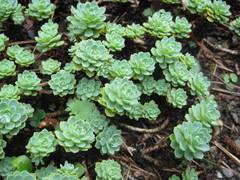
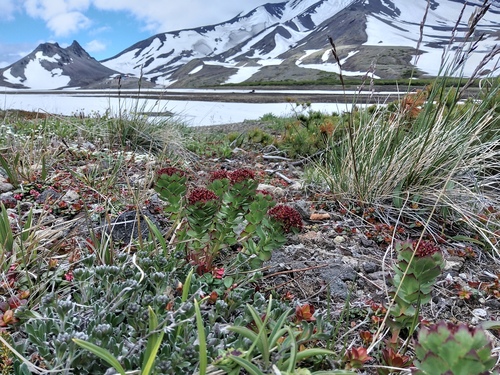
Rhodiola integrifolia is a succulent perennial of arctic and alpine regions, growing from a thick branched rootstock that smells of roses when cut. Each spring it sends up clustered unbranched stems 2-12 inches (5-30 cm) tall, lined with flattened, fleshy gray-green to blue-green leaves 0.4-1 inch (10-25 mm) long that often flush red in strong sun. The stems are topped by dense rounded clusters of small star-shaped flowers in deep red, maroon, or purple, each about 0.2 inch (5 mm) across. Plants are dioecious, so individual clumps carry either male or female flowers, and only female plants form the small erect reddish seed pods. R. integrifolia grows on rocky slopes, cliff ledges, tundra, and gravelly streambanks, often where snowmelt keeps the ground moist into summer. The fleshy leaves and roots store water and let it endure cold, wind, and a short growing season. In cultivation it needs cool conditions and sharp drainage and declines in hot, humid climates or heavy soils. Its low stature and brief summer display, followed by dieback to the rootstock, limit its presence to the cooler months in alpine and rock gardens.
Native Range
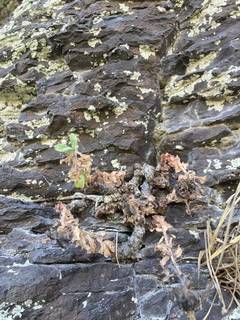
Rhodiola integrifolia is native to the arctic and alpine regions of western North America and northeastern Asia, from Alaska and the Yukon south through the Rocky Mountains and Sierra Nevada. It grows on tundra, rocky alpine slopes, cliff ledges, and cold streambanks.Suggested Uses
R. integrifolia is used in alpine troughs, rock gardens, and crevice plantings in cool climates, where its fleshy foliage and red flower clusters appear in early summer. It suits green-roof and gravel plantings that drain sharply. Its need for cool conditions makes it unsuited to hot, humid regions.How to Identify
Appearance
Size & Dimensions
Height2" - 1'
Width/Spread4" - 8"
Bloom Information
Flowering occurs in late spring and early summer, roughly May through July, shortly after snowmelt at high elevations. The dense terminal clusters of red to maroon flowers open over two to three weeks and draw flies, bees, and other cold-climate insects. Female plants then form small upright seed pods that ripen by late summer.
Detailed Descriptions
Flower Description
Red to maroonFoliage Description
Gray-green to blue-greenGrowing Conditions
Sun Requirements
Requires 6-10 hours of direct sunlight daily
• Full Sun: 6+ hours of direct sunlight
• Partial Shade: 3-6 hours of direct sunlight
• Full Shade: Less than 3 hours of direct sunlight
Care & Maintenance
Care Guide
R. integrifolia grows in full sun to partial shade in gritty, sharply drained soil with a neutral to slightly alkaline pH of 6.0-7.5. It needs cool summers and consistent moisture during spring growth, then drier conditions as it goes dormant. Heat, humidity, and waterlogged soil cause the rootstock to rot, so it performs poorly in warm lowland gardens. It withstands hard frost, wind, and lean alpine soils once established. Propagation is by seed or by division of the rootstock in spring. Pests are few, though aphids and root rot appear under unsuitable conditions.Pruning
R. integrifolia needs no pruning. Spent flower stems can be removed after seed ripens, and the foliage is left to die back naturally to the rootstock for winter. Dividing the rootstock in early spring renews older clumps.Container Growing
Suitable for container growing
Minimum container size: 1 gallons