Rhaphiolepis, Genus, umbellata, Species,
- Genus & species
Yeddo hawthorn
Overview
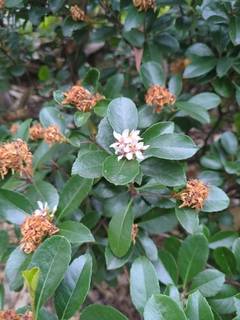
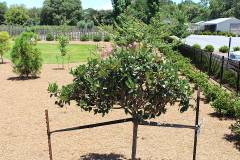
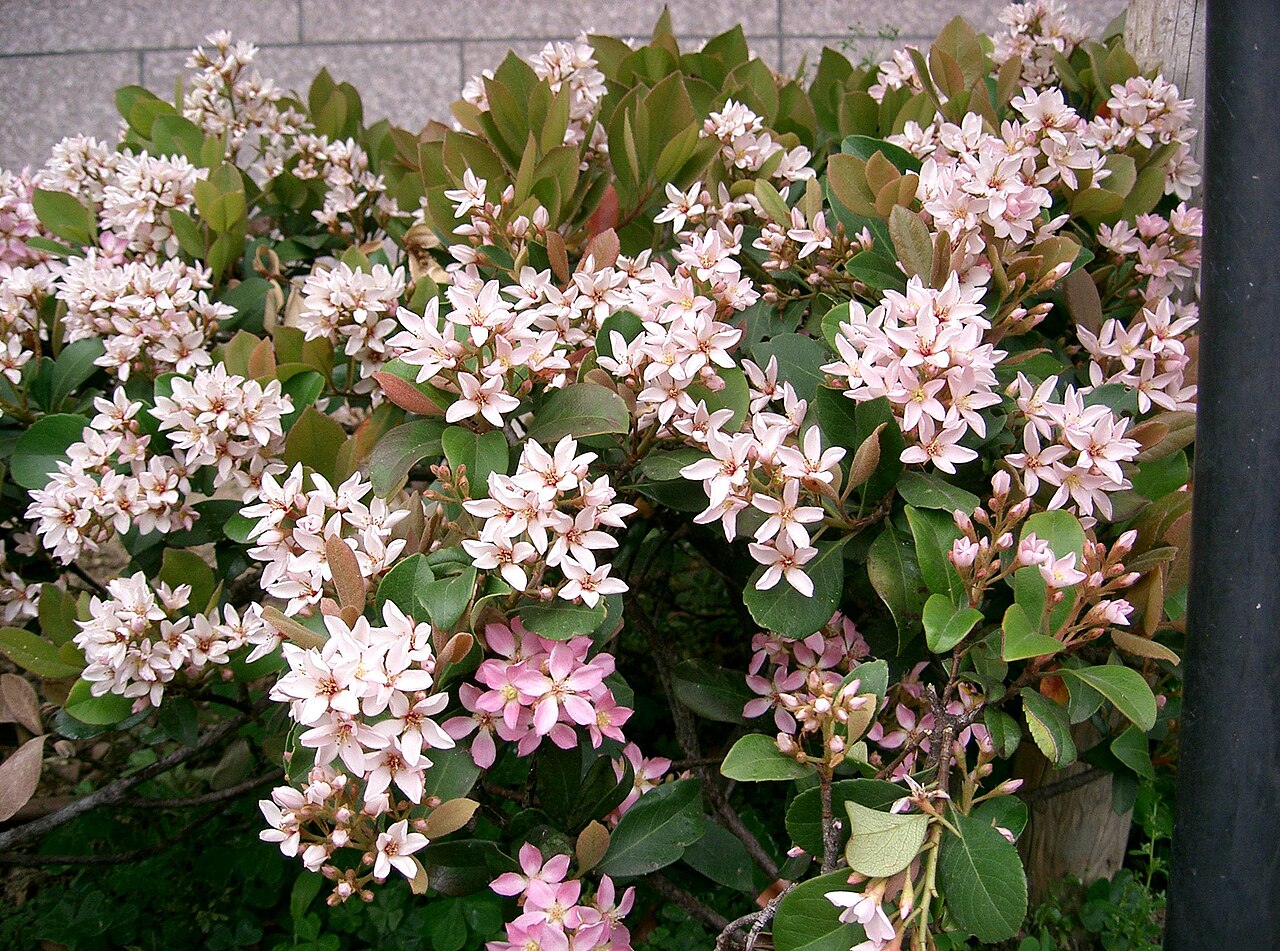
Rhaphiolepis umbellata is an evergreen shrub reaching 4-6 feet (1.2-1.8 m) tall and wide in most gardens, and 10-15 feet (3-4.5 m) over several decades, forming a dense rounded mound of stiff branches. Leaves are alternate and crowded toward the shoot tips, obovate, 1.5-3 inches (4-8 cm) long, thick and leathery, dark green, with margins rolled under and shallow teeth in the upper half. New growth opens bronze and hardens over 3-4 weeks. Flowers are 0.5-0.75 inch (1.2-2 cm) across, white and sometimes flushed pink, with five petals and dark stamens, held in upright terminal clusters 2-4 inches (5-10 cm) tall in April and May, carrying a scent of almond. Fruit is a blue-black pome 0.3-0.5 inch (8-12 mm) across, ripening from September and holding into winter. Growth runs 4-8 inches (10-20 cm) per year. Plants take salt spray and sandy soils on coastal sites and hold through 4-6 weeks without rain once established. Entomosporium leaf spot marks the foliage with red-purple spots in wet springs and strips plants in the southeastern United States, and foliage is damaged near 10F (-12C), which holds the species to USDA zones 8-10.
Native Range
Rhaphiolepis umbellata is native to Japan and southern Korea, where it grows on coastal cliffs, in maritime thickets, and on rocky slopes near the sea. It was introduced to Western gardens in 1862 and is planted through the southern United States, the Mediterranean, Australia, and New Zealand. Self-sown plants occur near plantings on coastal ground in New Zealand and Australia.Suggested Uses
Planted at 3-4 foot (0.9-1.2 m) spacing as a low hedge or mass planting, and at 5-6 foot (1.5-1.8 m) spacing as single mounds across USDA zones 8-10, including coastal gardens exposed to salt spray. Grown in containers of 10 gallons (38 L) or larger on terraces and in courtyards. Spring flowers carry nectar for honeybees, and the blue-black fruit is taken by mockingbirds and thrushes from October.How to Identify
Appearance
Size & Dimensions
Height4' - 6'
Width/Spread4' - 6'
Bloom Information
Flowering runs 3-4 weeks in April and May, on clusters formed at the previous season's shoot tips. Each cluster holds 10-20 flowers opening over 10-14 days, with a scent of almond noticeable at 5-10 feet (1.5-3 m). Honeybees and solitary bees work the flowers, and fruit sets on most plants without a second individual nearby. Fruit colours blue-black from September.
Detailed Descriptions
Flower Description
White, sometimes flushed pinkFoliage Description
Leathery dark green, bronze on new growthGrowing Conditions
Sun Requirements
Requires 6-12 hours of direct sunlight daily
• Full Sun: 6+ hours of direct sunlight
• Partial Shade: 3-6 hours of direct sunlight
• Full Shade: Less than 3 hours of direct sunlight
Care & Maintenance
Care Guide
Flowering and dense growth follow 6 or more hours of direct sun; in shade the plant opens up and carries fewer flower clusters. Free-draining soil at pH 6.0-7.5 suits the roots, including sandy coastal ground, while heavy soil that stays wet through winter brings on root rot. Water at 1 inch (25 mm) per week for the first two seasons; established plants hold through 4-6 weeks of dry weather. Fertilizer is generally unnecessary, and one application of a balanced feed in early spring covers the slow annual growth. Entomosporium leaf spot is the main problem in humid regions, spreading on wet foliage from spring rain and overhead irrigation, and repeated defoliation kills plants over 2-3 seasons. Fire blight enters flowering shoots in warm wet springs and blackens the shoot tips.Pruning
Pruning is carried out within 4-6 weeks of flowering, since the next season's flower clusters form at the shoot tips over summer. The rounded outline holds without pruning, and cuts are limited to dead wood, leaf-spotted shoots, and stems that break the line. Plants take shearing into a low formal hedge at 3-4 feet (0.9-1.2 m), which removes most of the flowers and fruit. Cutting whole stems back to a low side branch renews plants that have opened at the base, with regrowth over two seasons.Pruning Schedule
Prune: May–June
late spring
Container Growing
Suitable for container growing
Minimum container size: 10 gallons