Image 1 of 8
1 / 8
© Jeantosti at French Wikipedia, some rights reserved (CC-BY-SA) · Wikimedia Commons
Rhamnus, Genus, alaternus, Species,
- Genus & species
Italian buckthorn
Mediterranean basin (southern Europe, northern Africa, and Turkey)
Overview
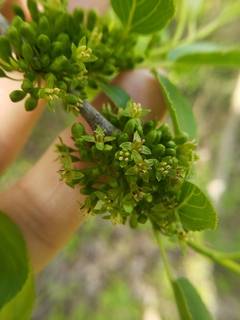
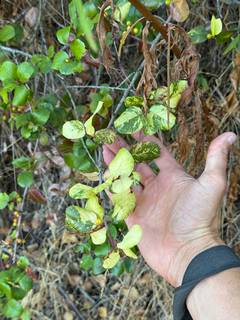
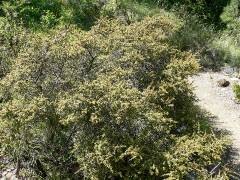
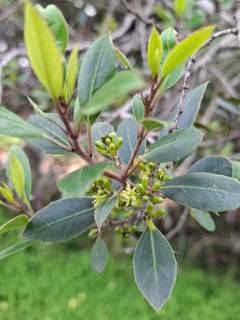
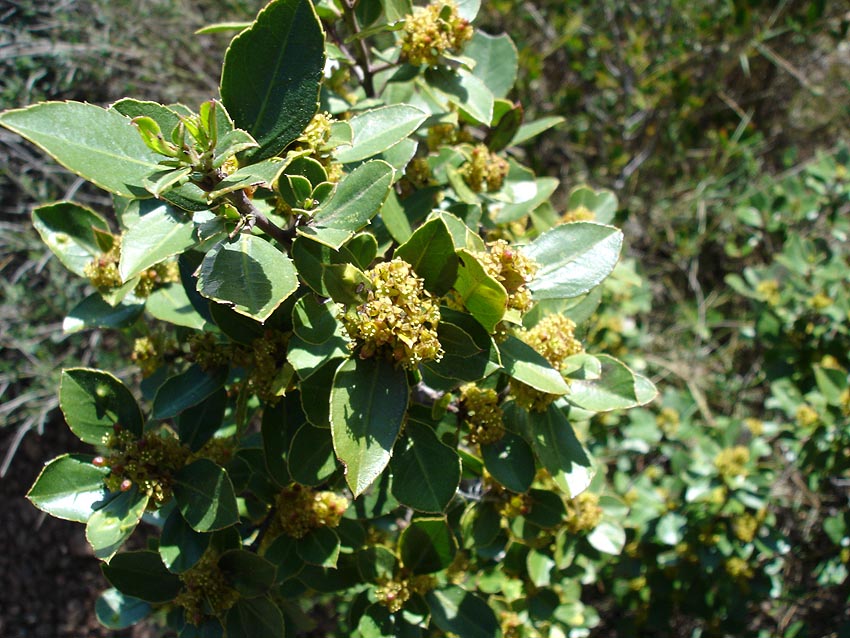
Rhamnus alaternus is an evergreen shrub or small tree in the family Rhamnaceae, native to the Mediterranean basin from Portugal and Morocco to Turkey. Plants reach 8–15 feet (2.4–4.6 m) tall and 6–12 feet (1.8–3.7 m) wide, with a dense, upright to rounded habit and thornless branches. Leaves are alternate, elliptic to ovate, 0.75–2 inches (2–5 cm) long, leathery, and glossy dark green, with entire to finely serrated margins. Flowers are tiny, 0.1 inch (3 mm) across, yellow-green, and held in short axillary clusters from February to April; plants are usually dioecious, with male and female flowers on separate plants. Fruit is a round berry-like drupe 0.2–0.3 inch (5–7 mm) across that ripens from red to black in summer. Plants are hardy in USDA zones 8–10 and tolerate drought, salt spray, and poor soils once established. Berries and bark contain anthraquinone compounds that act as laxatives when ingested. R. alaternus is listed as invasive in California and in parts of Australia, where birds disperse the seeds into native vegetation.
Native Range
Native to the Mediterranean basin, from Portugal and Morocco eastward to Turkey, where it grows in scrub, open woodland, and rocky slopes at low to mid elevations. Naturalized in California, Australia, and New Zealand.Suggested Uses
Used as an evergreen hedge, screen, and windbreak in mild-winter and coastal regions, spaced 4–6 feet (1.2–1.8 m) apart. Tolerance of drought and salt spray suits it to coastal sites. Listing as invasive in California and parts of Australia restricts planting in those regions.How to Identify
Appearance
Size & Dimensions
Height8' - 15'
Width/Spread6' - 12'
Bloom Information
Flowers open from February to April in short axillary clusters. Plants are usually dioecious, with male and female flowers on separate plants. Flowers are 0.1 inch (3 mm) across and visited by bees and flies. Fruit ripens from red to black in summer.
Detailed Descriptions
Foliage Description
Glossy dark greenGrowing Conditions
Sun Requirements
Requires 4-8 hours of direct sunlight daily
• Full Sun: 6+ hours of direct sunlight
• Partial Shade: 3-6 hours of direct sunlight
• Full Shade: Less than 3 hours of direct sunlight
Care & Maintenance
Care Guide
Growth is steadiest in full sun to part shade in well-drained soil of pH 6.0–8.0, including clay, sand, and limestone soils. Water is applied at 1 inch (2.5 cm) per week during the first two growing seasons; established plants tolerate long dry periods. Cold hardiness is USDA zones 8–10, and temperatures below 10°F (−12°C) damage leaves and stems. Plants tolerate wind and salt spray in coastal sites. Seedlings emerge in large numbers beneath female plants and are removed while small.Pruning
Pruning is done in late winter or after flowering, and plants tolerate shearing to 4–6 feet (1.2–1.8 m) for hedge use. Dead and crossing branches are removed at any time. Plants regrow from old wood after hard pruning. Suckers and seedlings are removed at ground level.Pruning Schedule
Prune: February & April
winterlate spring