Rhamnus, Genus, ilicifolia, Species,
- Genus & species
hollyleaf redberry
Overview
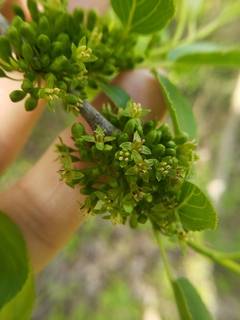
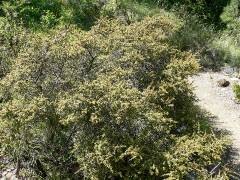
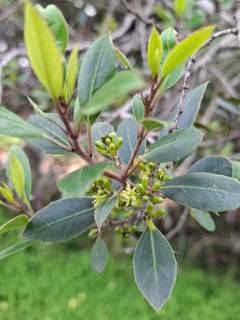
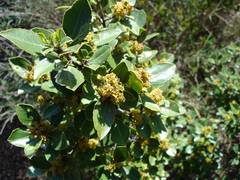
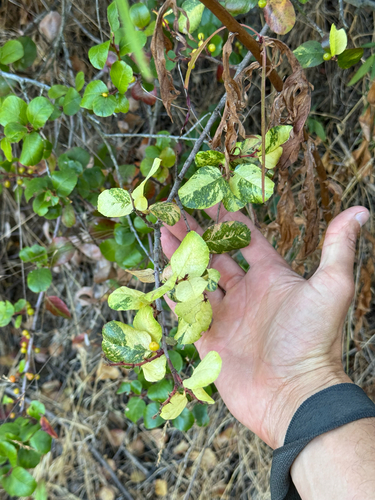
Rhamnus ilicifolia is an evergreen shrub in the buckthorn family, growing 3-12 ft (0.9-3.7 m) tall, occasionally treelike to 15 ft (4.5 m), with stiff, spreading branches. The leathery leaves are nearly round to oval, 0.5-1.5 in (1.5-4 cm) long, with spiny-toothed, wavy margins that resemble holly, glossy green above and paler below. Small greenish-yellow flowers without showy petals open in spring in the leaf axils; the species is mostly dioecious, so male and female flowers occur on separate plants. Female plants bear round, fleshy berries about 0.3 in (8 mm) wide that ripen from green through yellow to bright red and hold one or two seeds. Birds eat the fruit and spread the seed. It grows on dry slopes, in chaparral, oak woodland, and rocky canyons across California and the Southwest, on well-drained soils and tolerating summer drought. The slow growth and stiff, spiny foliage make it a dense, long-lived shrub. It withstands heat, drought, and poor soil but is slow to reach full size.
Native Range
Rhamnus ilicifolia is native to the southwestern United States and northern Mexico, centered in California and extending into Arizona and Baja California. It grows in chaparral, oak woodland, and dry rocky slopes.Suggested Uses
Used in dry native and chaparral gardens, slope plantings, and informal screens, spaced 4-6 ft (1.2-1.8 m) apart. Planted as a wildlife shrub for berry-eating birds and as a low-water hedge. Suited to fire-wise and erosion-control plantings on dry slopes.How to Identify
Appearance
Size & Dimensions
Height3' - 12'
Width/Spread4' - 8'
Bloom Information
Inconspicuous greenish-yellow flowers open in the leaf axils in spring, from March to May. Male and female flowers form on separate plants, so only female shrubs set fruit. Bees and other small insects visit the nectar of the petal-less flowers.
Detailed Descriptions
Foliage Description
glossy greenGrowing Conditions
Sun Requirements
Requires 5-10 hours of direct sunlight daily
• Full Sun: 6+ hours of direct sunlight
• Partial Shade: 3-6 hours of direct sunlight
• Full Shade: Less than 3 hours of direct sunlight
Care & Maintenance
Care Guide
Grows in full sun to part shade on dry, well-drained soils including rocky, sandy, and decomposed-granite ground. Soil pH from 6.0 to 7.5 is suitable. Once established it needs no summer water in its native climate and tolerates extended drought, while standing water and heavy clay cause root problems. It grows slowly and takes years to reach mature size. The shrub is long-lived and needs little care in a suitable site. Both male and female plants are required for berry production.Pruning
Prune in late winter or after fruiting to shape the shrub or limit its size; the dense growth tolerates fairly hard cutting. The spiny leaves make hand-thinning slow work. Hedging is possible where a formal outline is wanted.Pruning Schedule
Prune: February
winter
Container Growing
Suitable for container growing
Minimum container size: 7 gallons