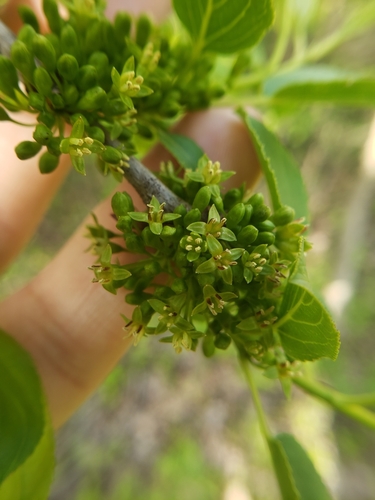
Rhamnus, Genus, spp., Multiple species,
- Genus
- Multiple species
buckthorns
Northern Hemisphere: Europe, Asia, North America
Overview
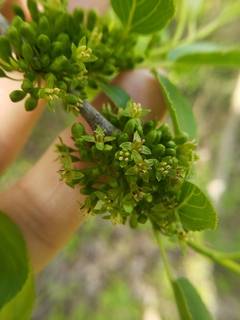
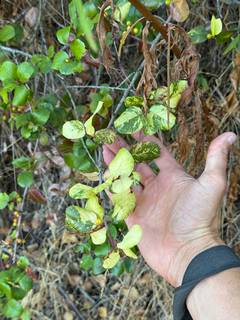
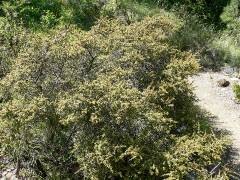
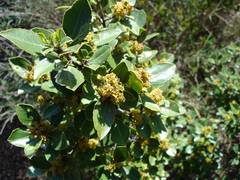
Rhamnus is a genus of about 110 species of deciduous and evergreen shrubs and small trees in the family Rhamnaceae, distributed across the Northern Hemisphere and into parts of Africa and South America. Plants range from low shrubs 3 feet (90 cm) tall to small trees of 20 to 30 feet (6 to 9 m), with simple, often glossy leaves marked by prominent parallel veins. Branch tips of several species end in a short spine, the source of the name buckthorn. The small greenish to yellowish flowers are inconspicuous, opening in spring, and are followed by rounded berry-like drupes that ripen from red to black and each hold two to four seeds. The fruit of many species contains compounds with a strong laxative effect and is mildly toxic to people if eaten. The genus grows in woodland, hedgerows, scrub, and along watercourses on a wide range of soils. A limitation is that several species, including R. cathartica, are listed as invasive across much of North America, where birds spread the seed and the plants form dense thickets that crowd out native vegetation.
Native Range
Rhamnus is native across the Northern Hemisphere, through Europe, Asia, and North America, with additional species in Africa and South America. Species grow in woodland, scrub, hedgerows, and streamside thickets, and R. cathartica of Eurasia has naturalized widely in North America.Suggested Uses
Evergreen Rhamnus species such as R. alaternus are used as hedges, screens, and clipped specimens in mild climates. Native species are grown in wildlife and woodland plantings, where the fruit supports birds, while invasive species are avoided in regions where they spread.How to Identify
Appearance
Size & Dimensions
Height3' - 30'
Width/Spread5' - 20'
Bloom Information
Rhamnus flowers in spring, roughly April through June, with small greenish to yellow flowers clustered along the twigs that are easy to overlook. Many species carry male and female flowers on separate plants. The fruit ripens through summer and autumn from red to black and is taken by birds.
Detailed Descriptions
Foliage Description
green to dark greenGrowing Conditions
Sun Requirements
Requires 3-12 hours of direct sunlight daily
• Full Sun: 6+ hours of direct sunlight
• Partial Shade: 3-6 hours of direct sunlight
• Full Shade: Less than 3 hours of direct sunlight