Pyrrhopappus, Genus, pauciflorus, Species,
- Genus & species
smallflower desert-chicory
South-central United States and northern Mexico
SunFull Sun
Overview
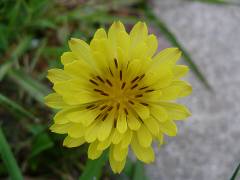
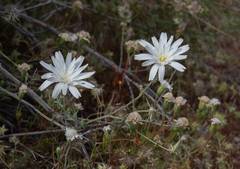
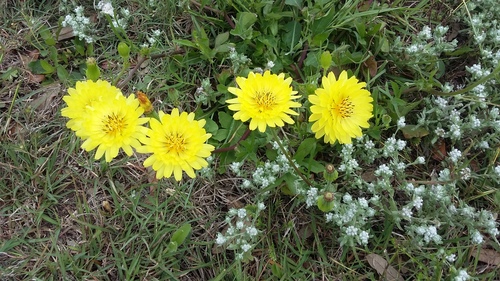
Pyrrhopappus pauciflorus is an annual to short-lived herb in the aster family, growing 1-2 feet (30-60 cm) tall on slender, branching stems that exude milky sap when broken. The mostly basal leaves are 2-6 inches (5-15 cm) long, narrow, and often lobed or toothed, resembling those of dandelions. From spring into early summer it produces pale yellow flower heads about 1-1.5 inches (2.5-4 cm) across, each made up of strap-shaped ray florets, sometimes with darker anthers at the center; the heads open in morning sun and close by afternoon. Flowers are followed by spherical seed heads of parachute-tipped seeds carried on the wind, much like a dandelion. It is native to Texas, the south-central United States, and northern Mexico, where it grows in grasslands, fields, roadsides, and other open, disturbed ground. The plant germinates with fall or late-winter moisture and completes its cycle within a single season. It self-seeds freely and can spread into lawns and beds, behaving as a weed in some settings. It tolerates heat, drought, and poor soils but does not persist where ground stays wet or heavily shaded.
Native Range
Native to the south-central United States and northern Mexico, centered on Texas and extending into neighboring states. It grows in prairies, fields, lawns, roadsides, and disturbed open ground.Suggested Uses
Used in wildflower meadows, naturalized areas, and low-water native plantings in warm climates. It combines with other spring annuals and prairie grasses on open, sunny ground. Its self-seeding habit suits informal plantings rather than tidy borders or lawns.How to Identify
Appearance
Size & Dimensions
Height1' - 2'
Width/Spread6" - 1'6"
Bloom Information
Detailed Descriptions
Foliage Description
greenGrowing Conditions
Sun Requirements
Requires 6-12 hours of direct sunlight daily
• Full Sun: 6+ hours of direct sunlight
• Partial Shade: 3-6 hours of direct sunlight
• Full Shade: Less than 3 hours of direct sunlight
Water & Climate
Water Needs
Drought Tolerance
Drought tolerant when established
Care & Maintenance
Care Guide
Grows in full sun on well-drained sandy, loamy, rocky, or clay soils, including alkaline ground, and tolerates lean, dry conditions. As an annual it germinates with fall or late-winter moisture, grows quickly, and dies after setting seed. It needs no fertilizer and little or no irrigation once established. Self-sown seed maintains the stand from year to year, and seedlings can be thinned or removed where spread is not wanted. Wet or shaded ground does not suit it. It is grown from seed sown directly where plants are to grow rather than transplanted.Pruning
No pruning is needed for this annual. Spent plants can be pulled or mowed after seed has set if self-seeding is not wanted. Removing seed heads before they open limits spread into lawns and beds.Toxicity
Non-toxicPlanting Guide
Planting Methods & Timing
Planting Method
direct sow
Direct Sow Timing
fall or late winter
Days to Maturity
60–120 days
Plant Spacing
8 inches
Companion Planting
Good Companions