Pyracantha, Genus, coccinea, Species,
- Genus & species
scarlet firethorn
Native to southern Europe and western Asia — from Spain east through the Balkans, Italy, Turkey, and the Caucasus — in scrubland, hedgerows, rocky hillsides, and forest margins
Overview
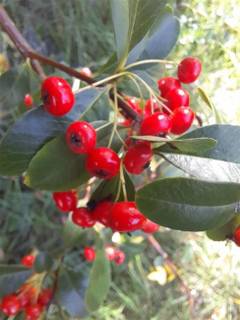
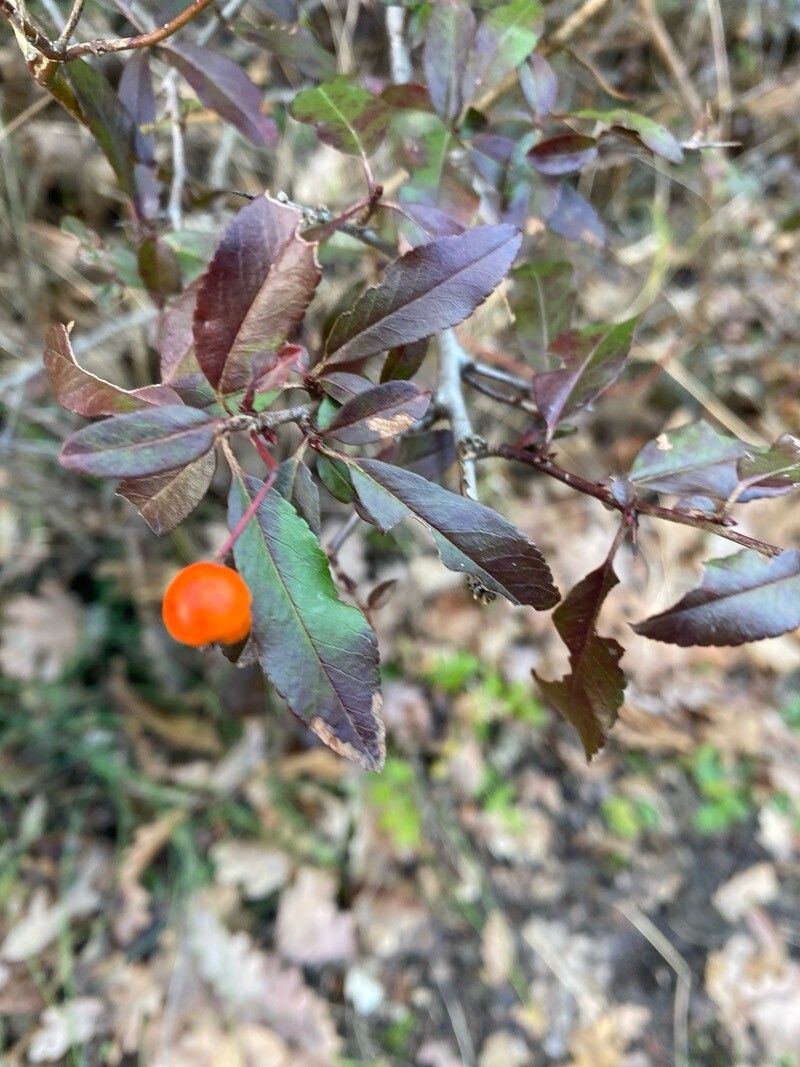
Pyracantha coccinea is scarlet firethorn (firethorn), an upright thorny broadleaf evergreen shrub in the rose family Rosaceae growing 6-12 feet (1.8-3.7 m) tall and 6-10 feet (1.8-3 m) wide in cultivation across a 4-6 year establishment to ornamental size. The generic name Pyracantha is from Greek pyr (fire) and akantha (thorn), recording both the fiery orange-red to scarlet color of the fall and winter berries and the sharp rigid stem thorns that are the genus's two identifying characters. The specific epithet coccinea is from Latin coccineus meaning scarlet and reinforces the berry color. White five-petaled flowers 0.3 inch (8 mm) across are carried in dense flat-topped corymbs 1-2 inches (2.5-5 cm) along the previous year's stems in late spring to early summer (May through June) across a 3-week bloom, and the flowers are followed by masses of orange-red to scarlet pomes (small berry-like fruits) 0.25 inch (6 mm) that ripen from September and persist on the stems through winter until consumed by birds — the persistent berry display across the fall and winter months is the species' primary ornamental feature. The stems are armed with sharp rigid thorns 0.5-1 inch (1.3-2.5 cm) long at the leaf axils, and the thorn armament supports the species' traditional use as an intruder-deterrent barrier hedge and the espalier training against walls and fences where the thorny stems form a security barrier against the wall surface. Limitation: fire blight (Erwinia amylovora), the bacterial disease that blackens and kills infected shoots, and scab (Spilocaea pyracanthae), the fungal disease that spots leaves and disfigures berries, are the two primary disease concerns — fire blight strikes are managed by cutting 12 inches (30 cm) below visible damage with sterilized tools, and resistant cultivars such as 'Mohave', 'Fiery Cascade', and 'Teton' carry reduced disease pressure compared with the unselected species type. The sharp thorns are a handling hazard during pruning and maintenance, and thick leather gloves and long sleeves are warranted when working within the canopy. Berries are mildly toxic if ingested in quantity by humans or pets (the flesh is low in toxicity but the seeds contain cyanogenic compounds in the Rosaceae family pattern). Drought-tolerant once established. Deer-resistant (because of the thorns). Waxwings, thrushes, blackbirds, and robins consume the berries across the fall and winter months.
Native Range
Native to southern Europe and western Asia — from Spain east through the Balkans, Italy, Turkey, and the Caucasus — in scrubland, hedgerows, rocky hillsides, and forest margins. The generic name Pyracantha is from Greek pyr (fire) and akantha (thorn), and the specific epithet coccinea is from Latin coccineus meaning scarlet.Suggested Uses
Used as a security barrier hedge at 48-72 inch (120-180 cm) spacing between plants (the sharp thorn armament deters intrusion through the hedge line), as an espalier trained against walls and fences where the thorny stems form a security barrier and the fall and winter berry display is displayed against the wall surface, as a free-standing specimen in residential and commercial landscapes where the persistent orange-red to scarlet berry display across fall and winter is the primary ornamental purpose, and as a bird-habitat planting supplying fall and winter food for waxwings, thrushes, blackbirds, and robins in USDA zones 6 through 9. The masses of persistent orange-red to scarlet pomes from September through winter, the thorny stems that support barrier and security applications, the glossy dark green evergreen foliage, the adaptability across loam, sand, and clay soil types, the drought tolerance once established, and the deer resistance (because of the thorns) combine to make Pyracantha coccinea a foundation thorny evergreen barrier and berry-display shrub for fall and winter interest. Fire blight and scab pressure in wet climates calls for the selection of resistant cultivars. Positions along walkways, patios, and children's play areas call for setback siting to avoid the thorn-contact hazard.How to Identify
Appearance
Size & Dimensions
Height6' - 12'
Width/Spread6' - 10'
Bloom Information
Late spring to early summer (May through June) across a 3-week bloom period. White five-petaled flowers 0.3 inch (8 mm) in dense flat-topped corymbs 1-2 inches (2.5-5 cm) along the previous year's stems (second-year wood). Bees and flies pollinate the flowers across the bloom period. Masses of orange-red to scarlet pomes (small berry-like fruits) 0.25 inch (6 mm) follow from September and persist on the stems through winter until consumed by birds. Waxwings, thrushes, blackbirds, and robins are the primary consumers across the fall and winter months.
Detailed Descriptions
Flower Description
white five-petaled flowers 0.3 inch (8 mm) across in dense flat-topped corymbs 1-2 inches (2.5-5 cm) along the previous year's stems (second-year wood) in late spring to early summer (May through June) across a 3-week bloom period; the flowers are pollinated by bees and flies and are followed by masses of orange-red to scarlet pomes (small berry-like fruits) 0.25 inch (6 mm) that ripen from September and persist on the stems through winter, constituting the species' primary ornamental display across the fall and winter monthsFoliage Description
glossy dark green above and paler beneath, with oblong to elliptic leaves 1-2 inches (2.5-5 cm) long carrying finely serrated margins, alternately arranged along the stems; the stems are armed with sharp rigid thorns 0.5-1 inch (1.3-2.5 cm) long at the leaf axils — the thorns are the source of the generic name Pyracantha (from Greek pyr meaning fire and akantha meaning thorn, i.e. fire-thorn) and serve as the species' primary anti-browsing defense and the character that supports its use as a security barrier planting; evergreen year-roundGrowing Conditions
Sun Requirements
Requires 5-12 hours of direct sunlight daily
• Full Sun: 6+ hours of direct sunlight
• Partial Shade: 3-6 hours of direct sunlight
• Full Shade: Less than 3 hours of direct sunlight
Care & Maintenance
Care Guide
Site in full sun to partial shade with 5-12 hours of direct sun per day (full sun produces the heaviest berry set) in well-drained loam, sand, or clay soil with a pH of 5.5-7.5. Water weekly during the first two growing seasons to establish the root system; established plants tolerate moderate drought. Fire blight (Erwinia amylovora) is the primary bacterial disease concern — infected shoots blacken and wilt from the tip backward, and strikes are managed by cutting 12 inches (30 cm) below visible damage with tools sterilized between cuts. Scab (Spilocaea pyracanthae) spots the leaves and disfigures the berries in wet climates. Resistant cultivars ('Mohave', 'Fiery Cascade', 'Teton') carry reduced disease pressure compared with the unselected species type. Pruning is done in summer (July through August) after flowering and after the developing berries are visible, so that berry-bearing second-year wood is not removed — pruning before or during the bloom removes the current year's flower and berry display. Thick leather gloves and long sleeves are warranted when pruning or working within the thorny canopy. Berries are mildly toxic if ingested in quantity (the seeds contain cyanogenic compounds in the Rosaceae family pattern). Drought-tolerant once established. Deer-resistant (because of the thorns). Hardy in USDA zones 6-9.Pruning
Pruning is done in summer (July through August) after flowering and after the developing berries are visible on the stems — this timing preserves the berry-bearing second-year wood that carries the fall and winter berry display. Pruning before or during the bloom removes the current season's flowers and the berry display. Fire blight strikes are cut 12 inches (30 cm) below visible damage and the pruning tools are sterilized between cuts (rubbing alcohol or a 10% bleach solution) to prevent spreading the bacterial infection between cuts on the same plant. Thick leather gloves and long sleeves are warranted when working within the thorny canopy. The species trains readily as an espalier against walls and fences — the main stems are tied to a support framework (wires, trellises, or the wall surface) and the lateral shoots are shortened in summer to produce a flat two-dimensional plant with a dense berry display against the wall surface. Free-standing specimens are pruned to maintain the desired size and to remove crossing and dead branches.Pruning Schedule
Prune: July–August
summer