Image 1 of 6
1 / 6
Plant Reference
Pyracantha, Genus, spp., Multiple species,
- Genus
- Multiple species
firethorn pyracantha
Southeastern Europe (Italy, the Balkans), southwestern and central Asia (Turkey, the Caucasus, Iran), and southern China (varies by species in the genus); dry rocky slopes, forest edges, and scrubland on a range of soil types
Overview
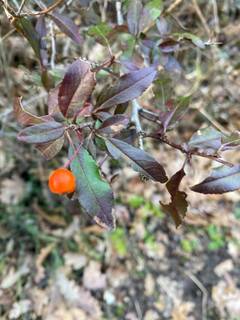
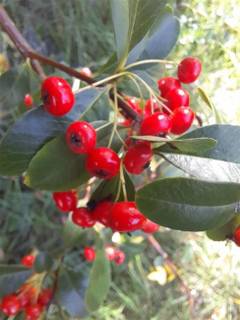
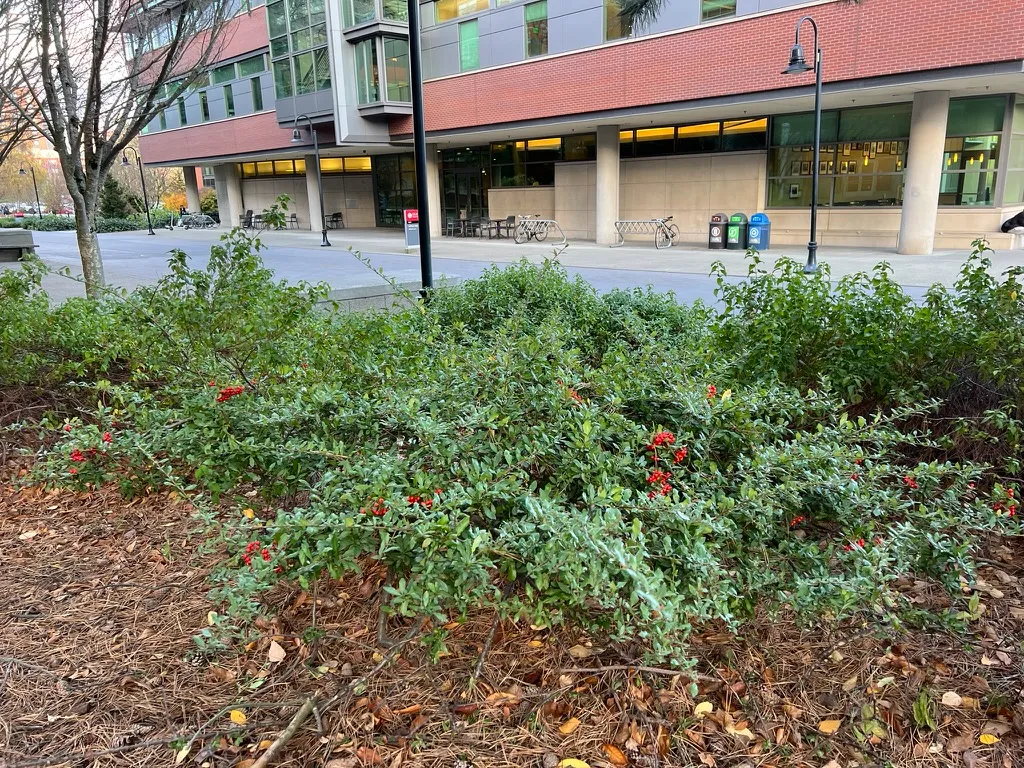
Pyracantha spp. is a genus of upright thorny broadleaf evergreen shrubs in the rose family Rosaceae growing 6–12 feet (1.8–3.6 m) tall and 6–10 feet (1.8–3 m) wide on rigid thorny stems that produce a dense impenetrable thorny canopy. The genus name Pyracantha is from Greek pyr meaning fire and akantha meaning thorn and refers jointly to the bright fire-colored fall and winter berries (bright orange, red, or yellow according to the species and cultivar) and to the sharp rigid axillary thorns 0.5–1 inch (1.3–2.5 cm) long that emerge at the leaf axils along the stems and along the modified short shoots that develop into the spur branches that carry the flower and fruit clusters. The genus contains approximately seven species — the most encountered cultivated species are P. coccinea (scarlet firethorn, native to southeastern Europe and southwestern Asia), P. angustifolia (narrow-leaf firethorn, native to southwestern China), P. koidzumii (Formosa firethorn, native to Taiwan), and P. fortuneana (Chinese firethorn, native to central China) — together with the disease-resistant interspecific hybrids developed at the U.S. National Arboretum (the Glenn Dale hybrids 'Mohave', 'Apache', 'Navaho', 'Pueblo', and 'Teton') that supply the modern fire-blight-and-scab-resistant selections of the cultivated trade. White small 5-petaled flowers 0.3 inch (8 mm) across open in dense flat-topped corymbs 2–3 inches (5–7 cm) wide that cover the upper surface of the spur branches in May through June across a 3-week bloom period, and dense persistent berry clusters develop from the spent flowers in fall and persist through winter into late winter when consumed by birds. Limitation: the species and many older cultivars are susceptible to fire blight (Erwinia amylovora, the same bacterial disease that affects pears and apples in the family Rosaceae) and to apple scab (Venturia inaequalis), and infected wood produces blackened scorched-looking shoots and dieback that calls for prompt cut-out at least 12 inches (30 cm) below the visible damage with sterilization of pruning tools between cuts; the modern Glenn Dale hybrids ('Mohave', 'Apache', 'Navaho', 'Pueblo', 'Teton') were specifically bred for combined fire blight and apple scab resistance and are the recommended selections for regions with active disease pressure. The sharp rigid 0.5–1 inch thorns make pruning operations difficult and call for thick leather gloves, long sleeves, and eye protection during any maintenance task — the same thorns that make the species a security barrier and a deer-deterrent hedge plant make hands-on maintenance hazardous. The genus tolerates espalier training against walls and fences, where the rigid thorny stems can be tied to wires or trellis supports and pruned to a flat plane that supplies a year-round wall-feature display of foliage, flowers, and berries. Native to southeastern Europe, southwestern and central Asia, and China. Drought-tolerant once established. Non-toxic (the berries are reported to be edible but mealy and astringent and are not eaten by humans in volume). Deer-resistant.
Native Range
Native to southeastern Europe (Italy, the Balkan Peninsula), southwestern and central Asia (Turkey, the Caucasus region, Iran), and southern and central China (varies by species in the genus). Found on dry rocky slopes, in forest edges, and in scrubland on a range of soil types from acidic forest soils to alkaline limestone and chalk. The genus has been cultivated in European gardens since at least the 16th century introduction of Pyracantha coccinea from the Mediterranean region, and the Asian species (P. angustifolia, P. koidzumii, P. fortuneana) were introduced to western horticulture during the 19th and early 20th century plant-collecting expeditions to China and Taiwan.Suggested Uses
Used as an impenetrable thorny security hedge or barrier planting, espalier-trained wall or fence display, large mixed-shrub border anchor, and bird-feeding winter-interest planting at 6–10 foot (1.8–3 m) spacing for free-standing plantings or at 4–6 foot (1.2–1.8 m) spacing for clipped formal hedges in USDA zones 6 through 9. The dense thorny branching that produces an impenetrable security barrier, the dense persistent fire-colored fall and winter berry clusters in bright orange, red, or yellow that supply both the ornamental display and the late-winter bird-food resource, the year-round glossy dark green small-leaved evergreen foliage, and the tolerance of espalier training against walls and fences combine for a versatile thorny evergreen shrub across full-sun garden positions. Active pedestrian-traffic positions, doorway-adjacent plantings, and households with small children, pets, or other vulnerable users are unsuitable because of the sharp rigid 0.5–1 inch thorns that produce puncture wounds. Regions with active fire blight pressure (commercial pear or apple orchards nearby, recent Erwinia amylovora outbreaks) are unsuitable for the species type and older cultivars but acceptable for the modern Glenn Dale interspecific hybrids ('Mohave', 'Apache', 'Navaho', 'Pueblo', 'Teton') that carry combined fire blight and apple scab resistance.How to Identify
Appearance
Size & Dimensions
Height6' - 12'
Width/Spread6' - 10'
Bloom Information
White small 5-petaled flowers 0.3 inch (8 mm) across open in dense flat-topped corymbs 2–3 inches (5–7 cm) wide that cover the upper surface of the spur branches in May through June across a 3-week bloom period. Honeybees and other early-summer pollinators work the flowers for nectar across the bloom window. Dense persistent berry clusters develop from the spent flowers in fall in colors that vary by species and cultivar — bright orange (most encountered, on P. coccinea and many of the Glenn Dale hybrids), bright red (P. koidzumii, 'Mohave', 'Lalandei'), or yellow ('Soleil d'Or', 'Shawnee') — that ripen in fall and that persist through winter into late winter when consumed by birds (cedar waxwings, robins, mockingbirds) on the late-winter resource pulse.
Detailed Descriptions
Flower Description
white small 5-petaled flowers 0.3 inch (8 mm) across carried in dense flat-topped corymbs 2-3 inches (5-7 cm) wide that cover the upper surface of the spur branches in May through June across a 3-week bloom period; followed by dense persistent berry clusters with berries 0.3 inch (8 mm) across in colors that vary by species and cultivar — bright orange (the most encountered color in the cultivated trade, on P. coccinea and many hybrids), bright red (P. koidzumii, 'Mohave', 'Lalandei'), or yellow ('Soleil d'Or', 'Shawnee') — that ripen in fall and that persist through winter into late winter when consumed by birdsFoliage Description
glossy dark green small elliptic to oblanceolate leaves 1-2.5 inches (2.5-6 cm) long densely arranged on thorny branches; sharp rigid axillary thorns 0.5-1 inch (1.3-2.5 cm) long emerge at the leaf axils along the stems and along modified short shoots that develop into the spur branches that carry the flower and fruit clusters; evergreen year-round (with some leaf drop in cold winters at the species' northern range margins)Growing Conditions
Sun Requirements
Requires 6-10 hours of direct sunlight daily
• Full Sun: 6+ hours of direct sunlight
• Partial Shade: 3-6 hours of direct sunlight
• Full Shade: Less than 3 hours of direct sunlight
Care & Maintenance
Care Guide
Site in full sun with 6–10 hours of direct sun per day in well-drained loam, clay, or sand soil with a pH of 5.5–7.5. Drought tolerance develops once the root system is established, and the genus is one of the more drought-tolerant of the rose family broadleaf evergreens. The genus is susceptible to fire blight (Erwinia amylovora) and to apple scab (Venturia inaequalis); fire blight produces blackened scorched-looking shoots and dieback that calls for prompt cut-out at least 12 inches (30 cm) below the visible damage with sterilization of pruning tools between cuts (10% bleach solution or 70% isopropyl alcohol), and the modern Glenn Dale interspecific hybrids ('Mohave', 'Apache', 'Navaho', 'Pueblo', 'Teton') developed at the U.S. National Arboretum for combined fire blight and apple scab resistance are the recommended selections for regions with active disease pressure. Pruning is done after flowering finishes (June or July) to preserve the developing berry crop on the current-season spur branches. Thick leather gloves, long sleeves, and eye protection are warranted during any pruning or maintenance task because the sharp rigid 0.5–1 inch thorns produce puncture wounds. Non-toxic. Deer-resistant. Hardy in USDA zones 6–9.Pruning
Pruning is done after flowering finishes in early summer (June or July) to preserve the developing berry crop on the current-season spur branches that emerge from the previous year's wood. Hand pruners or loppers (not hedge shears) are the appropriate tools because hedge shears remove the spur branches that carry the next berry crop and produce a sheared form that loses the natural arching branching habit that displays the berry clusters. For espalier training against walls or fences, new growth is tied to wire supports as it elongates and outward-pointing shoots are removed at each pruning to maintain the flat plane of the trained form. Fire-blight-infected wood is cut out immediately upon detection regardless of the season — cuts at least 12 inches (30 cm) below the visible damage with sterilization of pruning tools between cuts (10% bleach solution or 70% isopropyl alcohol). Thick leather gloves, long sleeves, and eye protection are warranted during any pruning task because of the sharp rigid thorns.Pruning Schedule
Prune: June–July
summer