Pultenaea, Genus, retusa, Species,
- Genus & species
notched bush-pea
Overview
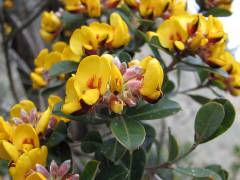
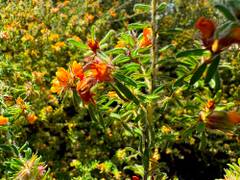
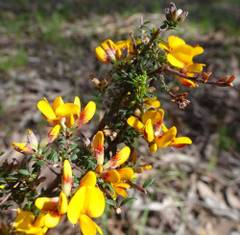
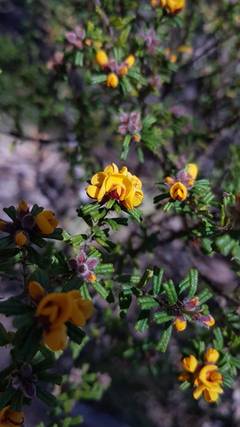
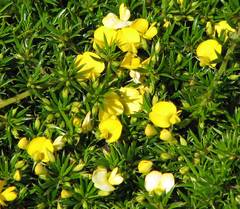
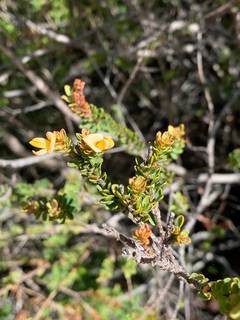
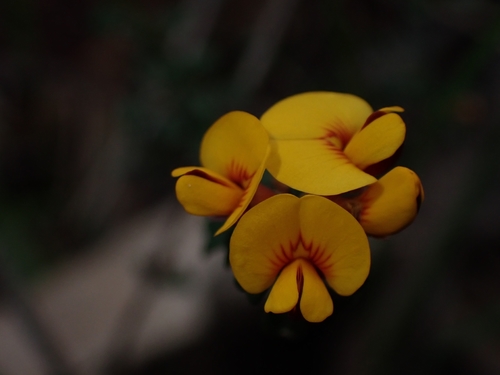
Pultenaea retusa is a small evergreen shrub in the pea family, growing 1.5-3 feet (0.5-1 m) tall and wide with a low, somewhat spreading framework. The leaves are wedge-shaped to obovate, 0.3-0.6 inch (8-15 mm) long, mid-green, and notched at the tip, often with a tiny point set in the notch, which gives the species its name. In spring the branches carry pea-shaped flowers about 0.4 inch (10 mm) across, yellow with reddish-brown markings on the back of the upper petal, clustered toward the stem tips. Small pods follow and split to shed seed. P. retusa grows in heath and dry sclerophyll woodland on sandstone-derived soils in eastern Australia, on sharply drained, low-nutrient ground. It needs full sun or light shade and good drainage, and grows poorly in heavy or wet soils. Plants are relatively short-lived and become woody and open with age.
Native Range
Pultenaea retusa is native to eastern Australia, mainly the coast and ranges of New South Wales. It grows in heath and dry sclerophyll woodland on sandstone-derived soils.Suggested Uses
P. retusa is grown in native, heath, and rockery plantings on well-drained sites, spaced 1.5-2 feet (0.5-0.6 m) apart. It also suits low-water gardens with other phosphorus-sensitive Australian shrubs.How to Identify
Appearance
Size & Dimensions
Height1'6" - 3'
Width/Spread1'6" - 3'
Bloom Information
Flowering occurs in spring, roughly September to November in the native range. Clusters of yellow pea flowers with reddish-brown markings cover the stem tips. Native bees and other insects visit the flowers.
Detailed Descriptions
Flower Description
yellow with reddish-brown markingsFoliage Description
mid-greenGrowing Conditions
Sun Requirements
Requires 5-8 hours of direct sunlight daily
• Full Sun: 6+ hours of direct sunlight
• Partial Shade: 3-6 hours of direct sunlight
• Full Shade: Less than 3 hours of direct sunlight
Care & Maintenance
Care Guide
P. retusa grows in full sun to light shade in sharply drained sandy or gravelly soils. Watering through the first growing season supports establishment, after which plants tolerate dry spells. It is sensitive to high phosphorus, so a low-phosphorus or native-plant fertiliser suits it. Heavy, wet soils lead to root rot. Light frost is tolerated in USDA zones 9-10. Plants are relatively short-lived and may be replaced as they decline.Pruning
Light tip-pruning after flowering keeps the shrub compact and encourages branching. P. retusa does not regenerate well from hard cuts into bare wood. Removing spent flowering stems maintains a denser form.Pruning Schedule
Prune: November–December
late spring
Container Growing
Suitable for container growing
Minimum container size: 3 gallons