Ptilotus, Genus, obovatus, Species,
- Genus & species
cotton bush
Overview
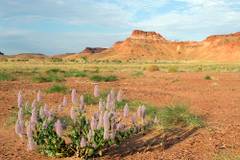
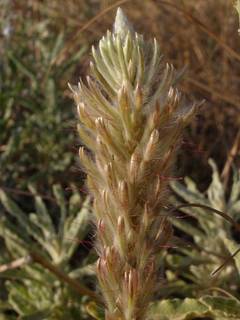
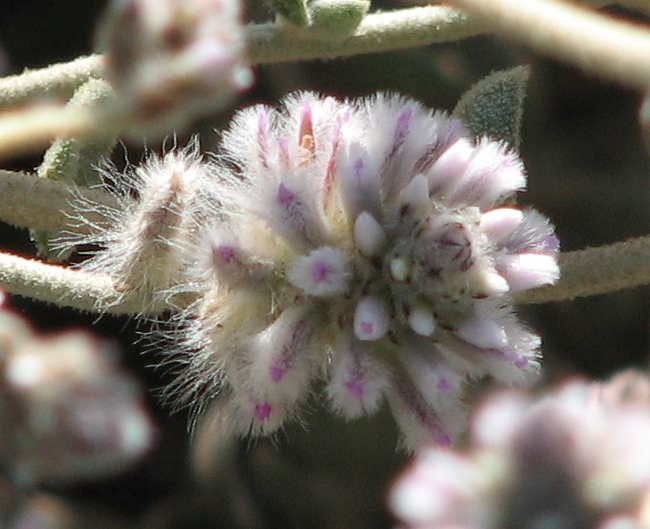
Ptilotus obovatus is a rounded shrub or subshrub growing 12-60 inches (30-150 cm) tall and wide, with many branches from a woody base. Leaves are obovate to spoon-shaped, 0.4-1.6 inches (1-4 cm) long, grey to silver-green and covered in dense woolly hairs that reduce water loss. Flowers are packed into rounded to cylindrical woolly spikes 0.6-1.6 inches (1.5-4 cm) long at the branch tips; each spike is grey-green to pink or mauve and has a soft, cottony texture from the long hairs on the flower parts. Flowering occurs through much of the year, with flushes after rain. The small dry fruits are wind-dispersed within the persistent woolly perianth. The plant develops a deep root system and tolerates extended drought, heat, and alkaline soils. Foliage is greyer in exposed, dry positions and greener with more moisture. Plants are moderately long-lived in arid conditions, persisting through dry seasons by drawing on stored root reserves, and are grazed by livestock and native herbivores.
Native Range
Native to arid and semi-arid Australia, occurring in all mainland states across the inland. Grows on stony hills, plains, and calcareous or limestone soils, as well as clay and loam, in low-rainfall regions, often in saltbush and mulga communities.Suggested Uses
Grown in dry-climate and native gardens, rockeries, and low-water borders, spaced 18-36 inches (45-90 cm) apart. Suited to coastal and inland sites with alkaline or stony soils and to containers of at least 3 gallons (11 L) with free-draining mix. Used in revegetation and as forage for grazing animals on arid rangelands.How to Identify
Appearance
Size & Dimensions
Height1' - 5'
Width/Spread1' - 4'
Bloom Information
Flowers through much of the year, with the heaviest flushes from late winter to spring (July to November) and additional flowering after summer rain. Spikes hold their woolly form for several weeks and fade slowly to grey. Flowering is closely tied to rainfall, and plants may flower at almost any time following significant rain.
Detailed Descriptions
Flower Description
grey-green to pink or mauveFoliage Description
grey to silver-greenGrowing Conditions
Sun Requirements
Requires 6-12 hours of direct sunlight daily
• Full Sun: 6+ hours of direct sunlight
• Partial Shade: 3-6 hours of direct sunlight
• Full Shade: Less than 3 hours of direct sunlight
Care & Maintenance
Care Guide
Grows in full sun on free-draining sandy, stony, loam, or calcareous soils and tolerates alkaline conditions to pH 8.5. Established plants are drought-tolerant and heat-tolerant, drawing on a deep root system, and decline in wet, poorly drained, or humid sites where root and stem rots develop. Watering is needed only to establish young plants; mature plants need little or no irrigation. Frost tolerance is moderate, with foliage damage in hard frosts. Plants are short-lived in cultivation outside arid climates, persisting longer in dry, well-drained positions. Light trimming after flowering maintains a rounded shape.Pruning
Light trimming after each flowering flush keeps the shrub compact and prolongs foliage density. Cutting back hard into old wood may fail to reshoot, so pruning is kept to younger stems. Removal of spent woolly spikes tidies the plant but is not required for health.Pruning Schedule
Prune: November–December
summer
Container Growing
Suitable for container growing
Minimum container size: 3 gallons