Image 1 of 10
1 / 10
© Photographs by Gnangarra...commons.wikimedia.org, some rights reserved (CC-BY) · Wikimedia Commons
Pterostylis, Genus, recurva, Species,
- Genus & species
jug orchid
Overview
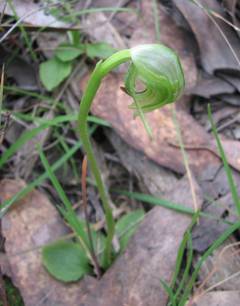
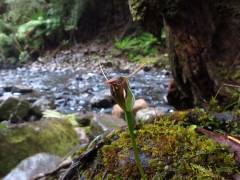
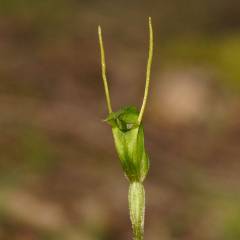
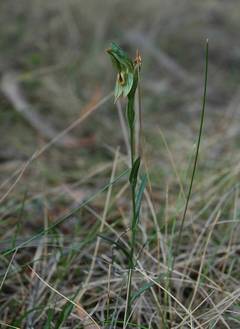
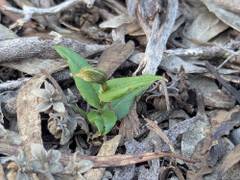
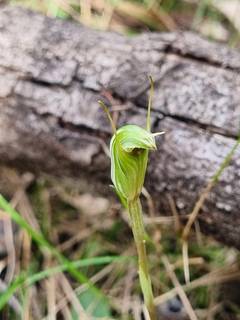
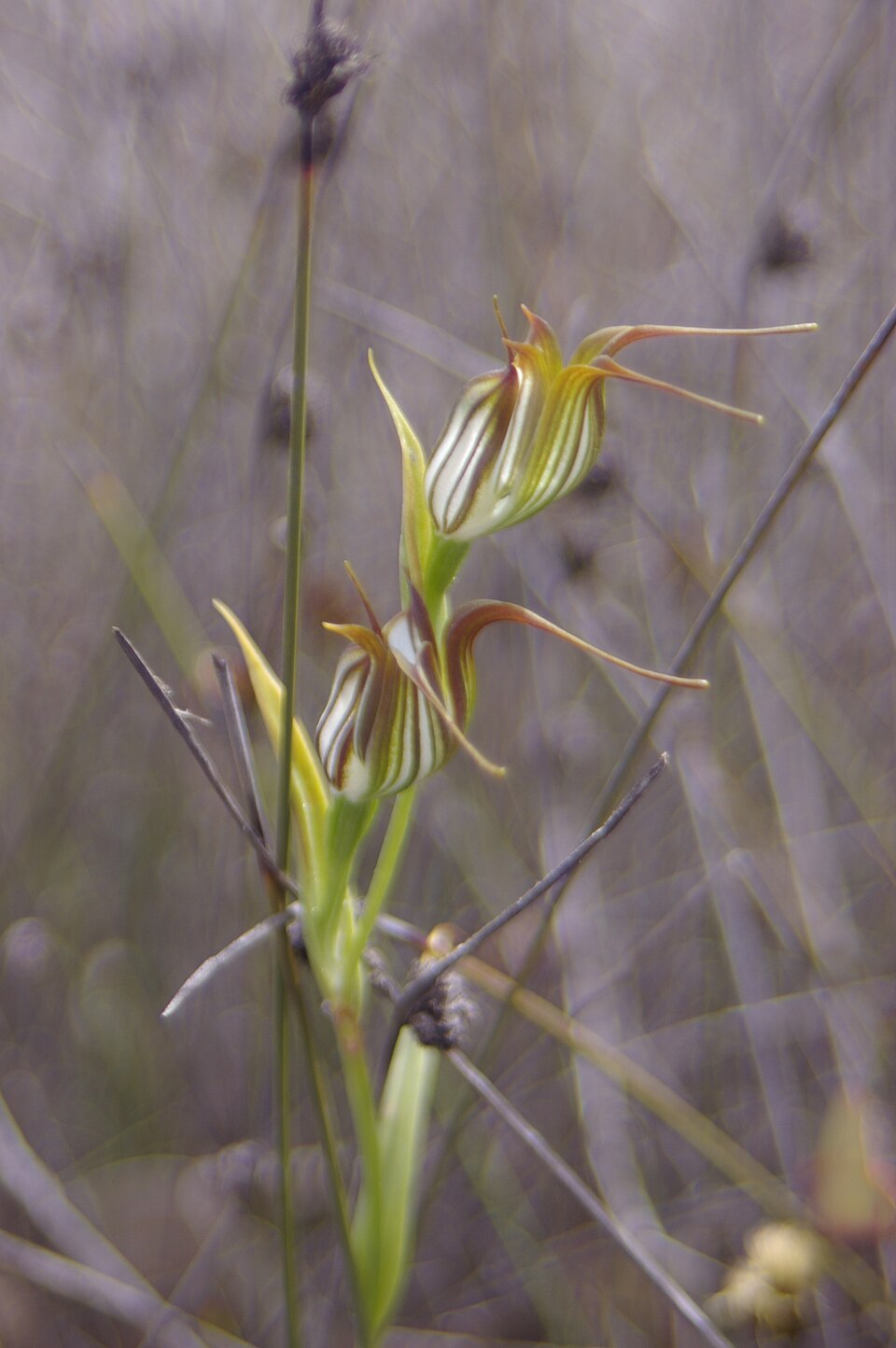
Pterostylis recurva is a deciduous terrestrial orchid growing from an underground tuber, reaching 4-12 inches (10-30 cm) tall in flower. A rosette of 4-8 leaves forms at the stem base; each leaf is oval to lance-shaped, 0.4-1.2 inches (1-3 cm) long, with wavy margins. A single flower tops each stem, 0.8-1.2 inches (2-3 cm) long, translucent green with brown and white longitudinal stripes. The dorsal sepal and petals fuse into a hood (galea) that curves forward and downward over the column, with the tips drawn into slender points. The lateral sepals are joined and recurved, producing the jug-like outline behind the common name. A hinged, touch-sensitive labellum sits within the hood and snaps shut when triggered by an insect. Flowering stems emerge in winter after autumn rains, and the foliage dies back to the tuber over summer dormancy. Plants spread slowly by daughter tubers, forming small colonies over several years. Like most terrestrial orchids, it depends on a symbiotic soil fungus (mycorrhiza) for germination and establishment, which makes transplanting from the wild largely unsuccessful.
Native Range
Native to south-western Western Australia, from the Geraldton district south to the Esperance region. Grows in jarrah and wandoo woodland, shrubland, and granite-outcrop margins in sandy or lateritic soils, often among leaf litter at 0-1,000 feet (0-300 m) elevation.Suggested Uses
Grown by terrestrial-orchid growers in pots and in dedicated orchid beds. Suited to native plant collections in regions with a Mediterranean climate of wet winters and dry summers. Not adapted to garden borders with summer irrigation.How to Identify
Appearance
Size & Dimensions
Height4" - 1'
Width/Spread2" - 4"
Bloom Information
Flowers from June to October, with peak bloom from July to September in south-western Australia. Each stem carries one flower lasting 2-4 weeks. Flowering follows autumn and winter rains; in drier years fewer plants flower and some persist as non-flowering rosettes.
Detailed Descriptions
Flower Description
translucent green with brown and white stripesFoliage Description
greenGrowing Conditions
Sun Requirements
Requires 3-6 hours of direct sunlight daily
• Full Sun: 6+ hours of direct sunlight
• Partial Shade: 3-6 hours of direct sunlight
• Full Shade: Less than 3 hours of direct sunlight
Care & Maintenance
Care Guide
Grows in well-drained sandy or lateritic soils that are moist through the winter growing season and dry during summer dormancy. Tuber growth depends on compatible mycorrhizal fungi in the soil, so establishment outside native habitat is difficult. In cultivation it is grown in deep pots of sandy loam with a mineral mulch, kept moist from autumn to spring and left dry once foliage yellows. Aphids feed on emerging flower stems, and slugs graze the rosette in wet conditions. Tubers rot if kept wet during summer dormancy. Colonies increase slowly as each plant forms one or more replacement tubers per season.Pruning
No pruning is required. Spent flower stems and yellowing leaves can be removed once the plant enters summer dormancy without affecting the tuber. Removal of seed capsules before they split limits self-seeding in pot culture.Container Growing
Suitable for container growing
Minimum container size: 1 gallons