Pterostylis, Genus, pedunculata, Species,
- Genus & species
maroonhood
Overview
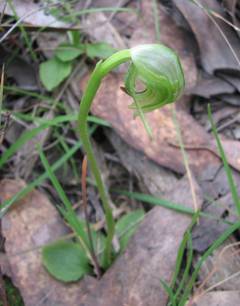
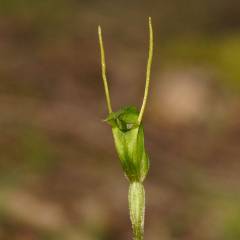
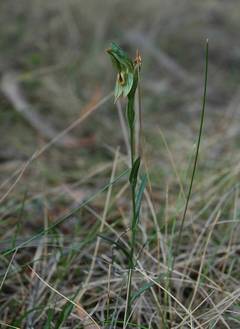
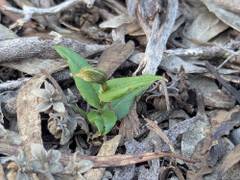
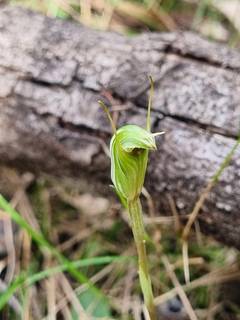
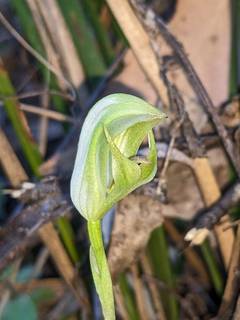
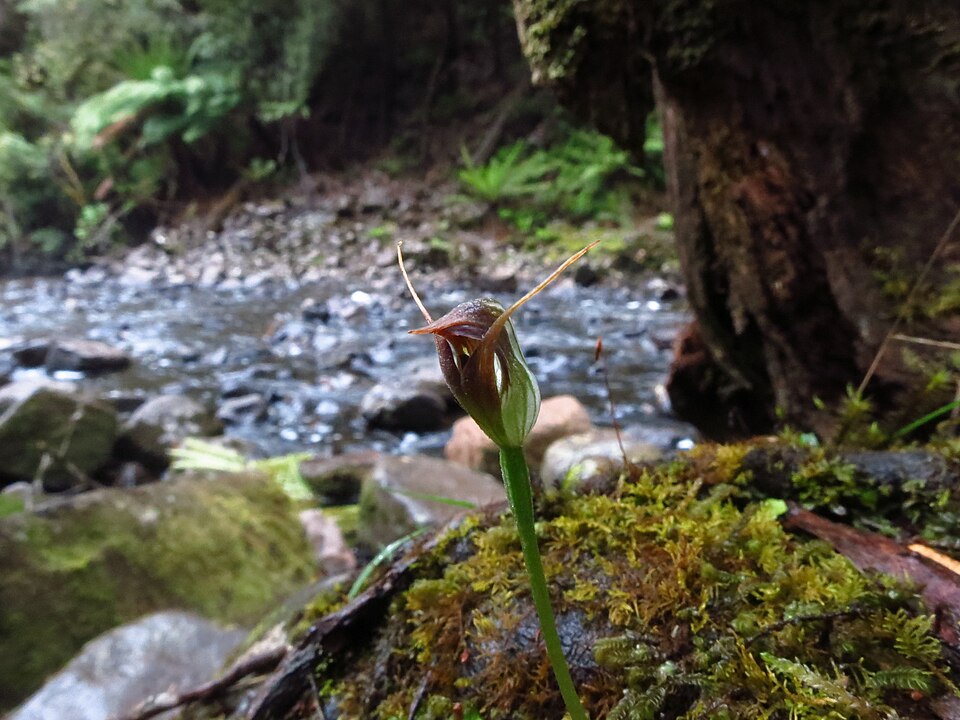
Pterostylis pedunculata, the maroonhood, is a small colony-forming terrestrial orchid in the family Orchidaceae native to south-eastern Australia. Growing from an underground tuber, non-flowering plants form a ground-level rosette of stalked oval leaves, while flowering plants raise a slender stem 2-6 inches (5-15 cm) tall with a single hooded flower. The flower is translucent green with a dark maroon to brown domed hood, formed from fused sepals and petals, and a hinged, sensitive lip inside. When a small fungus gnat lands on the lip, it snaps inward and briefly traps the insect, which collects pollen as it escapes. Flowering runs through winter and early spring, after which the plant dies back to the tuber and rests through the dry summer. It grows in shaded, moist leaf litter in forest and woodland on humus-rich loamy soils, forming spreading colonies by tuber offsets. Like other terrestrial orchids it depends on soil fungi and resists transplanting from the wild.
Native Range
Pterostylis pedunculata is native to south-eastern Australia, occurring in New South Wales, Victoria, Tasmania, and South Australia. It grows in shaded, moist forest and woodland on humus-rich loamy soils, often in colonies under shrubs and trees.Suggested Uses
Grown by terrestrial orchid specialists in shaded pots and in bushland conservation on undisturbed woodland soils. Suited to shaded fern and woodland collections that follow a moist-winter, dry-summer cycle. Not used in open borders because of its shade and soil-fungus needs.How to Identify
Appearance
Size & Dimensions
Height2" - 6"
Width/Spread1" - 3"
Bloom Information
Detailed Descriptions
Flower Description
green with maroon hoodFoliage Description
green, rosetteGrowing Conditions
Sun Requirements
Requires 2-5 hours of direct sunlight daily
• Full Sun: 6+ hours of direct sunlight
• Partial Shade: 3-6 hours of direct sunlight
• Full Shade: Less than 3 hours of direct sunlight
Care & Maintenance
Care Guide
Grows in part to full shade on moist, humus-rich loamy soils that stay damp through the cool growing season and dry in summer. Winter moisture and leaf-litter cover support the rosettes and flowers, after which the plant rests as a dormant tuber. Establishment depends on native soil fungi, so the orchid resists transplanting and grows poorly in disturbed or fertilised ground. Sharp drainage during summer dormancy prevents tuber rot. In cultivation it is grown in shaded pots of humus-rich, free-draining mix kept just moist in the cool months and dried off in summer. Colonies build slowly from tuber offsets.Pruning
No pruning is required, as the rosette and flower stem die back to the tuber each summer. Spent flower stems can be removed once seed has shed. Leaf litter is left in place over the colony to keep the soil cool and moist.Pruning Schedule
Prune: November
late spring
Container Growing
Suitable for container growing
Minimum container size: 1 gallons