Pterocarya, Genus,
- Genus
Wingnut
Caucasus region (Turkey, Iran, Georgia) through Central Asia to China and Japan; the genus carries a disjunct native distribution across moist valley bottoms, streamsides, and floodplain habitats; approximately 6 species composing the genus; all species run riparian trees in the wild
Overview
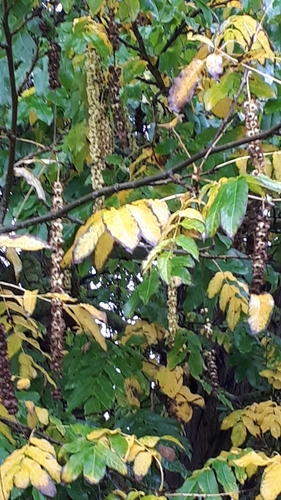
Pterocarya (wingnut) is a genus of large deciduous trees in the Juglandaceae (walnut family) reaching 50–100 feet (15–30 m) tall with a spread of 40–80 feet (12–24 m) and a broad rounded-to-spreading crown carried on massive wide-spreading branches. Pinnately compound leaves run 12–24 inches (30–60 cm) long with 11–25 serrated leaflets, which creates bold coarse-textured foliage similar to the foliage of walnut (Juglans), but with winged fruit clusters in place of the hard-shelled nuts that define the walnut genus. Pendant catkin-like fruit chains run the characteristic feature of the genus—strings of small winged nutlets 12–18 inches (30–45 cm) long hanging like green curtains from the branches through midsummer. Growth rate runs fast, among the fastest-growing large hardwood trees in commercial cultivation. Hardy to zone 5 (with variation among species). The genus includes approximately 6 species ranging from the Caucasus to East Asia, with P. fraxinifolia (Caucasian wingnut) and P. stenoptera (Chinese wingnut) the two most frequently stocked in the commercial nursery trade. The genus spreads aggressively by root suckering from established trunks.
Native Range
Pterocarya species run native across a disjunct range extending from the Caucasus region (Turkey, Iran, and Georgia) through Central Asia into China and Japan. The genus grows in moist valley bottoms, along streamsides, and across floodplain habitats throughout its native range. The riparian native ecology translates in garden cultivation to a high moisture requirement and to suitability for the wettest garden positions where few other large shade trees tolerate the standing moisture.Suggested Uses
Planted as a specimen in large-scale landscapes, parks, or along waterways at 40–60 foot (12–18 m) spacing in zone-5-and-warmer gardens with room for the very large mature stature. Fast growth rate produces canopy shade within 10–15 years from planting. Bold pinnately compound foliage supplies summer texture at large scale. The characteristic pendant fruit chains hang from the branches through midsummer as the genus' signature ornamental feature. The genus requires abundant soil moisture and aggressive root-sucker removal. The very large mature scale makes the genus a poor fit for small gardens, confined urban spaces, and sites near building foundations, paved surfaces, or utility infrastructure.How to Identify
Appearance
Size & Dimensions
Height50' - 100'
Width/Spread40' - 80'
Bloom Information
Pendant catkins open in spring across the canopy and develop through spring into the characteristic pendant fruit chains of small winged nutlets 12–18 inches (30–45 cm) long that hang from the branches through midsummer. The pendant fruit chains and the bold pinnately compound foliage run the genus' primary ornamental features across the growing season.
Detailed Descriptions
Flower Description
Pendant catkins in spring give way to characteristic fruit chains of small winged nutlets 12-18 inches long hanging from the branches by midsummerFoliage Description
Medium green; pinnately compound 12-24 inches long with 11-25 serrated leaflets; bold coarse foliage texture; yellow autumn colorationGrowing Conditions
Sun Requirements
Requires 6-12 hours of direct sunlight daily
• Full Sun: 6+ hours of direct sunlight
• Partial Shade: 3-6 hours of direct sunlight
• Full Shade: Less than 3 hours of direct sunlight
Care & Maintenance
Care Guide
Full sun in moist deep soil (pH 5.5–7.5) matches the genus' cultivation needs. Hardy to zone 5 (with variation among species). The genus requires abundant soil moisture because the native ecology runs riparian and the trees tolerate standing water at the root zone that defeats most large shade trees. Growth rate runs fast. Root suckering runs aggressive, which requires regular sucker removal to prevent the genus from colonizing garden space beyond the original planting. Mature scale runs very large, so planting sites need ample room for the 50-to-100-foot mature height and 40-to-80-foot mature spread.Pruning
Pruning runs in late winter to remove dead or crossing branches as needed. Root suckers are removed regularly from the parent trunk to prevent colonial spread of the tree into unwanted garden positions. The broad spreading crown develops naturally without shaping intervention.Pruning Schedule
Prune: January–February
winter
