Pteridium, Genus, esculentum, Species,
- Genus & species
austral bracken
Australia, New Zealand, and the Pacific
Overview
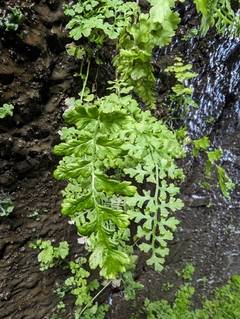
Pteridium esculentum, austral or Australian bracken, is a large, fast-spreading fern of the family Dennstaedtiaceae, found through Australia, New Zealand, and the Pacific. Rather than forming a crown, it sends up single coarse fronds at intervals from a deep, far-creeping underground rhizome. The fronds are broadly triangular, three times divided, and dark green, standing 2-6 feet (0.6-1.8 m) tall on stout stalks and dying back in cold or drought. The rhizome network lets a single plant spread into dense colonies many yards across, and bracken readily dominates cleared, burnt, or disturbed land, where it shades out other growth. It reproduces both by spores, released from the curled margins of the fronds, and by rhizome extension. P. esculentum grows on poor, acidic, well-drained soils in full sun to light shade and tolerates fire, which it resprouts from rapidly. The fronds contain ptaquiloside and thiaminase, compounds that are carcinogenic and poisonous to grazing stock and people, which limits its use and makes it a serious pasture weed.
Native Range
Native to Australia, New Zealand, New Guinea, and many Pacific islands, with a range extending into parts of southern and eastern Asia. It grows in open forest, heath, pasture, and disturbed ground, often spreading widely after fire or clearing.Suggested Uses
Used mainly in large bush-garden and habitat plantings where a tough, spreading groundcover fern is wanted on poor acid soil. Historically the starchy rhizomes were roasted as food by Aboriginal Australians and Maori, the source of the name esculentum. Its vigorous spread and toxic foliage limit garden use to contained or wild settings.How to Identify
Growing Conditions
Sun Requirements
Requires 4-10 hours of direct sunlight daily
• Full Sun: 6+ hours of direct sunlight
• Partial Shade: 3-6 hours of direct sunlight
• Full Shade: Less than 3 hours of direct sunlight
Care & Maintenance
Care Guide
Bracken grows in full sun to light shade on poor, acidic, sharply drained soil and needs little once established. Fronds emerge in spring and are killed by frost, while the deep rhizome survives cold and drought and resprouts. It spreads aggressively by rhizome and can overrun gardens and pasture, so it is rarely planted on purpose and is more often controlled. Repeated cutting or cultivation weakens the rhizome over time. The foliage is toxic to grazing livestock and contaminates hay. In cultivation it suits only large bush gardens where its spread can be contained.Pruning
Dead fronds can be cut to the ground in late autumn or winter after they brown. Cutting green fronds repeatedly through the season is also used to weaken and slow the spreading rhizome. No pruning is needed for the plant's health.Pruning Schedule
Prune: June–July
fallwinter