Pteridium, Genus, spp., Multiple species,
- Genus
- Multiple species
brackens
Cosmopolitan (all continents except Antarctica)
Overview
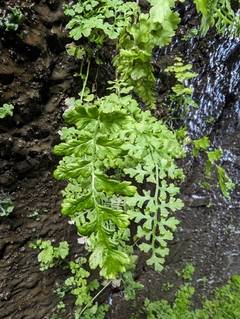
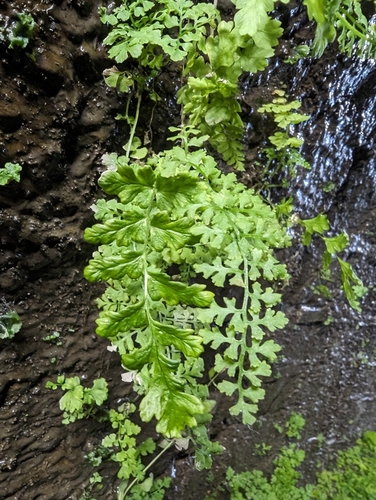
Pteridium is a genus of deciduous ferns in the family Dennstaedtiaceae, often treated as the single variable species P. aquilinum with several regional segregates. It grows on every continent except Antarctica, across temperate and tropical zones alike. Fronds are large, coarse, and triangular, held more or less horizontally on stout stalks 1.5 to 10 ft (0.5 to 3 m) tall, and arise singly from deep, far-creeping rhizomes rather than from a clump. The rhizome network lets a single plant spread across many square yards and form dense colonies that shade out other vegetation. New fronds unroll in spring and die back to brown in autumn, leaving the rhizomes dormant underground through winter. Reproduction is by spores along the rolled frond margins, and also vegetatively through the rhizomes. All fronds contain ptaquiloside, a compound shown to be carcinogenic, along with thiaminase, which destroys vitamin B1; grazing animals that eat bracken can develop bracken poisoning, and the young fronds and spores carry the highest concentrations. The colony-forming habit and toxicity make Pteridium a persistent weed of pastures, heaths, and cleared woodland.
Native Range
Pteridium is native across temperate and tropical regions of both hemispheres, occurring throughout North America, Europe, Asia, Africa, Australia, and South America. It colonizes acidic soils in open woodland, moorland, heath, pasture, and recently burned or cleared ground. It tolerates climates from cool temperate to tropical.Suggested Uses
Pteridium is rarely planted and is more often managed as a colonizer of heaths, moors, and cleared woodland. In its native settings it shelters ground-nesting birds and small mammals. It is not suited to garden cultivation because of its spreading rhizomes and toxic foliage.How to Identify
Appearance
Size & Dimensions
Height1'6" - 10'
Width/Spread3' - 10'
Bloom Information
Pteridium is a fern and does not flower. Spores ripen along the rolled margins of mature fronds from mid to late summer. Most spread in established stands occurs through the creeping rhizomes rather than from spores.
Detailed Descriptions
Foliage Description
green to yellow-greenGrowing Conditions
Sun Requirements
Requires 4-10 hours of direct sunlight daily
• Full Sun: 6+ hours of direct sunlight
• Partial Shade: 3-6 hours of direct sunlight
• Full Shade: Less than 3 hours of direct sunlight