Pseudofumaria, Genus, spp., Multiple species,
- Genus
- Multiple species
yellow corydalis
Overview
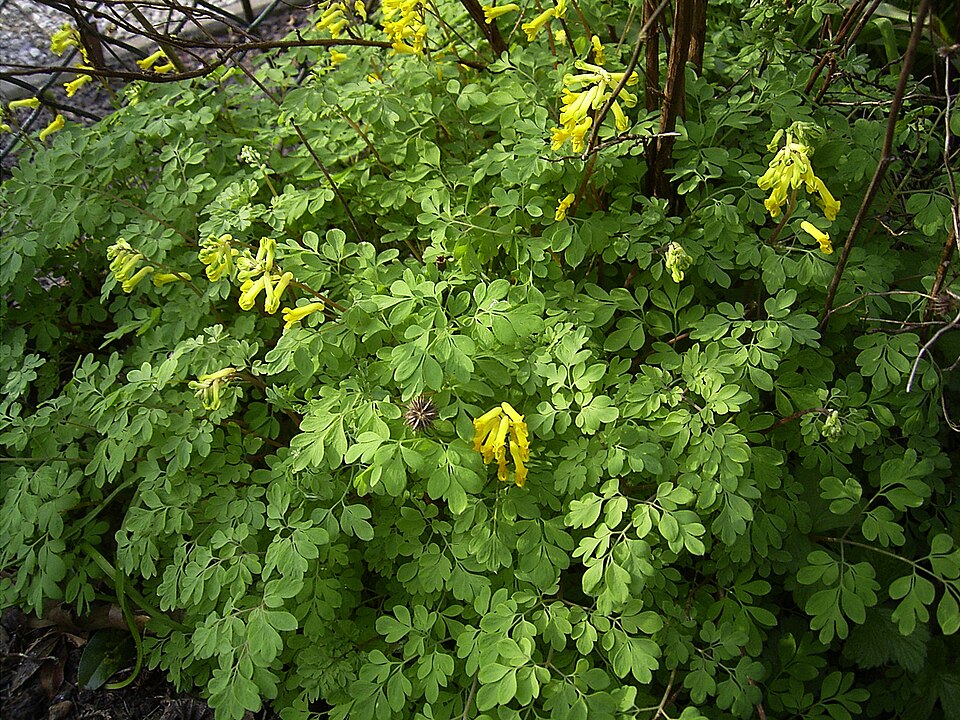
Pseudofumaria is a small genus of clump-forming perennials in the poppy family (Papaveraceae), comprising the yellow-flowered P. lutea and the cream-white P. alba, both formerly placed in Corydalis. Plants grow 8-15 inches (20-38 cm) tall and slightly wider, forming low mounds of divided, blue-green, fern-like foliage. From late spring well into autumn they carry dense racemes of small tubular flowers, each 0.5-0.8 inch (12-20 mm) long with a short spur, in yellow (P. lutea) or pale cream (P. alba). The long flowering season, often spanning four to six months, continues where summers are not too hot and dry. Pseudofumaria self-seeds freely, colonizing crevices in walls, paving, and rocky ground, which can make it spread beyond where it is wanted. The brittle stems and roots are intolerant of disturbance, so plants are difficult to move once established. All parts contain isoquinoline alkaloids and can cause digestive upset if eaten.
Native Range
Pseudofumaria is native to the southern Alps and foothills of Italy and the western Balkans, where it grows in rocky woodland, shaded cliffs, and limestone crevices. Both species have naturalized widely in temperate Europe and North America, often on old walls.Suggested Uses
Grown in shaded rock gardens, wall crevices, woodland edges, and the fronts of cool borders. The long bloom and self-seeding habit suit naturalistic and cottage-style plantings. It also fills gaps in paving and dry shade where many perennials struggle.How to Identify
Appearance
Size & Dimensions
Height8" - 1'3"
Width/Spread10" - 1'6"
Colors
Bloom Information
Flowering begins in late spring and continues through summer into autumn, roughly May to October, over a longer season than many spring perennials. Bloom is heaviest in cool, moist conditions and slows during hot, dry spells. Self-sown seedlings extend the display year to year.
Detailed Descriptions
Foliage Description
blue-greenGrowing Conditions
Sun Requirements
Requires 2-6 hours of direct sunlight daily
• Full Sun: 6+ hours of direct sunlight
• Partial Shade: 3-6 hours of direct sunlight
• Full Shade: Less than 3 hours of direct sunlight
Care & Maintenance
Care Guide
Grow Pseudofumaria in part shade to full shade in moist but well-drained soil; it also grows in sun where the soil stays cool and damp. The genus tolerates poor, stony, and alkaline soils and naturalizes readily in wall crevices. Water during dry spells to prolong flowering, as growth slows and foliage can scorch in hot, dry sites. Little feeding is needed, and rich soil mainly increases self-seeding. Plants are short-lived but maintain themselves through abundant seedlings. To limit spread, seedlings are removed before they set seed.Pruning
Shear Pseudofumaria back after the first flush to encourage fresh foliage and a second wave of bloom. Removing old flower stems before seed sets reduces unwanted self-sowing. Tattered foliage can be cut to the ground in late autumn.Pruning Schedule
Prune: October
fall
Container Growing
Suitable for container growing
Minimum container size: 2 gallons
