Prosartes, Genus, smithii, Species,
- Genus & species
largeflower fairybells
W North America (BC to CA; moist coniferous/mixed forests, streambanks, shaded slopes; sea level to 5000 ft / 1500 m)
Overview
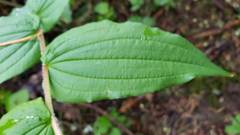
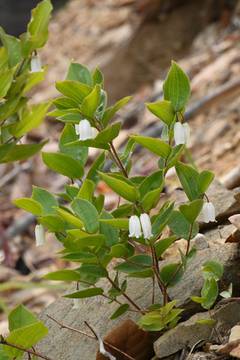
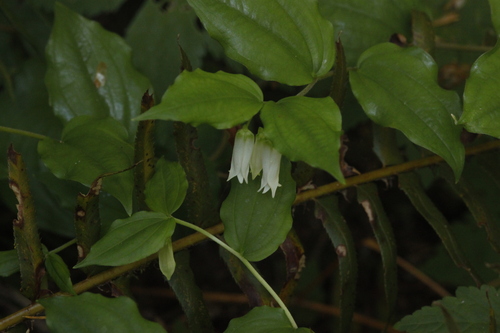
Prosartes smithii (formerly Disporum smithii) is a deciduous perennial reaching 12-24 inches (30-45 cm) tall with a spread of 12-18 inches (30-45 cm), spreading slowly by rhizomes to form loose colonies. The arching, unbranched stems bear alternate, ovate to lanceolate leaves 2-5 inches (5-13 cm) long, medium green with prominent parallel veins, arranged along the upper half of the stem. Pendant, narrowly bell-shaped white to cream flowers 0.5-0.8 inch (13-20 mm) long hang in clusters of 1-5 from the stem tips in April-May. Bright orange to reddish-orange berries follow in late summer—the berries are fleshy, oval, 0.3-0.5 inch (8-13 mm), and persist into autumn. Growth rate is moderate. Hardy to zone 5. A Pacific Northwest native woodland perennial—the arching stems with pendant white bells and bright orange fruits provide three-season interest.
Native Range
Prosartes smithii is native to western North America—from British Columbia south through Washington, Oregon, and California—in moist coniferous and mixed forests, streambanks, and shaded slopes from sea level to 5,000 feet (1,500 m).Suggested Uses
Planted in shade gardens, woodland borders, or native plant gardens at 12-18 inch (30-45 cm) spacing. Pacific Northwest native with three-season interest: white bells spring, bright orange berries late summer-autumn. Naturalizes in shade. Not suitable for full sun, dry sites, or hot climates.How to Identify
Appearance
Size & Dimensions
Height1' - 2'
Width/Spread1' - 1'6"
Bloom Information
Pendant narrowly bell-shaped white to cream flowers 0.5-0.8 inch (13-20 mm) long, in clusters of 1-5 from stem tips, April-May. Bloom duration 3-4 weeks. Bright orange to reddish-orange fleshy berries follow in late summer-autumn.
Detailed Descriptions
Flower Description
White to cream; pendant narrowly bell-shaped 0.5-0.8 inch; clusters of 1-5 from stem tips; Apr-May; bright orange berries followFoliage Description
Medium green; ovate to lanceolate 2-5 inches; prominent parallel veins; alternate on arching stemsGrowing Conditions
Sun Requirements
Requires 2-4 hours of direct sunlight daily
• Full Sun: 6+ hours of direct sunlight
• Partial Shade: 3-6 hours of direct sunlight
• Full Shade: Less than 3 hours of direct sunlight
Care & Maintenance
Care Guide
Plant in partial to full shade in moist, humus-rich, well-drained soil (pH 5.0-7.0). Hardy to zone 5. Consistent moisture needed. Spreads slowly by rhizomes. Tolerates dry shade once established in cool climates. Pacific Northwest native.Pruning
Cut back spent stems to ground after frost in autumn. No other pruning needed. Allow berries to develop and persist for late-season interest.Pruning Schedule
Prune: October–November
fall
Container Growing
Suitable for container growing
Minimum container size: 2 gallons