Potentilla, Genus, indica, Species,
- Genus & species
mock strawberry
Overview
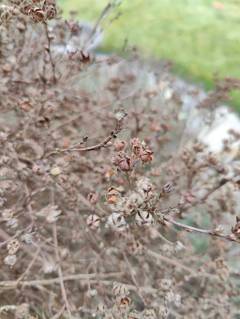
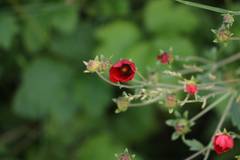
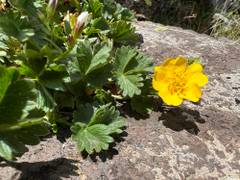
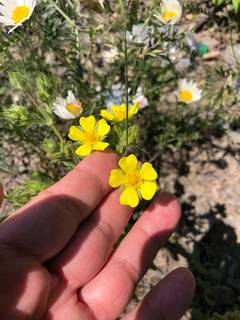
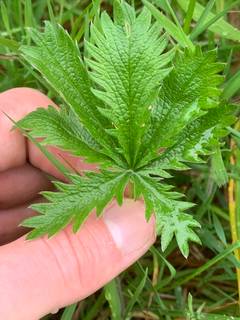
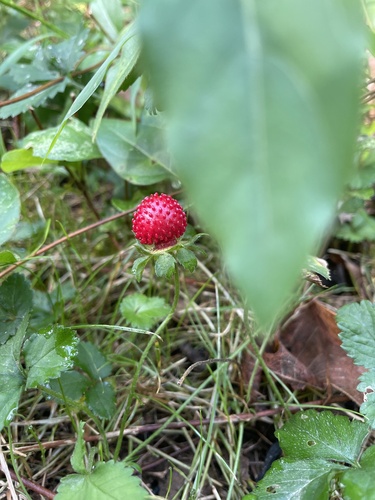
Potentilla indica is a low, creeping herbaceous perennial in the rose family, spreading by runners to form a mat 2-4 inches (5-10 cm) tall and 1-2 feet (30-60 cm) or more wide. Its leaves are divided into three toothed, oval leaflets 1-1.5 inches (2.5-4 cm) long, resembling those of a true strawberry but slightly hairier and a paler green. From spring into autumn it carries solitary yellow flowers 0.5-0.75 inch (12-20 mm) across, each with five petals, held above the foliage on slender stalks. The flowers are followed by round, red, strawberry-like fruit about 0.4 inch (10 mm) across, dotted with tiny seeds and held upright rather than nodding. The fruit is edible but nearly tasteless and dry, unlike the sweet fruit of garden strawberries. The plant roots at the nodes of its runners and spreads quickly across open ground, lawns, and bed edges. It stays low and semi-evergreen in mild winters, dying back where winters are cold. It self-sows and runs freely and can become weedy in lawns and borders.
Native Range
Native to southern and eastern Asia, from the Indian subcontinent through China and Japan. It grows in grassland, woodland edges, and disturbed ground. It has naturalized widely in North America, Europe, and elsewhere in mild temperate regions.Suggested Uses
Used as a fast groundcover for slopes, bed edges, and informal areas, and sometimes in containers and hanging baskets where its runners trail. Its low mat suppresses some weeds once established. Because it spreads readily, it is usually kept away from manicured lawns and mixed borders.How to Identify
Appearance
Size & Dimensions
Height2" - 4"
Width/Spread1' - 2'
Bloom Information
Blooms over a long season from spring into autumn, mainly April through October in mild climates. The yellow flowers open singly and are pollinated by small bees and flies. Flowering and fruiting often overlap, so blooms and red fruit appear together.
Detailed Descriptions
Foliage Description
greenGrowing Conditions
Sun Requirements
Requires 3-8 hours of direct sunlight daily
• Full Sun: 6+ hours of direct sunlight
• Partial Shade: 3-6 hours of direct sunlight
• Full Shade: Less than 3 hours of direct sunlight
Care & Maintenance
Care Guide
Grows in full sun to part shade in average, moist, well-drained soil but tolerates poor and dry ground once established. It needs little care and spreads by runners that root as they go, quickly covering bare soil. Because it runs into lawns and beds, it is often grown where its spread can be contained. Trimming runners keeps it within bounds. It has few serious pests, though leaf spot can occur in damp, crowded conditions. Plants stay low and semi-evergreen in mild winters and regrow from the crown after cold ones.Pruning
Runners can be trimmed back through the growing season to limit spread. Tattered foliage can be sheared in late winter before fresh growth begins. No other pruning is needed.Pruning Schedule
Prune: February
winter
Container Growing
Suitable for container growing
Minimum container size: 1 gallons