Platycodon, Genus, grandiflorus, Species,
- Genus & species
Balloon flower
Northeastern China, the Korean peninsula, Japan, and the Amur and Primorye regions of eastern Siberia
Overview
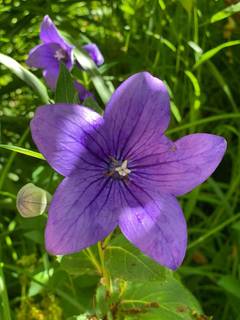
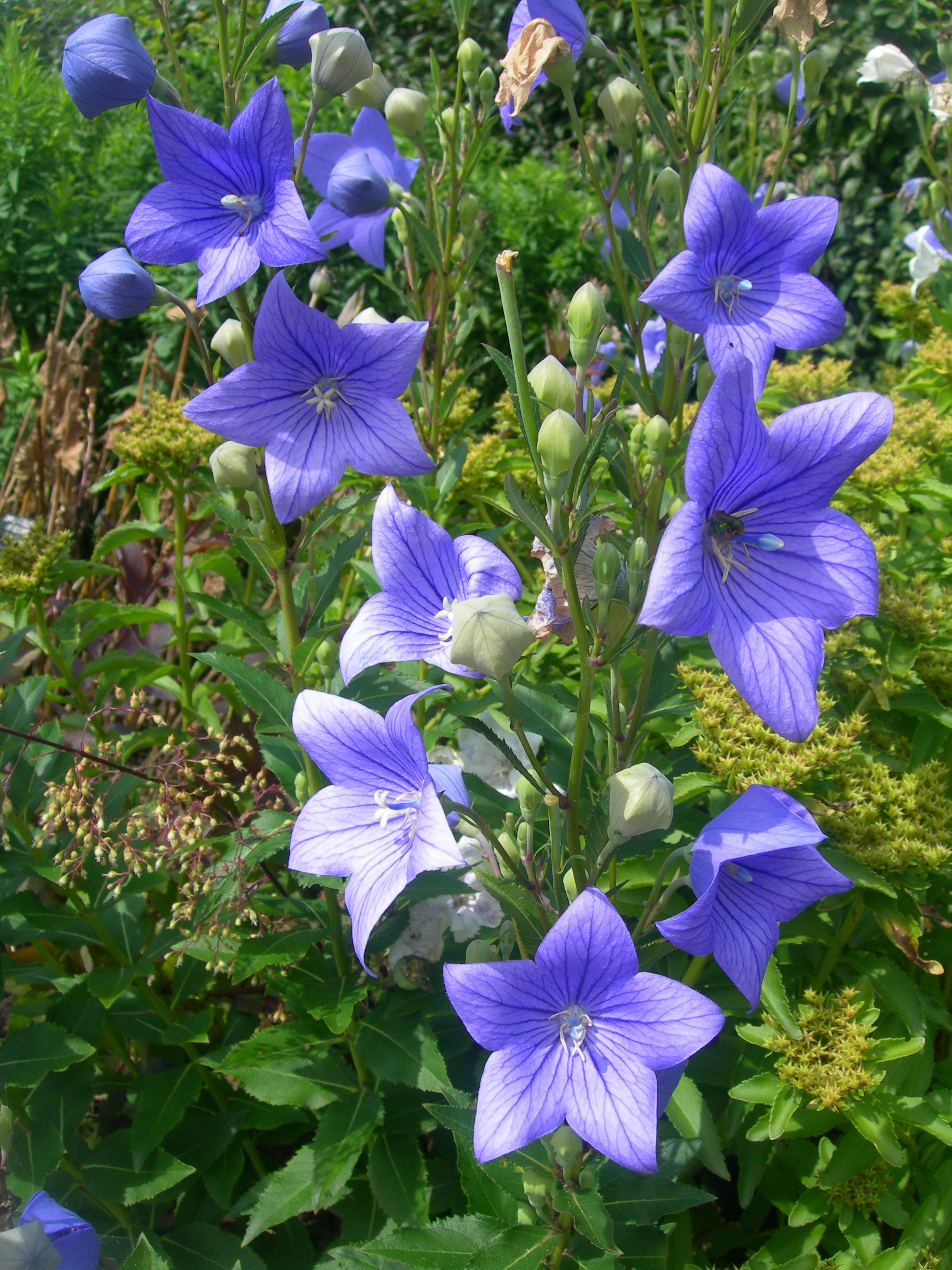
Platycodon grandiflorus is a herbaceous perennial forming an upright clump 12-30 inches (30-75 cm) tall and 12-18 inches (30-45 cm) wide from a fleshy taproot. Flower buds inflate into hollow, five-angled balloons 1-1.5 inches (2.5-4 cm) across before splitting open into broad star-shaped bells 2-3 inches (5-7.5 cm) wide in violet-blue, white, or pale pink, marked with darker veins. Leaves are 1-3 inches (2.5-7.5 cm) long, ovate to lanceolate, sharply toothed, blue-green above and paler beneath. Cut stems and roots release a white latex. Shoots break ground in early to mid-May in USDA zone 5, four to six weeks after most border perennials, and the crown is damaged by cultivation before it appears. The taproot descends 8-12 inches (20-30 cm) and regenerates poorly from division, so established clumps move or split with a high loss rate. Stems grown in fewer than five hours of sun lean outward and separate at the centre of the clump. Roots are harvested in Korea as the vegetable doraji and contain platycodin saponins. Hardy in USDA zones 3-8.
Native Range
Platycodon grandiflorus is native to eastern Asia, across northeastern China, the Korean peninsula, Japan, and the Amur and Primorye regions of eastern Siberia. It grows in open grassland, sunny forest clearings, and rocky slopes from sea level to about 5,600 feet (1,700 m). The genus Platycodon holds this single species.Suggested Uses
Planted through the middle of mixed borders at 12-15 inch (30-38 cm) spacing, in cottage plantings, and in rock gardens where dwarf forms under 10 inches (25 cm) are used. Container culture works in 3 gallons (11 L) or more with free drainage. Cut stems hold five to seven days in water once the cut end is seared to stop latex flow.How to Identify
Appearance
Size & Dimensions
Height1' - 2'6"
Width/Spread1' - 1'6"
Bloom Information
Flowering runs from early July to late August in USDA zone 5, carrying into September where spent flowers are removed. Each bell holds three to five days, and a mature clump shows 15-40 flowers open at once at peak. Buds inflate over about four days before splitting along five seams. Second-year plants flower sparsely, with full flower counts arriving in the third season.
Detailed Descriptions
Flower Description
violet-blue, white, or pale pink with darker veinsFoliage Description
blue-green above, paler beneath, turning yellow in autumnGrowing Conditions
Sun Requirements
Requires 4-8 hours of direct sunlight daily
• Full Sun: 6+ hours of direct sunlight
• Partial Shade: 3-6 hours of direct sunlight
• Full Shade: Less than 3 hours of direct sunlight
Care & Maintenance
Care Guide
Four to eight hours of direct sun daily holds the stems upright; clumps in less light lean outward and separate at the centre. Soil is well-drained loam or sandy loam at pH 5.5-7.5, and roots rot within a season in ground that stays wet through winter. Water use is about 1 inch (2.5 cm) per week in the first year, dropping to occasional deep watering once the taproot is down. Average garden soil calls for no supplementary fertiliser; heavy feeding produces tall, weak stems. Marking the crown position in autumn stops accidental digging during the six-week gap before shoots appear in spring. Slugs graze emerging shoots, and root rot follows waterlogging in clay.Pruning
Stems are cut to ground level after the first hard frost, or left standing through winter and taken off in early spring before new shoots emerge. Taller forms are cut back by one third in late May, which lowers mature height to 15-18 inches (38-45 cm) and reduces leaning. Division is done in spring on clumps three years old or more, cutting the crown into sections that each carry part of the taproot, with losses of a third or more.Pruning Schedule
Prune: April & October–November
fallearly spring
Container Growing
Suitable for container growing
Minimum container size: 3 gallons