Phytolacca, Genus, americana, Species,
- Genus & species
American pokeweed
Overview
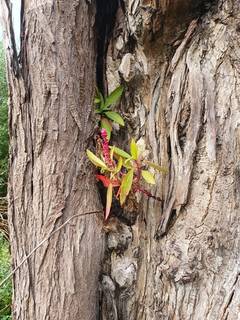
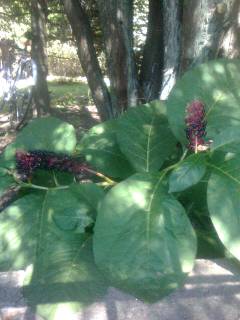
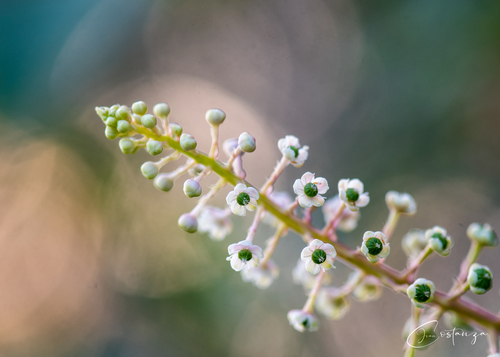
Phytolacca americana is a large herbaceous perennial native to eastern North America, growing 4-10 feet (1.2-3 m) tall in a single season from a thick, fleshy taproot. The smooth, often reddish to magenta stems branch widely and carry alternate, lance-shaped to oval leaves 5-12 inches (13-30 cm) long with a strong odor when crushed. From midsummer into fall it bears elongated clusters 4-8 inches (10-20 cm) long of small greenish-white flowers, which develop into flattened, glossy purple-black berries on pink to red stalks. Each berry holds about ten seeds and is eaten by many songbirds and mammals, which disperse the seeds widely. The plant dies to the ground after frost and resprouts from the persistent taproot each spring, growing larger year to year. It colonizes fence rows, woodland edges, pastures, and disturbed open ground across its range. All parts are toxic to humans, pets, and livestock, with the root, mature stems, and seeds holding the highest concentrations of the saponins and oxalates responsible; the juice of the berries stains skin and fabric a deep red-purple. Although young shoots are eaten cooked in some regional traditions, raw material and the mature plant cause severe digestive and neurological symptoms.
Native Range
Phytolacca americana is native to eastern and central North America, from southern Canada south to Florida and Texas. It has naturalized in parts of Europe and Asia and grows in open woods, fence rows, pastures, and disturbed ground.Suggested Uses
Phytolacca americana is grown occasionally in wildlife gardens and naturalized borders for its red stems and dark berries, which feed many bird species. Its large size and toxicity restrict its use to the back of informal plantings and wild areas where contact with children and grazing animals is unlikely. It also appears as a volunteer in hedgerows and field edges.How to Identify
Appearance
Size & Dimensions
Height4' - 10'
Width/Spread3' - 5'
Bloom Information
Flowering runs from midsummer into early fall, roughly July through September. The slender clusters of small greenish-white flowers open progressively along the stalk and are followed within weeks by green berries that ripen to glossy purple-black. Flowering and fruiting overlap, so a single cluster often carries flowers and ripe berries at once.
Detailed Descriptions
Foliage Description
greenGrowing Conditions
Sun Requirements
Requires 4-8 hours of direct sunlight daily
• Full Sun: 6+ hours of direct sunlight
• Partial Shade: 3-6 hours of direct sunlight
• Full Shade: Less than 3 hours of direct sunlight
Care & Maintenance
Care Guide
Phytolacca americana grows in full sun to partial shade in moist, fertile soils and tolerates a wide range of conditions once the taproot is established. It needs no watering or fertilizing and grows quickly each spring from the persistent root. The taproot deepens and thickens with age, making established plants hard to remove by hand. Birds spread the seed widely, so new seedlings appear well away from existing plants. All parts are toxic if eaten, and the berry juice stains skin and clothing. Cutting the top growth does not kill the plant, which resprouts from the root.Pruning
Cutting stems to the ground in fall removes the dying top growth and the berry clusters, limiting seed spread by birds. The plant resprouts from its taproot the following spring regardless of cutting. Removing the entire taproot is required to stop regrowth, and is easiest on young plants before the root thickens.Pruning Schedule
Prune: October–November
fall