Phragmites, Genus, spp., Multiple species,
- Genus
- Multiple species
reeds
Cosmopolitan wetlands (worldwide except Antarctica)
Overview
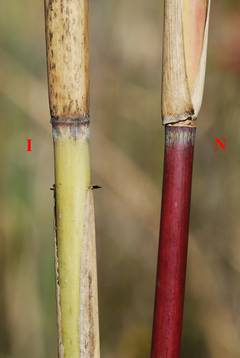
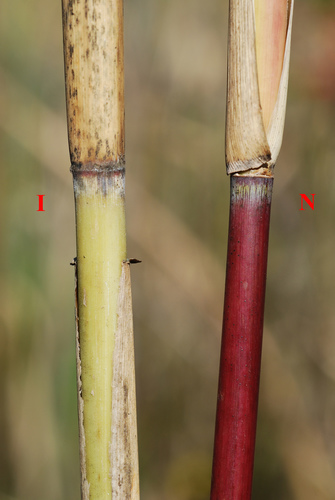
Phragmites is a small genus of about four species of tall, robust perennial grasses in the family Poaceae, known as reeds and found in wetlands across most of the world. The common reed, P. australis, occurs on every continent except Antarctica, forming dense stands 6 to 20 feet (1.8 to 6 m) tall in marshes, ditches, lake margins, and brackish shores. Stout, hollow canes carry broad, flat, grey-green leaves up to 2 feet (60 cm) long, and in late summer the stems are topped by soft, feathery, purplish flower plumes that fade to tan and persist through winter. Plants spread aggressively by thick rhizomes and creeping runners, building large clonal colonies. In North America an introduced Eurasian lineage of P. australis has become a serious invader of wetlands, crowding out native plants, while a native lineage also occurs. The reeds stabilise banks, filter water, and shelter wildlife, and the canes have long been cut for thatch, screens, and matting. Their vigorous spread and great height make them difficult to contain in small or managed sites.
Native Range
Phragmites grows in wetlands worldwide, on every continent except Antarctica. P. australis is native across Eurasia, Africa, Australia, and parts of North America, where a separate native lineage occurs alongside an introduced Eurasian one. The introduced strain has spread through wetlands of the United States and Canada.Suggested Uses
Common reed is used in constructed wetlands and reed beds for water treatment, in bank stabilisation, and as a source of thatch and screening canes. The tall plumes give winter structure in large naturalistic and waterside plantings. Because of its invasive spread, it is planted only where it can be contained, and native species are chosen in sensitive wetlands.How to Identify
Appearance
Size & Dimensions
Height6' - 20'
Width/Spread3' - 10'
Bloom Information
Flowering plumes appear in mid to late summer, roughly July to September, opening purplish and ageing to straw and silver. The plumes release wind-borne seed in autumn and stand through the winter. Established colonies flower every year once the stems are mature.
Detailed Descriptions
Flower Description
Purplish fading to tanFoliage Description
Grey-greenGrowing Conditions
Sun Requirements
Requires 6-12 hours of direct sunlight daily
• Full Sun: 6+ hours of direct sunlight
• Partial Shade: 3-6 hours of direct sunlight
• Full Shade: Less than 3 hours of direct sunlight