Phalaris, Genus, aquatica, Species,
- Genus & species
harding grass
Overview
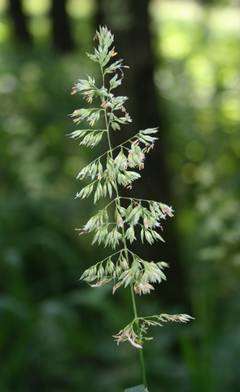
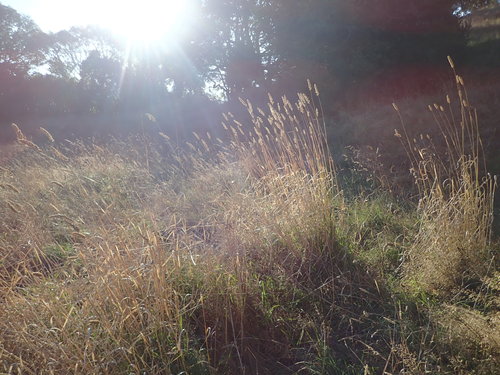
Phalaris aquatica is a long-lived perennial grass that forms dense tussocks 2-5 feet (60-150 cm) tall, spreading from short rhizomes and a swollen, bulb-like stem base. The flat leaf blades are 4-12 inches (10-30 cm) long and 0.2-0.5 inch (5-12 mm) wide, blue-green and somewhat waxy. Flowering stems carry a dense, cylindrical, spike-like panicle 2-6 inches (5-15 cm) long that is green to pale purple before fading to straw. It grows actively in the cooler, wetter months and slows or goes dormant through hot, dry summers, regrowing from the crown with autumn rain. Native to the Mediterranean region, it has been sown widely as a pasture and erosion-control grass in temperate Australia, and it has naturalised along roadsides, drainage lines, and grasslands where it can displace native species. The foliage contains tryptamine alkaloids that can poison grazing livestock, causing a nervous condition known as phalaris staggers. Deep roots let established plants persist through drought, but the same vigour makes stands hard to remove once they spread into bushland.
Native Range
Phalaris aquatica is native to the Mediterranean region of southern Europe, North Africa, and western Asia. It has been introduced to Australia, New Zealand, and North America, where it is grown as pasture and has naturalised in temperate grasslands.Suggested Uses
Phalaris aquatica is sown as a perennial pasture and for soil binding on slopes and drainage lines in temperate regions. Where it has naturalised in conservation areas it is managed as an environmental weed rather than planted.How to Identify
Appearance
Size & Dimensions
Height2' - 5'
Width/Spread1' - 3'
Colors
Bloom Information
Flowering occurs in late spring and early summer, roughly October to December in its naturalised southern-hemisphere range. The dense cylindrical panicles emerge green to purple-tinged and dry to straw as the seed ripens. Flowering follows the main cool-season growth period and slows as summer heat sets in.
Detailed Descriptions
Flower Description
green to pale purpleFoliage Description
blue-greenGrowing Conditions
Sun Requirements
Requires 6-10 hours of direct sunlight daily
• Full Sun: 6+ hours of direct sunlight
• Partial Shade: 3-6 hours of direct sunlight
• Full Shade: Less than 3 hours of direct sunlight
Care & Maintenance
Care Guide
Phalaris aquatica grows in full sun on a wide range of soils, including heavy clays and seasonally wet ground, and tolerates both waterlogging and extended dry periods once established. It makes most of its growth in autumn, winter, and spring, and becomes semi-dormant in hot summers. Plants establish from seed sown into the cool season and form deep root systems within the first year. It withstands frost in USDA zones 7-10. The foliage carries alkaloids that can poison grazing animals, particularly on stressed or rapidly regrowing pasture. Stands spread by seed and short rhizomes and can move into adjoining bushland.Pruning
Cutting or mowing in late spring removes flowering stems and limits seed spread, and stands regrow from the crown afterward. Grazing or slashing is used to keep growth leafy, though hard cutting during summer dormancy can weaken plants.Pruning Schedule
Prune: November–December
late springsummer