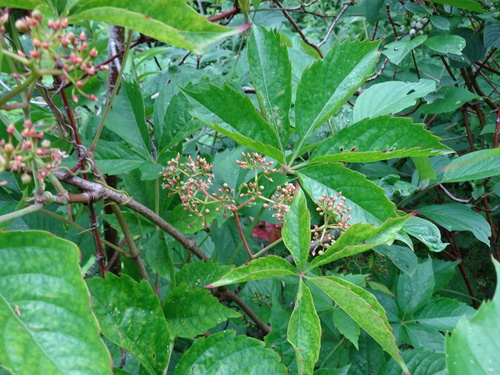
Parthenocissus, Genus, inserta, Species,
- Genus & species
thicket creeper
Overview
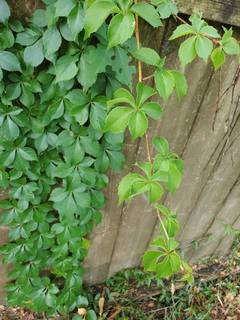
Parthenocissus inserta is a deciduous woody climber in the grape family, scrambling or climbing 10-30 feet (3-9 m) by means of twining tendrils that lack the adhesive pads of its close relative P. quinquefolia. The palmately compound leaves have five elliptic leaflets 2-4 inches (5-10 cm) long with coarsely toothed margins, glossy dark green in summer and turning red to purple in autumn. Inconspicuous greenish flowers appear in branched clusters in early summer, followed by pea-sized berries 0.25-0.33 inch (6-8 mm) across that ripen blue-black on red stalks. Because its tendrils coil around twigs and wires rather than sticking to flat surfaces, it sprawls over fences, shrubs, and thickets instead of clinging to walls. Parthenocissus inserta spreads by seed dispersed by birds and by stems that root where they touch moist soil, forming dense cover. The berries contain calcium oxalate crystals and are toxic to humans if eaten. Limitations include vigorous growth that can smother smaller plants and a need for annual cutting back to stay within bounds.
Native Range
Parthenocissus inserta is native to much of central and northern North America, from Quebec and Ontario west to British Columbia and south through the central United States to Texas and the desert Southwest. It grows along woodland edges, riverbanks, fence lines, and thickets, often in moist, fertile soil.Suggested Uses
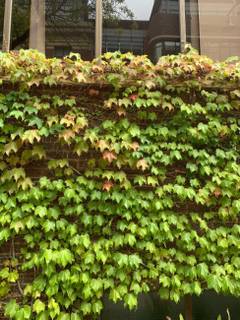
Parthenocissus inserta is grown to cover fences, arbours, pergolas, and chain-link screens, and for quick groundcover on banks and slopes. It is also used in wildlife plantings, where the berries feed birds and the foliage shelters small animals.How to Identify
Appearance
Size & Dimensions
Height10' - 30'
Width/Spread5' - 10'
Bloom Information
Parthenocissus inserta flowers in early to midsummer, around June to July, producing small greenish flowers in forked clusters opposite the leaves. The flowers are not showy and are easily overlooked among the foliage. Berries develop through late summer and ripen blue-black by early autumn, persisting after the leaves drop.
Detailed Descriptions
Foliage Description
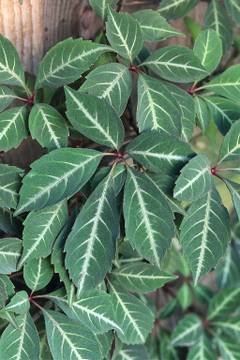
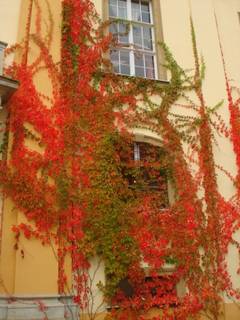
Glossy dark green, red to purple in fallGrowing Conditions
Sun Requirements
Requires 4-10 hours of direct sunlight daily
• Full Sun: 6+ hours of direct sunlight
• Partial Shade: 3-6 hours of direct sunlight
• Full Shade: Less than 3 hours of direct sunlight
Care & Maintenance
Care Guide
Parthenocissus inserta grows in full sun to part shade on most soils, from sand to clay, and tolerates dry as well as seasonally moist ground once established. It needs a fence, trellis, or shrub to climb, since the tendrils require something to coil around. Growth is rapid, and stems extend several feet in a single season. Plants withstand cold to USDA zone 3 and need no winter protection. Few pests trouble it, though leaf-feeding beetles and powdery mildew appear occasionally. Annual cutting keeps it from overwhelming nearby plantings.Pruning
Parthenocissus inserta tolerates hard pruning and is cut back in late winter or early spring while dormant to control size and direction. Wayward stems can be shortened at any time during the growing season. Removing rooted runners limits its spread into surrounding beds.Pruning Schedule
Prune: February–March
winterearly spring