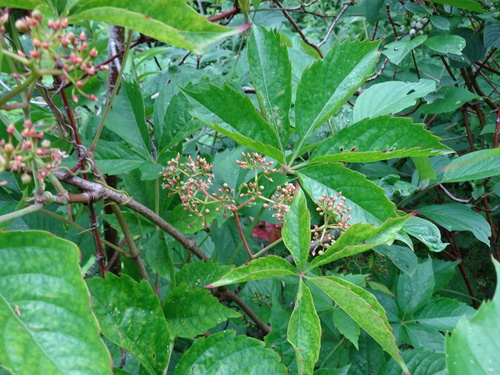
Parthenocissus, Genus, spp., Multiple species,
- Genus
- Multiple species
Virginia creepers
Eastern North America and eastern Asia
Overview
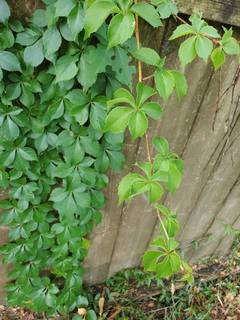
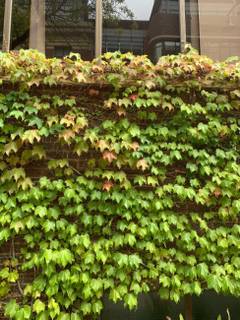
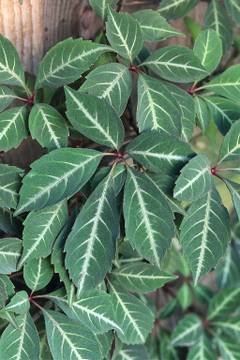
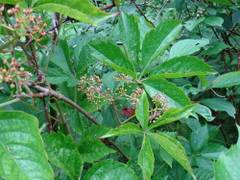
Parthenocissus is a genus of about 12 species of deciduous woody climbing vines in the grape family, Vitaceae, widely grown as Virginia creeper and Boston ivy. The vines climb by branched tendrils that end in small adhesive pads, allowing them to cling to masonry, bark, and fences without support and to climb 30 to 70 feet (9 to 21 m) high. Leaves are alternate and either palmately compound with three to five leaflets, as in Virginia creeper (P. quinquefolia), or simple and three-lobed, as in Boston ivy (P. tricuspidata). Summer foliage is dull to glossy green, turning vivid red, crimson, and purple in autumn. The small greenish flowers are borne in branched clusters and are easy to overlook, but they ripen into round, blue-black, grape-like berries 0.2 to 0.3 inch (5 to 8 mm) across on red stalks. Native to eastern North America and eastern Asia, Parthenocissus grows in woodland, on cliffs, and along forest edges, scrambling over ground, rocks, and trees. The vines are vigorous and can cover large areas, and their clinging pads may damage paint and soft mortar. The berries contain oxalate crystals and are toxic to people and pets if eaten.
Native Range
Parthenocissus is native to eastern and central North America and to eastern Asia, including China, Japan, and the Himalayas. The vines grow in deciduous woodland, on rocky bluffs and cliffs, along streambanks, and at forest margins, climbing trees and rock or trailing across open ground.Suggested Uses
Parthenocissus is planted to clothe walls, fences, pergolas, and large trees, and as a fast groundcover on banks and slopes for erosion control, set 3 to 10 feet (0.9 to 3 m) apart depending on the area to be covered. The autumn color is used for seasonal display on masonry and boundary walls. The berries feed birds, which spread the seed widely.How to Identify
Appearance
Size & Dimensions
Height30' - 70'
Width/Spread5' - 10'
Bloom Information
Parthenocissus blooms in early to mid summer, generally June and July, with small, five-parted greenish flowers in branched clusters mostly hidden among the leaves. Bees and other insects visit the inconspicuous flowers for nectar. By late summer and autumn the clusters ripen into blue-black berries on reddened stalks, often persisting after the leaves drop. The autumn berry and stalk color outlasts the brief flowering.
Detailed Descriptions
Foliage Description
green, turning red, crimson, and purple in autumnGrowing Conditions
Sun Requirements
Requires 2-10 hours of direct sunlight daily
• Full Sun: 6+ hours of direct sunlight
• Partial Shade: 3-6 hours of direct sunlight
• Full Shade: Less than 3 hours of direct sunlight
Care & Maintenance
Care Guide
Parthenocissus grows in full sun to full shade and tolerates almost any soil of average fertility across a pH of 5.5 to 8.0, including dry, poor, and urban ground once established. Autumn color is strongest in sun, while shade gives larger leaves and more muted tints. The vines are cold hardy to USDA zone 3 or 4 and withstand drought, pollution, and exposure. Growth is rapid, so the vines are kept off wood siding, gutters, and roof shingles, where the pads and stems work into gaps. Few pests cause serious harm, though Japanese beetles, leaf hoppers, and powdery mildew may appear. Plants are cut back yearly to keep them in bounds.Pruning
Parthenocissus tolerates hard pruning and is cut back in late winter or early spring while dormant to remove growth from windows, gutters, and woodwork and to control its spread. Stray and overlong shoots are also trimmed through the growing season. Vines that have overrun their space can be cut to near ground level and will regrow.Pruning Schedule
Prune: February–March
winterearly spring